
barbecue & grilling accessories
Techniques Recipes Buyer's Guides Ingredients One Nation Under Sauce
Misc BBQ Articles Weights, Measures, Conversions Links Advertising Newsletter Updates Meet Meathead

More articles about the history of barbecue on this site

The etymology of the word barbecue, its complete defintion, and the myths about its origin.

The history of barbecue sauces and their regional styles.

The history of charcoal.

How LBJ used barbecue to advance his policies.

Charles Lamb's tale "A Dissertation Upon Roast Pig".

How it all began!

Yes, that's the title of this cartoon from Collier's magazine, circa 1954.

how it all baegan - colliers on bbq

The BBQ rules

This one has been going around the net for years, but it always bring a chuckle.

When a man volunteers to barbecue the following chain of events are put into motion:

1) The woman buys the food.

2) The woman makes the salad, the vegetables, and dessert.

3) The woman prepares the meat for cooking, places it on a tray along with the necessary cooking utensils and sauces, and takes it to the man who is lounging beside the grill with his buddies, drinks in hand.

4) The woman remains outside the compulsory 10' exclusion zone where the exuberance of testosterone and other manly bonding activities can take place without the interference of the female aura.

5) Here comes the important part: THE MAN PLACES THE MEAT ON THE GRILL.

6) Then the woman sets the table.

7) The woman comes out to tell the man that the meat is looking great. He thanks her and asks if she will bring another drink while he flips the meat.

8) Another important activity: THE MAN TAKES THE MEAT OFF THE GRILL AND HANDS IT TO THE WOMAN.

9) The woman places it on the table and the guests dig in.

10) Everyone praises the man and thanks him profusely.

11) After eating, the woman clears the table and does the dishes.

12) The man asks the woman how she enjoyed her night off, and, upon seeing her annoyed reaction, concludes that there's just no pleasing some women.

The buccaneer connection

The French words boucan and boucanier and various spellings of them appear in the diaries of early French and English explorers describing barbaoas.

In 1906 John Masefield, in his book "On the Spanish Main", made the case for boucan as the name of the grill used by the Amerindians. He said "The meat to be preserved, were it ox, fish, wild boar, or human being, was then laid upon the grille. The fire underneath the grille was kept low, and fed with green sticks, and with the offal, hide, and bones of the slaughtered animal. This process was called boucanning, from an Indian word 'boucan,' which seems to have signified 'dried meat' and 'camp-fire.' Buccaneer, in its original sense, meant one who practised the boucan."

It is interesting to note that Masefield says that "Meat thus cured kept good for several months. It was of delicate flavour, red as a rose [sounds like a smoke ring, doesn't it?], and of a tempting smell. It could be eaten without further cookery. Sometimes the meat was cut into pieces and salted, before it was boucanned - a practice which made it keep a little longer than it would otherwise have done. Sometimes it was merely cut in strips, roughly rubbed with brine, and hung in the sun to dry into charqui, or jerked beef. The flesh of the wild hog made the most toothsome boucanned meat. It kept good a little longer than the beef, but it needed more careful treatment, as stowage in a damp lazaretto turned it bad at once [a lazaretto is a quarantine for sailors, most likely a cellar in this case]. The hunters took especial care to kill none but the choicest wild boars for sea-store. Lean boars and sows were never killed. Many hunters, it seems, confined themselves to hunting boars, leaving the beeves [beef] as unworthy quarry."

Fans of the Pirates of the Caribbean films will appreciate this description of buccaneers from Atlantic Monthly, September 1862: "A cotton shirt hung on their shoulders, and a pair of cotton drawers struggled vainly to cover their thighs: you had to look very closely to pronounce upon the material, it was so stained with blood and fat. Their bronzed faces and thick necks were hirsute, as if overgrown with moss, tangled or crispy. Their feet were tied up in the raw hides of hogs or beeves just slaughtered, from which they also frequently extemporized drawers, cut while reeking, and left to stiffen to the shape of the legs. A heavy-stocked musket, made at Dieppe or Nantes, with a barrel four and a half feet long, and carrying sixteen balls to the pound, lay over the shoulder, a calabash full of powder, with a wax stopper, was slung behind, and a belt of crocodile's skin, with four knives and a bayonet, went round the waist. These individuals, if the term is applicable to the phenomena in question, were buccaneers.

"The name is derived from the arrangements which the Caribs made to cook their prisoners of war. After being dismembered, their pieces were placed upon wooden gridirons, which were called in Carib, barbacoa. It will please our Southern brethren to recognize a congenial origin for their favorite barbecue. The place where these grilling hurdles were set up was called boucan, and the method of roasting and smoking, boucaner. The buccaneers were men of many nations, who hunted the wild cattle, which had increased prodigiously from the original Spanish stock; after taking off the hide, they served the flesh as the Caribs served their captives. There appears to have been a division of employment among them; for some hunted beeves [beefs or cattle] merely for the hide, and others hunted the wild hogs to salt and sell their flesh."

Note that Masefield, the Atlantic, and many others before them, described the natives boucanning and barbecuing humans. Warnes questions the veracity of these claims of cannibalism, saying they were likely invented by Europeans to justify their own violence and rationalize their attempts to convert the "barbarians" but, in my readings of original diaries, I have seen so many descriptions of barbecuing and grilling of humans, usually enemies or criminals, that it seems that the practice was common.

Stories intersect here in the most interesting manner. Buccaneers plyed both the Caribbean and the Pacific coast from Mexico to South America. Off the coast of present day Colombia and Ecuador was especially happy hunting in the late 1600s. According to historian Kris E. Lane "The Spanish knew the region as the Barbacoas, having brought from the Caribbean the Taíno word for the stilt houses favored by its native population".

Foods native to the New World

According to Sam Brookes, Heritage Program Manager of the National Forests in Mississippi, Europeans discovered these new foods on their explorations:

  • Corn (hundreds of varieties)
  • Beans (hundreds of varieties)
  • Squash and Pumpkins
  • Tomatoes
  • Chili and Sweet Peppers
  • Wild Rice
  • White Potatoes (numerous varieties)
  • Sweet Potatoes
  • Peanuts
  • Plums
  • Strawberries
  • Wild Grapes and Scuppernongs
  • Persimmons
  • Pineapple
  • Raspberries
  • Blueberries
  • Blackberries
  • Cranberries
  • Avocado
  • Black Walnuts, Hickories, Chestnuts,
  • Pecans, Filberts, and Brazil Nuts
  • Chocolate
  • Vanilla
  • Sassafras
  • Maple Sugar
  • Turkeys

The history of barbecue cookoffs

kaiser cookoff

No doubt macho cavemen began challenging each other to cookoffs soon after the first bonfire, but today, barbecue cookoffs may be the nation's fastest growing sport. With scores of new ones popping up every year the current count is probably close to 1,000.

The first barbecue competition was the Kaiser Foil Cookoff conducted in 1959 in Hawaii, just a few months after Hawaii became a state. "For Men Only", contestants sent in their main dish recipes, 25 finalists were chosen and with their wives (assuming they were all married) were flown to the Hawaiian Village Hotel on Waikiki for the cookoff.

First prize was the title "Grand National Cookout Champion" $10,000 cash and 2nd, 3rd, 4th, and 5th prizes were a Jeep Station Wagon! The entry form had "Bar-B-Tricks" that emphasized wrapping things in foil before putting on the barbecue. At this time, I do not know who won and if his entry was cooked in foil or over open flame, but I'm digging.

Uvale BBQ competition

The template for modern barbecue competitions comes from chili cookoffs, the first of which, like so many other food firsts, was held at the State Fair of Texas in 1952 in Dallas. The World Championship Cow Country BBQ Cookout, held June 3, 1972 in Uvalde, TX at an event called Arama Days was probably patterned after the many chili cookoffs around the state.

According to John Raven of Johnson City, TX, the winner was Kermit Hahne as head cook for the Brazos Barristers cooking team of San Antonio. Hahne lived in Stonewall and, according to Raven, often did catering for President Lyndon Johnson. In the photo above we see "Big John" Hamilton, an actor who appeared in numerous John Wayne movies, David Low, one of the competitors, and Slim Pickens, a popular actor in numerous Westerns as well as Blazing Saddles. His most famous role was probably in Dr. Strangelove in which he famously played Maj. "King" Kong, a B-52 pilot who rode a nuclear bomb to its target in Russia waving his cowboy hat. Special thanks to Raven who located the photo above in the Uvalde Union Leader.

The first really big competition was in Chicago. In 1982 Pulitzer Prize winning Chicago Sun-Times columnist Mike Royko bragged that he made the best ribs anywhere and set in motion the annual Mike Royko Ribfest in Grant Park on the Lake Michigan lakefront. There were more than 400 contestants the first year. The winner was Charlie Robinson who parlayed his instant fame into a restaurant and a line of sauces and spices.

royko ribfest

The event became an overnight sensation, and even a source of minor controversy. Almost from the outset vegetarians began pestering Royko for permission to enter non-meat ribs. The crotchety columnist wrote that he had nothing personal against vegetarians, "In fact, I occasionally eat vegetables - a tiny onion in a martini or a stalk of celery in a Bloody Mary. Keeps me fit."

In 1986 he gave in and several vegetarians showed up that year. He tasted their faux ribs and wrote, "The texture was very much like a soft, chewable piece of rubber." He thought there were great possibilities for "gluten-on-a-stick barbecued ribs. There are many people who compulsively nibble on pencil erasers."

When the Sun-Times was purchased by Rupert Murdoch in 1984, an outraged Royko moved across the street to the arch-rival Chicago Tribune where he was syndicated in more than 600 newspapers.

The competition was limited to 500 contestants by the space available in Grant Park, and many applicants were turned away each year. Managing the event became a hassle, so in 1987 he wiggled out of the job. He explained why in a column. It seems he plotted to win the cookoff by raising his own hog, Prince, but one fateful night while walking him around the block, he was attacked by muggers. "With a roaring oink of rage, Prince was upon them, tusks flashing, hoofs flailing. One of them shrieked, 'killer pig!' and they fled in terror to a lifetime of porcine nightmares."

He asked "How can I turn this loyal, trusting, valiant creature into a a few slabs of barbecued ribs?" So he passed the tongs to others at the Tribune. Ribfest continued another three years, until 1990, when the Trib wiggled out of it, too.

Royko continued to bedevil crooked politicians in his columns, defended the citizens of Chicago, and enjoyed ribs and cheap wine he bought at a liquor store at which I was the wine buyer until he died suddenly of a brain aneurysm in 1997.

The event that propelled barbecue competition into the big time occured one fall evening in 1985 in Kansas City, MO, when Carolyn and Gary Wells and their friend Rick Welch had an adult beverage inspired brainstorm. They formed a club for barbecue lovers, called it the Kansas City Barbecue Society, launched the club's newsletter and called it the Bullsheet, and held a few informal cookoffs for themselves and their friends. Today there are 15,000 dues paying members and more than 500 KCBS sanctioned competitions across the continent where backyard braggers could see just how good their game is. Prize money has skyrocketed and at least 20 cooks are earning near or above six figures by hitting these weekend festivals/parties/events/contests.

BBQ Pitmasters on TV

Meanwhile the Food Network has featured barbecue competitions and John Markus produced a made-for-TV shootout called BBQ Pitmasters on TLC that has stirred interest even more. The 2010 version of Pitmasters posted a $100,000 first prize.

Click here to read more about barbecue competitions, how they operate, and for links to the many barbecue societies and associations that sponsor them. Click here to go behind the smoker with Candy Weaver, a real iron chef and top competitor, and watch her in action.

George Stephens making barbecue in the 1950s

The Story of Barbecue

"The story of barbecue is the story of America. Settlers arrive on great unspoiled continent. Discover wondrous riches. Set them on fire and eat them." Vince Staten, Real Barbecue

Barbecue made human civilization possible.

Homo erectus probably first tasted cooked meat after a forest fire burned animals, and it was good. So good that it influenced human evolution. Traits that enhanced their ability to hunt and eat cooked meat were favored: Larger brains, better hand articulation, speed, communication skills, and smaller jaws. Eventually they learned to domesticate dogs to help with the hunt, and then they learned to husband animals that tasted best. The family circle and tribal structure evolved so that men became hunters and women became cooks. Ergo, the first pitmasters were probably women.

ancient bonfire cookingIn 2007 Israeli scientists at University of Haifa uncovered evidence that early humans living in the area around Carmel, about 200,000 years ago were serious about barbecue. From bone and tool evidence, these early hunters preferred large mature animals and cuts of meat that had plenty of flesh on them. They left heads and hooves in the field. Three of their favorites were an ancestor of cattle, deer, and boars. From burn marks around the joints and scrape marks on the bones, there is evidence that these cave dwellers knew how to cook.

Early barbecue cooking implements will likely never be found because they were probably made of wood. The first meats were probably just tossed onto the campfire's embers. According to barbecue historian Dr. Howard L. Taylor, the first cooking implements were almost certainly "a wooden fork or spit to hold the meat over the fire.

early rotisserieSpit roasting is common around the world and for many years was the major barbecue cooking method. Baking an animal, vegetables, or bread in a hot pit in the ground was also an early development. Wooden frames were later used to hold meat over the fire, but they often held the meat well above the fire to keep the wood from burning, which resulted in the meat cooking slowly and absorbing smoke. The gridiron [similar to a grate on a modern grill] was developed soon after the Iron Age started, which led to grilling as we know it. Iliad, Book IX, Lines 205-235 and The Odyssey, Book III, lines 460-468 mention spits and five-pronged forks used to roast meat, basted with salt and wine at outdoor feasts in ancient Greece. Such feasts at the end of a battle or long march were common throughout history."

Early cooks figured out that cooked meats tasted better than raw, and smoked foods not only tasted swell, they kept longer. We now know this is because there are antimicrobial compounds in smoke and because slow smoking dried foods and bacteria need moisture to grow. In the days before refrigeration, smoking, drying, and salting meat were clever strategies for preserving perishable foods. This allowed hunting tribes to make a kill and, unlike other animals, they did not have to gorge themselves before the prey spoiled. If they were migratory, they could smoke, dry, and salt foods and take it on the road with them.

Barbecue and the Bible

The Hebrew Old Testament contains what may be the first detailed plans for the design of a barbecue. In Exodus, chapter 27, probably written somewhere between 1300 and 1500 years before Christ was born, after Moses brings down the 10 Commandments, he tells his flock that God wants them to construct a tabernacle with an ark for the Covenant and an altar for burnt offerings of animals.

It stood about 4 1/2 feet high about 7 1/2 feet long, contained fleshooks, firepans, ash pans, shovels, basins, a grate, and tie downs to attach the animal before the sacrifice. Like today's big rigs, it was portable. It did not have wheels, but poles on each side so it could be carried by hand.

In chapter 29 there are instructions of how to prepare the sacrifice of a young bull and two rams and describes the process as "a sweet savour, an offering made by fire unto the Lord." Apparently the scent was all the Lord wanted because Aaron, Moses' brother and the priest in charge, and his associates, were allowed to eat the sacrifice.

A model of the device and the tabernacle, based on the detailed description in Exodus 27, was built in Israel in Timna Park in the Negev Desert. A photo by someone named Ori229 is shown here under the terms of the Creative Commons license.

China, India, and Japan

Many scholars think techniques for low and slow smoke roasting began in China where some early kitchens had special devices for smoking meats. A wonderful speculation on the discovery of the delights of fire-roasted pork was penned by the English essayist and humorist Charles Lamb in 1822. He tells of the Chinese peasant Bo-bo who, long long ago, accidentally burned down his father's cottage and the pigs within. Bo-bo not only discovers barbecue, but then embarks on a career of arson, burning down the neighborhood one cottage at a time to sate his hunger for roast pork. Click here to read Lamb's tale, "A Dissertation Upon Roast Pig."

In India, food has been cooked over coals in ceramic urns called tandoors for centuries, and in Japan the Kamado, another ceramic cooking urn has been around for about 3000 years.

Italian Ox Roast

Old World influences

In Europe, artists have painted pictures of barbecues since pig hair bristles were first wrapped around a stick to make a brush. This ox roast in the painting above took place in Bologna, Italy in the 1531.

Early cooks learned quickly that flavor, tenderness, and juiciness were related to how foods were cooked and how long. Museums are full of clever gadgets built to improve palatability. Cooking in open fireplaces over wood and with plenty of smoke was commonplace, and all manner of clever iron grids, reflectors, and rotating devices were developed. Below is an elaborate rotisserie mechanism mounted in a fireplace that I photographed in a 13th century castle in Europe. The cook would turn a handle that would wind a weighted cable around an axle. The weight would slowly descend and the mechanism would slowly rotate the food above the coals.

chaine de rotisseurs barbecue emblemThe international gastronomic society, Chaîne des Rôtisseurs is based on the traditions and practices of the French corporation of roasters. Their written history has been traced back to 1248. King Louis XII awarded them an official coat of arms in 1610. It consists of two crossed turning spits and four larding needles, surrounded by flames of the hearth on a shield encircled by fleur-de-lis and a chain representing the mechanism used to turn the spit.

Somewhere along the way someone invented the smokehouse. I'm guessing it was an early cook trying to escape from the rain, so he hung some skins over the fireplace and huddled beneath. Eventually it evolved into an something like the ancient smokehouse found at the Ahtna Fish Camp on the Copper River in Alaska. It was a simple sapling frame building, four sapling posts for corners, a pitched roof of sticks covered in skins, with beams just under the peak of the roof to hang the salmon filets.

grilling in ItalyGrilled and smoked meats, especially pork and sausage, are deeply woven into German and Czech culinary traditions, and this influence is particularly strong in the Carolina and Texas barbecue traditions where their immigrants settled. Above is an excerpt from a painting from the 1600s by an unknown Flemish artist titled "Hier wird um wenig geld" ("Here, for little money"). It shows a women selling grilled vegetables outdoors. From the Academia Barilla Collection in Italy, it is one of the first representations of a grill I have seen.

New World barbacoa and the etymology of the word barbecue

Whether you spell it Barbecue, Barbeque, Barbaque, Barbicue, BBQ, B-B-Que, Bar-B-Q, Bar-B-Que, Bar-B-Cue, 'Cue, 'Que, Barbie, and just plain Q, the origins of the word barbecue (that's how I, and most American dictionaries, spell it) are a bit hazy. The word "barbacoa" is the real source of the word "barbecue". Every other goofy explanation (see sidebar) you have heard is wrong. Click here to read about the etymology of the word barbecue, its complete defintion, and the myths about its origin. Below are the facts.

In 1492 Christopher Columbus made the first of his four voyages from Spain to the New World landing in what he called Hispanola, present day Dominican Republic and Haiti, and then went on to Cuba, and the Bahamas. Over the next 11 years he came back three more times and set foot on numerous Caribbean islands, Central America, and even northern South America. His tales of the strange new world, its people, animals, foods, and riches, launched a flurry of explorations by Spanish Conquistadors as well as French and English adventurers.

On his second voyage he probably stopped in the Canary Islands off the coast of Africa and picked up 20 to 30 cattle, mostly pregnat females descended from portuges and Spanish stock brought there a few decades earlier. Within three weeks they were grazing contentedly on the lush greenery of Hispanola and within a few years Conquistadors brought them to Mexico where Vaqueros, Mexican predecessors of cowboys, drove them north to Texas.

The people they encountered in the Caribbean were unfortunately called Indians since CC had been seeking a route to India. I shall call them Amerindians to avoid confusion.

Taino Indians with Barbecoa

The first tribesmen he encountered were Arawaks, and the Spaniards tried to document their language and their habits. Unlike Europeans, Arawaks cooked outdoors most of the time, although there are some records of indoor fireplaces. One of their favorite methods of cooking and preserving food was to place it on a wooden frame above the fire. It was built of green wood so it would not burn, had four vertical poles to hold up a grid of more green wood cross pieces, and was usually tall enough to prevent the wood and food from incinerating. The word for this device, they said, was barbacoa and the Diccionario de la Lengua Espanola (2nd Edition) of the Real Academia Espanola traces the origin of the word to the Taino dialect of the Arawak American Indians. The Spanish explorer Gonzalo Fernández De Oviedo y Valdés traveled extensively in the Caribbean and what is now Florida in the 1500s, and he was the first to use the word in print when, in Spain in 1526, he first described the devices.

According to barbecue historian Dr. Howard Taylor "Oviedo is reputed to be a reliable source for translation from these American Indian dialects into Spanish because of his dedication to accuracy and experience as Chronicler to Charles V of Spain. Arawak tribes and dialects of the Arawak language were widely distributed across the West Indies, Central America, and Northern South America."

Of course we will never know precisely what the Taino word was since they had no writing system. I'm guessing it only sounded like barbacoa to the Conquistadors since people usually mispronounce foreign language words. Nobody will ever know for sure, but barbacoa, especially the "-oa" at the end, sounds mighty Spanish to me. Other European explorers reported home that natives in northern South America, especially Guiana, may have called their version of the barbacoa a babracot or babricot or barboka. These are possibly dialects of the many tribal languages or further clumsy attempts to mimick the native words.

During the European explorations of the 1500s Arawak tribes were not native to areas now in the United States, but some Arawak tribes moved into southern Florida during the mid-to-late 1600s. "Florida" which was the Spanish name for all the land they claimed, extending north through modern Virginia and even into New York and west through Louisiana. The English did not arrive in Jamestown, VA, until 1607, and the French did not settle in New Orleans until 1690. Present day Florida was populated with many different tribes, among them the Timucua, Apalachee, Calusa, Tocobaga, Ais, Mayaca, and Hororo, and most of them had adapted the barbacoa and accounts of other explorers show it in use by other tribes far north and west.

In fact, the engraving above shows a barbacoa used by Amerindians in the mid 1580s in what is today North Carolina. It was done by the European engraver and publisher Theodor de Bry and based on a watercolor by a settler, John White. Similar illustrations were made in the 1560s by the first European artist in North America, Miles Harvey and in 1564 by Jacques le Moyne. Note the smoke in the illustration above and the two fish cooking with indirect heat off to the left. The smoke not only cooked the fish, it kept away flies and animals, and preserved it for storage.

The barbacoa however, was the name for a wooden rack, not just a cooking device, because other early explorers described similar devices being used to store food above the damp ground and out of reach of animals, as well as a bed for sleeping above the snakes and insects. Oviedo described "a loft made with canes, which they build to keep their maize in, which they call a barbacoa." According to the Historical Dictionary of Cuba Second Edition by Jaime Suchlicki, the Ciboney Indians of Cuba even called their primitive dwellings barbacoa. The Bishop of Cuba, Gabriel Diaz Vara Calderon in 1675 wrote after a 10 month journey through Florida "They sleep on the ground, and in their houses only on a frame made of reed bars, which they call barbacoa, with a bear skin laid upon it and without any cover, the fire they build in the center of the house serving in place of a blanket."

A French explorer describes a cooking barbacoa here: "A Caribbee has been known, on returning home from fishing, fatigued and pressed with hunger, to have the patience to wait the roasting of a fish on a wooden grate fixed two feet above the ground over a fire so small as sometimes to require the whole day to dress it." That's low and slow cooking, folks.

The DeSoto National Memorial in Bradenton, FL, not far from the place where the Spanish explorer is believed to have landed in 1539 with 400 soldiers, horses, and Spanish hogs, the first to inhabit North America, has a small replica barbacoa on display.

hans stade etching of cannibalism on the barbecueThe first to describe the use of the barbacoa for cooking was Hans Stade, a German in the service of Portugal captured by Indians in Brazil in 1547. He escaped and returned to Europe in 1555. His 1557 book "True History" included woodcuts he supervised showing a barbacoa. Here's how he described the device, which he did not name "When they want to cook any food, flesh or fish, which is to last some time, they put it four spans high above the fire-place, upon rafters, and make a moderate fire underneath, leaving it in such a manner to roast and smoke, until it becomes quite dry. When they afterwards would eat thereof, they boil it up again and eat it, and such meat they call Mockaein." His accounts include extensive use of the device for cooking human flesh.

The first recorded barbecue in the Southeastern US may have featured human flesh. In April 1528, Panfilo de Narváez set out with 400 men and 80 horses from Cuba to explore Florida and search for gold. They landed in the Tampa Bay area and foolishly lost contact with their ships. They were quickly set upon by hostiles and tried to retreat by building boats and sailing for Panuco on the east coast of Mexico in New Spain. A few made it to Texas and over the course of about 2 years their numbers dwindled to 4, among them Cabeza de Vaca. Navarez perished at sea. In spring of 1536, the party made it to the Spanish settlement of San Miguel de Culiacán on the lower San Lorenzo River.

hernando de sotoWhile they were lost, the Spanish governor of Cuba sent out a search party that also ran into trouble. One member of the party, Juan Ortiz was captured by the Ozita tribe. They decided to sacrifice him by torture and tied him to a barbacoa-like device. The chief's daughter took pity on the slowly roasting man and convinced his father to release him. Ortiz was not flipped, so he was permanently scarred on his back. Ortiz lived for years with the tribe until he was rescued by a party led by a fellow Spaniard, the explorer and conquistador Hernando de Soto (shown here). Ortiz joined de Soto as an interpreter.

After helping conquer the Incas in Central America, de Soto had sailed from Cuba to Tampa Bay in 1539. He brought about 650 men, many horses, dogs, and Spanish hogs, which were not native to the continent. He then set out exploring and pillaging what is now the Southeast of the US.

According to Charles Hudson's 1998 book Knights of Spain, Warriors of the Sun: Hernando De Soto and the South's Ancient Chiefdoms, on March 25, 1540 a party of about 40 Spaniards led by de Soto invaded a village in what is now Georgia and found venison and turkey smoke roasting on a barbacoa-like device. Although the word had not been brought north by Indians yet, DeSoto called it a barbacoa because he had probably heard the word in Spain. Famished from a 35 hour ride, despite the fact that it was Holy Thursday, they feasted on the first barbacoa in recorded history.

On May 17, 1540, according to Hudson, they enjoyed another meal cooked on a barbacoa near present day Salisbury, NC: Corn and small dogs.

According to Sam Brookes, Heritage Program Manager of the National Forests in Mississippi, in December 1540, near what is now Tupelo, Mississippi, de Soto collaborated with the Chickasaw tribe on a feast featuring pork from Spain cooked on a barbacoa. The Chickasaws loved their pork barbecue (can you blame them?) and even stole hogs from DeSoto. The Spanish adopted the cooking method and refined it.

Eventually the method of cooking found its way north to the English colonies in Virginia and the Carolinas where they doused the meat with a favorite condiment from home, vinegar. Vinegar remains the major ingredient of most sauces in Eastern North Carolina and South Carolina to this day. German settlers were fond of mustard on their pork so the classic mustard based barbecue sauce of South Carolina evolved.

The first big barbecue in Texas, according to Taylor, "Was probably held on April 30, 1598, near San Elizario on the Rio Grande, about 30 miles Southeast of El Paso, TX. The leader of the later celebration was Juan de Onate." Natives were present, and it was a traditional, religious, outdoors feast that included spit roasted wild game and birds and native vegetables in addition to the usual salted pork, hard biscuits and red wine from Spain.

According to etymologist Michael Quinion, William Dampier, in his New Voyage Round the World of 1699, used the word in English for the first time to describe a raised wooden sleeping platform that protected Indians from snakes: "And lay there all night, upon our Borbecu’s, or frames of Sticks, raised about 3 foot from the Ground." One can assume there was no fire beneath. According to Quinion, the Dictionary of National Biography describes Dampier as a "buccaneer, pirate, circumnavigator, captain in the navy, and hydrographer." Ironic that the first to use the word in English should be described as a buccaneer since that occupation comes from the French word boucan, "which in turn comes from mukem, a word used by a group of Brazilian Indians, the Tupi, for a wooden framework on which meat was dried."

The evolution of barbecoa into barbecue

washington's smokehouseGeorge Washington had a large smokehouse at his plantation at Mt. Vernon, VA (shwn at right). On May 27, 1769, the aristocrat, not yet our President or even a General, wrote in his diary (2:154) "Went in to Alexandria [VA] to a Barbecue and stayed all Night." So the tradition of partying all night with outdoor cooked meat can be traced back at least this far. Washington even hosted "a Barbicue of my own giving at Accatinck" in September 1773.

Alas the exact menus and cooking method are unknown, but pork and ox were popular at the time, and whiskey would have been served. Washington even built a distillery at Mt. Vernon in 1797.

According to the book Dining with the Washingtons: Historic Recipes, Entertaining, and Hospitality from Mount Vernon edited by Stephen A. McLeod, "Barbecues were lively social events..." and Washington brought 48 bottles of French claret to one. "During the Christmas season of 1773, he came outside to find his stepson and some visiting friends 'pitching the bar' which was probably similar to horseshoes. Painter Chales Willson Peale later recorded that '[Washington] requested to be shown the pegs that marked the bounds of our efforts; then, smiling, and without putting off his coat, held out his hand for the missile. No sooner... did the heavy iron bar feel the grasp of his mighty hand than it lost the power of gravitation, and whizzed through the air, striking the ground far, very far, beyond our utmost limits. We were indeed amazed, as we stood around, all stripped to the buff, with shirt sleeves rolled up, and having thought ourselves very clever felloes, while the colonel, on retiring, pleasantly observed, 'When you beat my pitch gentlemen, I'll try again.''"

The flavor of slowly smoke roasted meat with flavorful sauce grew in popularity, especially in the southern US. Many plantations had smokehouses, primarily for preserving meat, especially hams. Slaves did most of the cooking, maintained the smokehouses, and were given responsibility for preparing open pit barbecues for big celebrations such as weddings, holidays, and political gatherings.

Andrew Jackson, our seventh President from 1829 to 1837, had a large smokehouse behind his manor at the Hermitage near Nashville, TN. It was built between 1819 and 1821 and has been brought back to its original condition. At right is the restored smokehouse showing how hams were brined in dugout log tubs and then hung from the rafters while smoke was introduced.

In the pre-Civil War South, Master got to eat the best cuts of meat. They ate the tenderloin from along the pig's back, "high on the hog" (yes, that's where the expression came from), while the slaves got the tougher, more gristle-riddled cuts. Raw pork was often pickled by storing in a barrel of brine. It didn't take them long to learn the concepts of low and slow cooking with smoke to make the tenderest most juicy meats from these less desirable cuts. Kindlier masters would reward their slaves with barbecues at Christmas and Independence Day, irony missed, I'm sure.

cowboy barbecueIn 1913, Martha McCullogh-Williams wrote Dishes And Beverages Of The Old South. Born in 1848, she was a teenager through the Civil War, and her family had slaves. The book has many recepies taught to her by her black Mammy. She describes a barbecue that is similar to other accounts from the era: "The animals, butchered at sundown, and cooled of animal heat, after washing down well, are laid upon clean split sticks of green wood over a trench two feet deep, and a little wider, and as long as need be, in which green wood has previously been burned to coals. There the meat stays twelve hours -- from midnight to noon the next day, usually. It is basted steadily with salt water, applied with a clean mop, and turned over once only. Live coals are added as needed from the log fire kept burning a little way off. All this sounds simple, dead-easy. Try it -- it really is an art. The plantation barbecuer was a person of consequence -- moreover, few plantations could show a master of the art. Such an one could give himself lordly airs -- the loan of him was an act of special friendship -- profitable always to the personage lent. Then as now there were free barbecuers, mostly white -- but somehow their handiwork lacked a little of perfection." The picture at right is a public barbecue in Texas in the 1960s using pretty much the same method.

Barbecues were not common in the 1800s. They were for special occasions and events. Slaves and poor whites ate mostly pork and chicken, but sometimes there was beef, mutton, or fish, depending on where they lived. Corn meal was also a staple, as were greens, especially collards, and beans. Corn, oats, and wheat were often stored in an open air crib on some farms. Some even had potatoes. Molasses from the Caribbean was occasionally available. Liquor and coffee were not uncommon. Peanuts were readily available in Georgia and a faux coffee was made from roasted peanuts and corn. Most of the dairy products, butter, milk, cream, and cheese, went to the big house. Just about everything was fried in the plentiful pork lard.

This was not haute cuisine. The Tallahassee Sentinel on April 23, 1867 published "Observations in Tropical Florida (from a report made in the Spring of 1866 to Col. T.W. Osborn, by Col. Geo. F. Thompson, and never published before)". Thompson, sounding like a modern restaurant critic, wrote "The principal food is pork, corn bread, hominy and Hayti potatoes, and what these articles naturally lack in repulsiveness to a refined taste, is fully made up in the abominable manner in which they are cooked and served. To cook a piece of meat, with them, means to fry it to the consistency of a piece of dry hide, and made about as palatable and digestible as live oak chips. The corn bread is usually made (the process I have never learned) so as to be about as delicious and gratifying to the taste as an equal quantity of baked saw-dust."

He continued: "Grease is used excessively as food; indeed, so repulsive is the manner of cooking, that to a person of refined habits and taste, nothing but the direst necessity and a deep sense of moral obligation to preserve his own life, could induce him to undergo such a diet. People living on the Gulf coast live much better, the art of cooking receiving much ore attention, and the articles of food being more numerous; in the interior, if we judge of the civilization of the inhabitants by the proficiency in the art of cooking and living generally, I fear the would take rank but little above the savages. I have frequently sat down to the table when my olfactories and stomach have joined in a united protest against the task before them, and have only quieted them by the plea of necessity."

1930s barbecueEventually the saplings used to hold the meat over the open pits in the ground were replaced by metal gridirons, and before long the pits were built with stones or bricks above ground. The photo at right is a stone barbecue in a Long Island park in 1936. Magazines like Sunset in California ran plans for building stone and brick barbecues in your back yard and barbecue was something Dad could do in the suburbs on weekends and after a long day of work.

In 1897 Ellsworth Zwoyer patented the charcoal briquet. The briquet really took off when, in the 1920s, Henry Ford, in collaboration with Thomas Edison and EB Kingsford, began commercial manufacturing by making them from sawdust and wood scraps from Ford's auto plants in Detroit. The Kingsford Company then built the town Kingsford, MI. The company was later sold, and today Kingsford converts more than one million tons of wood scrap into briquets a year. So Ford not only brought the world affordable cars, he created an industry that made backyard barbecue easy. Click here to read about the Zen of Charcoal.

Meanwhile, there was a migration going on as freed slaves and sharecroppers started moving north to the industrial centers, among them Kansas City. The flow peaked between 1879 and 1881. Among the migrants was young Henry Perry, born in 1875 in Shelby County, TN, not far from Memphis on the banks of the Mississippi River. At age 15 he got a job on steamboat as a cook. His new job took him to Minneapolis, Chicago, and finally Kansas City where he got a job in a saloon, according to Doug Worgul superb book, The Grand Barbecue: A Celebration of the History, Places, Personalities and Techniques of Kansas City Barbecue .

In 1907 Perry started a barbecue stand and eventually moved it indoors, plying a skill he probably learned in Shelby County. Commercial barbecue stands had been around for decades in cities and under shade trees in the country, but Perry's was probably the first commercial restaurant in the nation. It was certainly the first commercial barbecue stand in what is now the nation's most important barbecue center. According to Worgul "In February 1932, 25 years after Henry Perry first opened his barbecue business, The Call, Kansas City's leading black newspaper, published an interview with Perry. The article notes that there were in Kansas City at that time 'more than a thousand barbecue stands.'"

The Call notes that Perry's food was popular with everyone, although the sauce had a reputation for producing tears it was so hot. Not at all what we think of as KC style today. "With a trade about equally divided between white and black, Mr. Perry serves both high and low. Swanky limousines, gleaming with nickel and glossy back, rub shoulders at the curb outside the Perry stand with pre-historic Model-T Fords. Liveried chauffeurs gaze haughtily at humble self-drivers -- but all have the common ambition, to sink their teeth in a bit of Perry's succulent barbecue."

arthur bryant'sPerry was "The Barbecue King" not just because he was first, not just because he eventually had 3 restaurants, but because, as he explained to The Call, "the special way I prepare my meats. Cooking only over a fire made from hickory and oak woods the meat gets that delicious flavor which is the cause of the tremendous popularity of barbecued meats."

Among Perry's and disciples were Arthur and Charlie Bryant who opened Arthur Bryant's in 1930. The KC landmark was called the nation's best restaurant by New Yorker columnist Calvin Trillin. It still considered a required pilgramage to barbecue lovers around the world. Perry died in 1940, but today KC has more barbecue restaurants per capita than any city in the world. It is, in the words of Kansas City Barbecue Society Founder Carolyn Wells, "The Constantinople of Barbecue".

Modern barbecue becomes portable

Masonry barbecues were a pain to build. Somewhere somebody cut the trop off a steel drum, dumped charcoal into the bottom, and put an expanded metal grate on the top. His neighbor had a better idea. He cut a steel drum in half lengthwise, hinged the two parts together like a clamshell, and attached four legs. Next thing you know, Popular Mechanics is running plans for making a barbecue from an oil barrel.

popular mechanics barbecueThen, in 1948, H.J. Heinz introduced the first nationally distributed barbecue sauce. Since then there have been a gazillion brought onto the market. Click here for more about the history of barbecue sauces and their regional styles. Every neighborhood BBQ joint has their sauce in bottle and the grocery store shelves are bulging with them. Click here for some of my faves.

early weber barbecueAlso in 1948 Grant "Hasty" Hastings introduced the Hasty-Bake oven with a hood, and an adjustable height charcoal tray. They are still made today, and the modern version is one of my all-time favorite grills.

Three years later, in 1951, George Stephen, Sr., frustrated by his inability to control the heat in his backyard grill, had the welders at the Weber Brothers Metal Works where he worked, cut up a buoy that was to be used for Lake Michigan boating. The Weber Kettle was born and introduced in 1952 (shown at right). Among its innovations was a tight-fitting lid and much of the early marketing involved touting the merits of "covered barbecuing". Today it is by far the most popular backyard grill in the world with the basic unit selling for under $100.

eisenhower barbecueBefore long the Japanese Hibachi, a small portable charcoal grill without a top migrated to the US and next thing you know they had lids and handles, perfect for President Eisenhower shown here do his guy thing on a porch at the white house, and perfect for Gidget's beach parties.

Meanwhile hungry Texas oil rig welders began building heavy duty steel cookers from oil barrels, huge pipes, and large propane tanks creating tubular "pits" that could be mounted on boat trailers and towed from jobsite to jobsite. Some were fitted with boxes on the side to hold logs and allow the cook to smoke meats with indirect heat, low and slow. Nowadays they have gotten complex and expensive.

On Chirstmas Eve 1963, just a month after President John Kennedy was murdered, President Lyndon Johnson and his wife Ladybird, frazzled from, as Ladybird described it, the "tornado of activity that has surrounded us" retreated to their Texas ranch on Christmas Eve. West German Chancellor Ludwig Erhard was scheduled to visit Kennedy to discuss the Soviet threat, the Berlin Wall, and other important matters. Rather than return to Washington for a formal State Dinner, LBJ invited Erhard and his entourage on down to what historians claim was the first official Presidential barbecue in history. Yes, Johnson's first state dinner was a barbecue for 300 in Texas on December 29, 1963. Click here for more about how LBJ used barbecue to advance his policies.

In the 1960s gas grills appeared on the scene, and soon became more popular than charcoal because they are easier to start and stop and there is minimal cleanup.

In the 1980s high tech motorized temperature and smoke controlled devices evolved for use in restaurants and by caterers, and today they can be controlled by computer. The best burn gas for heat, and logs for smoke.

In the 2000s grill/smokers that burn pellets made from sawdust started gaining popularity. The latest have digital controls making barkyard grilling, roasting, and smoking as easy as indoors.

Who knows what's next?

This page was revised 2/5/2012


facebook Be my
Friend
twitter Follow
on
Twitter
google_plus_logo My posts
on Google+
Huffington Post Food Read me
in
HuffPost
amazingribs barbecue & grilling favicon My free email
newsletter
amazing ribs barbecue & grilling RSS Feed My current
RSS feed

Add to Google Add to My Yahoo! Add to My AOL

Read this before posting a comment please:

1) If you are looking for info, please use the table of contents or the search box, at the top of every page.

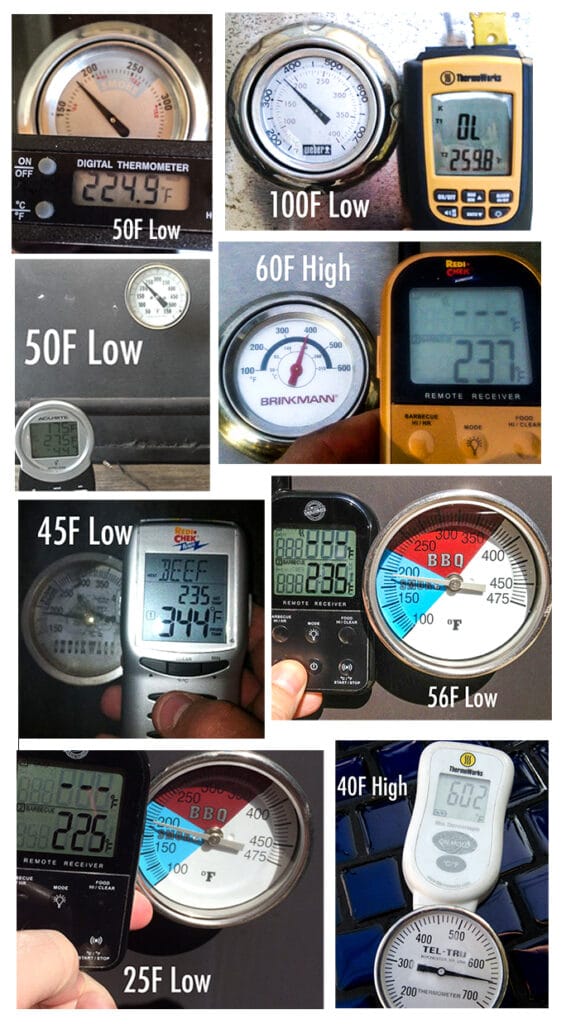
2) Don't ask me any questions that involve temp or time unless you tell me that you are using a digital thermometer! Bi-metal dial thermometers are often off by as much as 50°F! If you are not using a good digital you have no idea what the temp really is so I can't help you. If you are still using a dial thermometer, please read this article about thermometers, then buy a good digital, and then, if the problem persists (chances are it won't), hit me with your questions. Then, please tell me everything I need to know to answer your question. Like the type of cooker you are using. Remember, I am not a mind reader.

3) Please don't ask me "What grill (or smoker) should I buy?" Read my Buyer's Guides and the buying checklists and follow the links. I've shared just about everything I know. Pay attention to the awards I have given my faves. I cannot pick the right cooker for you any more than I could pick the right car or spouse for you.

4) If you have problems posting with Internet Explorer, please read this. If problems persist, send me a note.


Barbecue & Grilling Accessories


Important Info About This Website

AmazingRibs.com is all about the Zen of barbecue, grilling, and outdoor cooking, with great BBQ recipes and techniques: Barbecue baby back ribs, spareribs, pulled pork, beef brisket, steak, burgers, chicken, smoked turkey, lamb, barbecue sauces, burgers, steaks, rubs, and side dishes, with the world's best buying guide to barbecue smokers and grills. It is written, photographed, illustrated, and coded solely by Meathead.

AmazingRibs.com is published by AmazingRibs, Inc., a Florida Corporation.

Our philosophy about food is simple. First of all it must taste great. It must be easy to make and emphasize fresh seasonal products with a minimum of processed ingredients. We think that people need to know why as well as how, so we spend a lot of time explaining things, and we believe that there are no rules in the bedroom or dining room.

Gold Medal for barbecue & grilling awardAbout Product Reviews and Best in BBQ Gold, Silver, and Bronze Medals are highly recommended products. Awards are based on features, quality, and value. Rest assured that when we recommend a product, it is really because we like it, not because someone has paid us to say so or because the company is an advertiser or sponsor. We purchase most products we review although occasionally suppliers send us samples. We have always been transparent about when we are reviewing a product sample, even before the Federal Trade Commission Required it in 2009.

About links on this site. Other than clearly marked ads, links and recommendations on this site are all products, services, and websites we truly admire, and are never paid endorsements. Your suggestions are always welcome. If you would like us to link to your website, click here to read our links policy first.

Federated media Advertising on this site. AmazingRibs.com is one of the 100 most popular food websites in the US according to comScore, Alexa, and Quantcast. It is by far the most popular barbecue website in the world and pageviews double every year. Advertising on AmazingRibs.com is a great way to build your brand or make direct sales. I keep a strict wall between editorial and advertising, so, for current pricing and availability of prime space, contact my agency, Federated Media, by clicking the logo at right. Click here for analytics, stats, demographics, and advertising options.

Our Privacy Promise. AmazingRibs, Inc. promises to never sell or distribute any info about you individually without your express permission, and we promise not to, ahem, pepper you with email or make you eat spam. Click here for more details of my privacy promise.

Disclaimer. The information on this website is for educational purposes only. All material within comes without warranties of any kind. The authors are human and capable of mistakes, omissions, or errors, so we make no guarantees as to the accuracy, completeness, or safety of the information. Under no circumstances are we liable for any damages that result from use of the site (so you can't sue us if you don't like a recipe or if you burn your tongue on hot ribs, OK?).

Copyright © 2011 by AmazingRibs, Inc. Unless otherwise noted, all text, recipes, photos, and code are owned by AmazingRibs, Inc and fully protected by US copyright law. This means you need written permission to republish or distribute anything on this website. But we're easy. To get reprint rights, click here. Note: Some photos of commercial products such as grills were provided by the manufacturers and under their copyright.


Meathead the Barbecue & Grilling Lover Cartoon

Get Smoke Signals, my free eletter with tips and recipes. No spam. Guaranteed.


Save this link to
keep this site free!

http://tinyurl.com/3usxwaj

This link takes you to Amazon and tags anything you buy with a code so I get a referral fee. It works on anything from grills to diapers and it has zero impact on the price you pay. The best reasons to buy from Amazon are low prices, fast often free delivery, fair return policies, and often there is no sales tax. But clicking on that link before you shop helps me devote more time and money to you. Thanks!


Donate to keep this site free!

barbecue & grilling hatWith a $30 donation you'll get a 100% cotton brushed twill adjustable low profile cap with the AmazingRibs patch sewn on. I'll even toss in a small bag of BBQ'rs Delight wood smoke pellets. Click here for more info.


Hot Stuff Barbecue & Grilling Award
AmazingRibs.com Best in BBQ Gold Medal Winners

Here are three great products that have earned The AmazingRibs.com Best in BBQ Gold Medals. These are not ads!

GrillGrates Take You To The Infrared Zone

GrillGrates are the best new product I have tested in years and the best thing to happen to beef since salt and pepper. The base superheats, eliminates hot spots, and blocks flareups. This is the concept behind the expensive new infrared grills. A must for gas grills. Click here for more about GrillGrates.

barbecue grill grates

The Smokenator: A Necessity For Weber Kettles

If you have a Weber Kettle, you need the amazing Smokenator and Hovergrill. The Smokenator turns your grill into a first class smoker, and the Hovergrill can add capacity or be used to create steakhouse steaks. Click here to read more.

Weber Barbecue Smokenator

ThermoWorks Pocket Thermometer - No More Guessing

A good thermometer is why I never serve overcooked or undercooked food. This one has a very thin tip with a tiny thermocouple so it gives an accurate reading in just six seconds. I cannot recommend it more highly. It will improve your cooking overnight and pay for itself in a hurry. And it is inexpensive. Click here for more about thermometers.

barbecue & grilling thermometer
pastacheese barbecue & grilling ad

Advertisement


Big Poppas Smokers Grilling & Barbecue Ad