


“Gas or Charcoal?” The most frequently asked question since “Chicken or Egg?” The flame war between charcoal purists and gas hotheads burns brighter than the debate between Mac and PC users. You should read some of the slop slung on the barbecue message boards. On second thought, don’t. Let me try to sort it out for you with a few inflammatory thoughts.
Click Here To Search 600+ Reviewed And Rated Smokers And Grills
Grills are used mostly for three types of cooking:
1) High heat direct radiation cooking when the food is placed directly above the heat source for things like steaks. Usually there is no lid over the meat.
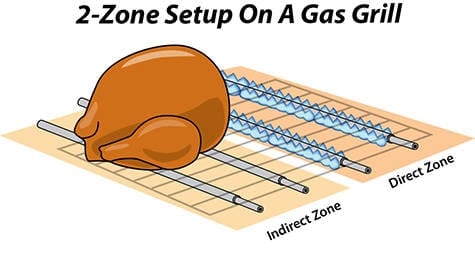
2) Indirect heat convection roasting for things like whole chickens and roasts when the heat source is off to the side and the food cooks by warm air circulating around it with the lid closed. Most folks never figure out this 2-zone method of cooking or the following
3) Indirect heat smoke roasting with the lid closed when the warm convection airflow is heavy with flavorful hardwood smoke.
Is there a taste difference?
Searing. Searing is the process of browning the surfaces of meats, especially steaks. When done properly there are chemical reactions, the Maillard reaction and caramelization chief among them, that create rich, complex, sweet and savory compounds on the surface. Searing also dries the surface making a satisfyingly crunchy crust. Despite what you have been told, searing does not seal in juices. And when it comes to steak, you want an even sear from edge to edge, no grill marks.
Most charcoal grills can usually easily outsear gas grills because they simply produce more direct infrared heat. A few gas grills, usually expensive ones, come with special sear burners that can do a good job of searing.
The most convincing argument for gas? Probably 90% of the world’s greatest and most expensive steakhouses grill their rare aged prime beef with gas. This is not just a matter of convenience or price. With the prices that steakhouses charge, they can afford any fuel they want. Why do so many use gas?
The main reason is that they want a dark all over sear and they can only achieve that with high heat. Many steakhouses use special broilers that can heat from above and below simultaneously at blowtorch temps. Restaurant gas broilers typically heat meat surfaces to 800°F to 1,200°F. Alas, regular burners on backyard gas grills can occasionally deliver temps in the 500°F range. Some gas grills come with a sear burner that can get up to 900°F or more on a small portion of the cooking surface. But most sear burners are narrow and can only sear one or two steaks at a time, perfect if you’re an empty nester, but if you’re hosting the graduation party you will want more real estate. A charcoal grill can lay up to 900°F on the surface of a lot of steaks at once. A major reason to go charcoal.
Your mileage may vary significantly depending on make and model and how you have it set up. It is very hard to tell how much heat a gas grill will deliver because the manufacturers only tell you BTU, British Thermal Units, used. It is a useless number. BTU is just a measure of how much gas is used, like mpg in a car. Not very helpful if you want to know what top speed is. The number you want is called the “heat flux” which is the BTU per square inch of primary cooking surface (the secondary surface, the warming rack is not included). You have to calculate this yourself in order to compare potential heat from one grill to another (although we do that for you in our Equipment Reviews database).
But temp is not the most important factor. Other than for searing, you rarely need high heat, in fact, as a rule, we cook most everything waaaaay too hot. I want you to learn to use the 2-zone system and hit 225°F or 325°F. Almost all my recipes call for one or the other of these two temps in the indirect zone. Rarely do I call for Warp 10. More meals are ruined by cooks who peg the dials for everything. Controlling temp on a gas grill is a lot easier, and temperature control is vital to good cooking, outdoors or in. And remember, for searing we want direct radiant heat which is different from the air temp.
The other difference between gas and charcoal is smoke. Smoke is a sapid byproduct of combustion, and the smoke from burning gas and charcoal are different. Charcoal makes more smoke than gas, with a broader range of tasty flavor molecules, because it is burning complex organic molecules, among them cellulose and lignin. Gas is a simple molecule, and when fully combusted, produces no flavor, just water and carbon dioxide. You can create smoke by adding wood to either fuel and a lot of smoke happens as drippings from the food hit hot surfaces below. Learn more about the subject by reading my article, The Science of Wood and Smoke.
A lot of the smoke happens as drippings from the food hit the hot surfaces below. Meat drippings are mostly water, fat, and protein, plus whatever you have added, such as marinade or sauce. When they hit the heat source they vaporize and some of that vapor condenses on the meat. Most gas grills cover the flame jets with metal plates, lava rock, or ceramic rocks. They protect the burners and absorb the heat and radiate it. But the food is not exposed directly to flame. Drippings may hit these radiant surfaces where they are vaporized, making smoke and steam, much like charcoal. Infrared burners that are very close to the meat put more vapors get back to the meat.
But smoke is not likely to significantly change the flavor of food that is cooked quickly such as hot dogs, burgers, or skinny steaks. On thick steaks, chicken, turkey, and thick cuts, smoke can make its presence known. If you use your grill for long low and slow smoke roasting, there is a more noticeable difference in flavor. The combustion gases from charcoal when mixed with smoke from wood chips or chunks makes a distinctive flavor typical of traditional Southern barbecue. On a propane grill, the flavor is milder and a bit more bacon-like.
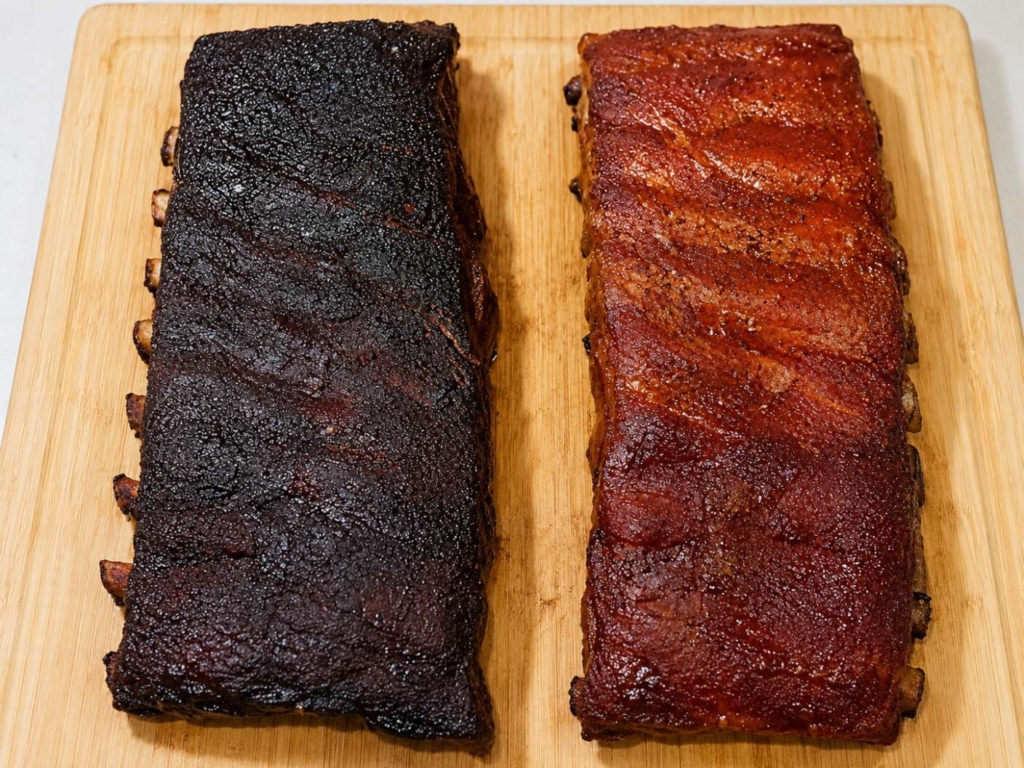
Above you can see two slabs of St. Louis cut ribs cooked at the same temp side by side with Meathead’s Memphis Dust only, no sauce. The one on the left was cooked with charcoal with wood chips for flavor. The one on right was cooked with gas and exactly the same amount of wood chips by weight. The charcoal ribs had a deeper smokier fireplace scent and flavor. The gas ribs had a better pork flavor with hints of bacon and they were moister. Which was better? Taste is a matter of taste. I loved them both.
But here’s another fact worth noting: Nowadays barbecue restaurants are springing up like mushrooms after a rainstorm and many of them are making incredibly good low and slow ribs, pulled pork, and beef brisket. The vast majority of them are using large smokers that use natural gas to produce their heat, and they burn logs for smoke.
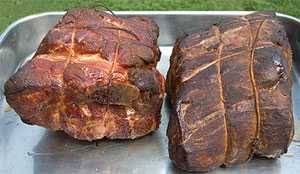
Notice how the colors of the two pork butts differ. Can you guess which is which? The one on the left was cooked on a gas grill. The other was cooked on a charcoal smoke. Both tasted great. The one on the left (gas) had a bit of a sheen and bright pink highlights. It tasted lively, with sexy bacon undertones. The one on the right (charcoal) was dull brown with dark edges. It had a heavier, husky fireplace scent and flavor, more like traditional Southern barbecue. I ended up mixing the two together!
There is one other flavor difference of note. If you use self-igniting charcoal or charcoal fluid to start a charcoal fire, there can be an unpleasant petrochemical smell during ignition and it can get into the food. For this reason you should use a charcoal chimney, a torch, or an electric charcoal starter. I strongly recommend the chimney because it is faster and easier and needs no outlet. Click here for an article discussing the best ways to start a charcoal fire.
The mercaptan myth. Because natural gas and propane are colorless and odorless a foul smelling compound called mercaptan is mixed in to alert people of dangerous leaks. We occasionally encounter the myth that cooking with gas imparts a foul taste and aroma due to the mercaptans. The AmazingRibs.com science advisor Prof. Greg Blonder calls this “A complete falsehood. When gas burns, the mercaptans turn into sulfur dioxide, which becomes sulfuric acid due to the water produced by combustion. The small amount of sulfur deposited on your food when burning gas is orders of magnitude less than naturally present in food, or added with garlic or onion powder in rubs, or found in the smoke from burning charcoal or wood. Natural gas is a very clean burning fuel.”
The AmazingRibs.com equipment reviewer Max Good says “No one turns their nose up at Grandma’s holiday turkey and homemade pie because she cooked with gas. Likewise some of the best barbecue restaurants use gas burners as do many of the best steak houses. Clearly this is nonsense.”
Charcoal grills: Pros and cons
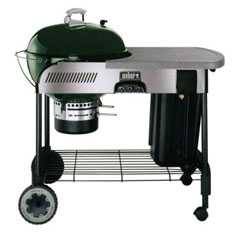
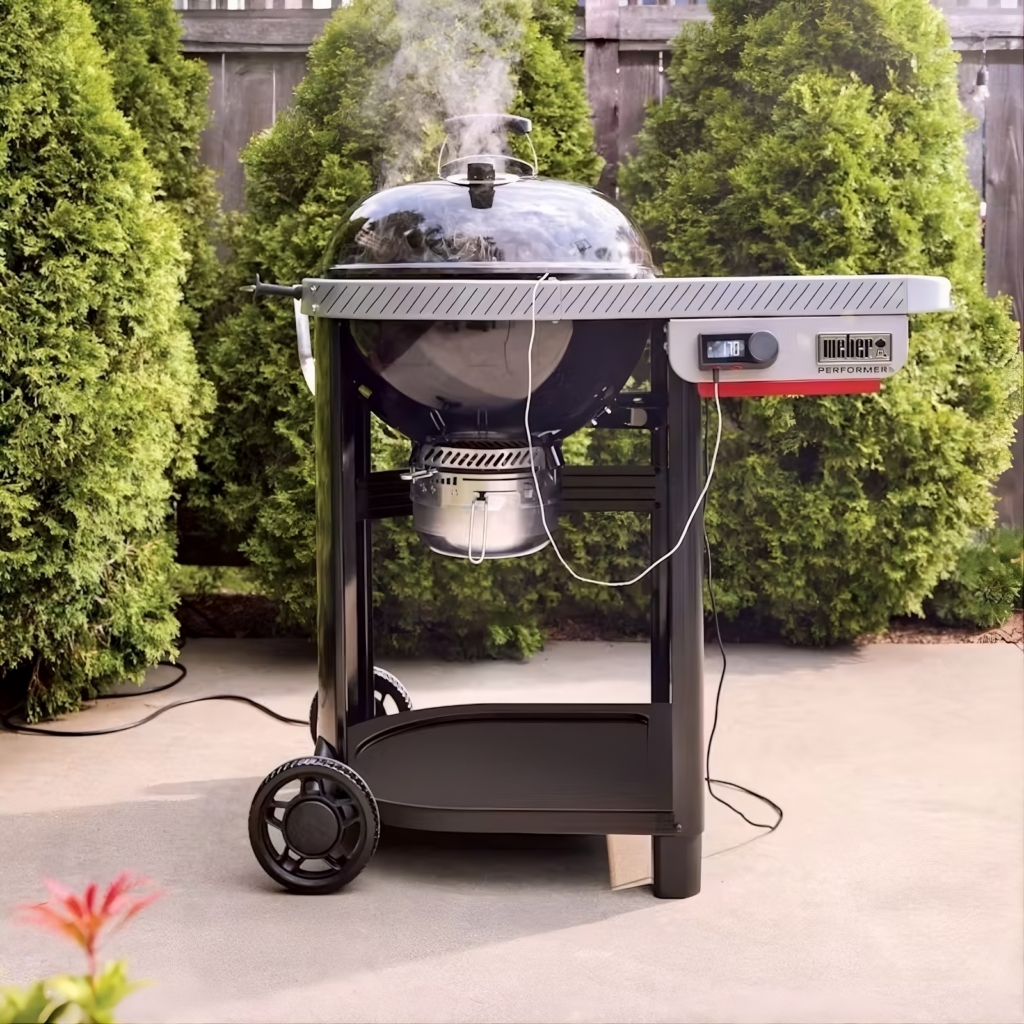
Why people love charcoal grills. Charcoal purists are passionate and border on rabid. They who would never ever never no how no way own a gas grill.
But as we have seen, from a taste standpoint, they do have a point. The best reasons to buy a charcoal grill is that charcoal can get hotter than standard gas grills without infrared burners, and heat is what you need to get steaks and lamb chops crisp on the outside while keeping them red or pink on the inside. In addition, charcoal, especially before it is fully lit, emits stronger smoke flavors that impact food more the longer it cooks. When fully lit and ashed over, and for short cooks like steaks and burgers, there isn’t a lot of smoke. But that smoke flavor is still soooooo gooooood.
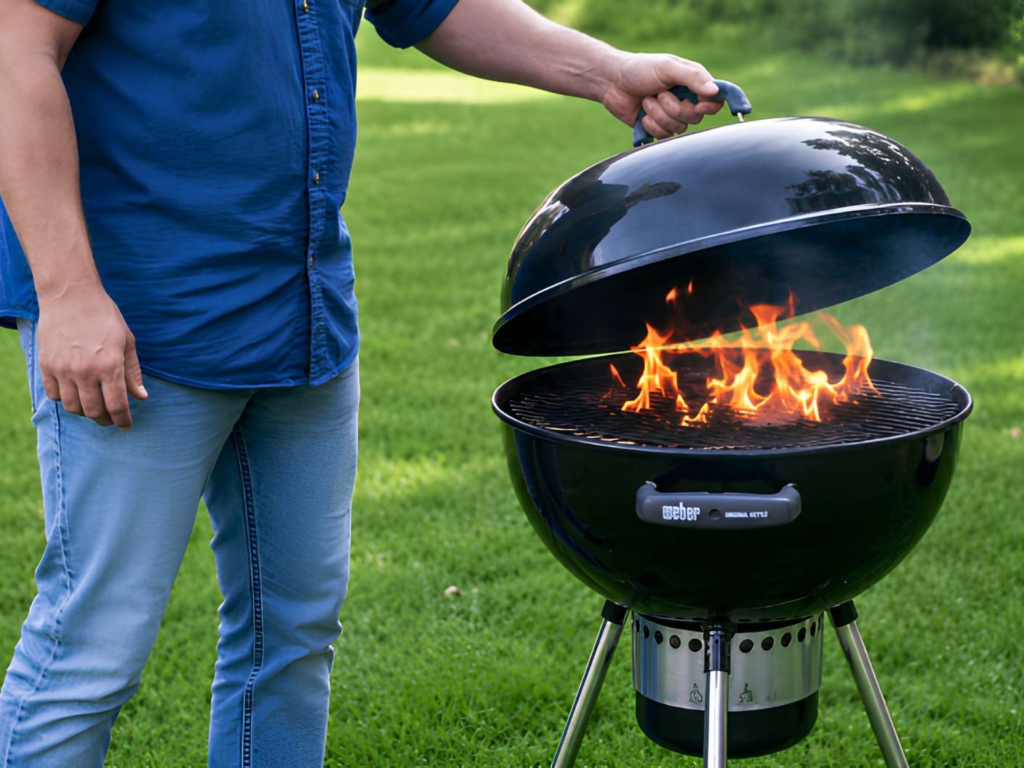
If you use a lot of coals or if the coals are raised close to the cooking surface, they can blast food with up to 800°F or more. When I get my hands on top quality lamb or beef, I use bricks to raise the charcoal grate on my Weber Kettle close to the meat, pile the coals deep, and the result looks and tastes as good as anything you can get at a white tablecloth steakhouse. My favorite charcoal grills, the Hasty Bakes, have a crank that let you raise and lower the charcoal bed, perfect for searing.
Why people hate charcoal grills. There is a slightly higher risk of fire when working with charcoal and for that reason many apartment buildings and local fire codes ban them from high rises. Coals and sparks can escape the grill by falling through vents or from chimney starters, and you may need water or a fire extinguisher to put them out. With a gas grill, you just turn a knob and the flame is dead.
Charcoal is dirty to handle; it can be hard to light; it takes a few minutes longer to get up to temp; there can be flare-ups that can burn the food and flareups may be a health risk; it is hard to tell what temp you are cooking at; the temperature cannot be turned down rapidly; during long cooks it slowly loses heat and you need to add more charcoal; if you don’t give it enough oxygen it can deposit soot all over your food; charcoal grills rarely have rotisseries; and there is ash to clean up after.
Most of these problems are easily surmounted if you know how: Careful handling can eliminate the fire risk, if you use gloves, shovels, or tongs, you need never handle raw coals. If you keep the charcoal dry and use a chimney, getting hot coals is easy. If you push the coals to one side of the grill and set up a 2-zone cooking environment, fatty meats like chicken skin do not drip on the coals and flare up, and even if there are flareups, a squirt gun can contain them. And cleanup of ash is easier with some of the one-touch grills or grills that have removable ash trays.
The most important part of any cooking, indoor or out, is regulating heat. To do that you need a reliable oven thermometer, and a little know-how that takes practice, patience, and persistence to acquire. Alas I have never seen a charcoal grill with a half good thermometer, and even then the excuse for a thermometer is usually mounted in the dome, not where it is needed, near the meat. The temp in the top of the dome can be very different at meat level, and I rarely plan on eating the dome, so measuring the temp there is just plain wrong.
Since charcoal grills do not have temperature dials to raise or lower temp, it is important to learn how to set up a 2-zone fire which helps you regulate heat by moving meat from the hot to the not so hot zone, and learn how to control the energy of the fire by closing off the oxygen intake vents. They are your temperature dials.
The bottom line. Flavor. Cooking with charcoal can yield superior results if you calibrate your grill, set it up properly, and practice. There is no substitute for doing dry runs without food. It is not intuitive and brainless, but there is little it cannot do when you achieve mastery, Grasshopper.
Yes, it is the flavor, but for me, a lot of the fun is the ritual and the thrill of playing with fire.
Gas grills: Pros and cons
Gas grills sales passed charcoal grills in 1994 and are now almost 60% of all grills sold are gas. It is easy to understand why.
Why people love gas grills. Gassers offer convenience and control. Those two words alone cinch the argument for many folks. They are easy to start, they heat up within 10 to 15 minutes, they hold temperatures steadily yet we can crank them up and cool them down rapidly, they can be configured for indirect and multi-zone cooking, and they are easy to clean. If it’s Tuesday, you’re late getting home from work, and you need those frozen burgers ready in an hour, a gasser can do it. Low to mid-price gas grills typically have a top end of about 500°F. More expensive grills with sear burners and double layered hoods can get up to 900°F or so.
Temp control. Although they excel at holding a steady temp, they are not perfect. A dial setting of one may equal 275°F on a 70°F day, but it can be 225°F on a cool, windy, or rainy day. Or 300°F on a hot day. But once you get to know your instrument, it is pretty easy to manage and if it has two or more burners it is easy to have two or more heat zones. On a three burner grill you might use a hot zone for meat, a medium zone for veggies, and a low zone for holding finished foods. The heat diffusers above the burners are pretty good about preventing flareups, too.
Temperature measurements are very misleading because the air temp above a piece of meat, in the heat shadow, will be a lot lower than the actual temp delivered to the underside of the meat if it is sitting directly above the flame. And because most manufacturers mount the thermometer well above the cooking surface it is even more misleading. If you have the left side on hot and the right side is off for a good 2-zone setup, and the worthless dial thermometer that came on your grill is in the center, it is averaging of the temp of the two zones giving you a meaningless number. You really need a probe clipped to the cooking surface next to the food you are cooking. I recommend in the strongest possible terms that you buy a good digital oven thermometer and a good digital meat thermometer. Click here for my Buying Guide to Thermometers.
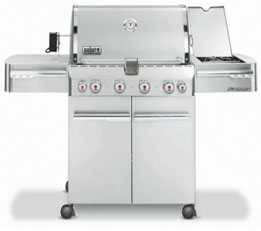
Easy cleaning. Cleanup is easier because there is no ashand drips are usually vaporized. But gas grills can suffer from carbon and grease buildups below the burners that need to be scraped or pressure washed every few months. It is not uncommon for this grease to catch on fire and it is very difficult to put it out without a fire extinguisher. There are also gas jets and venturis that can clog. Spiders seem to like to hide down in the tubes, and I have even had to dig a wasp’s nest out of one.
Some people discard the lava rocks or ceramics every year. My brother-in-law makes the world’s finest swordfish on a crappy old gas grill with lava rocks he has been using since they were harvested in the last ice age. Some of his lava rocks have begun to disintegrate and there are gaps where bare flame slips through to lick the meat. I have never been able to come close to his swordfish on all my fancy toys. Click here to read about how to clean, maintain, and troubleshoot your grill.
Rotisserie. Most gas grills have rotisserie kits as an option and this is a fine, but underutilized method of cooking producing evenly cooked moist meat. Few charcoal grills have rotisserie kits.
Accessories. Gas grills usually offer a wider range of accessories. Many come with side burners so you can keep sauces warm or cook side dishes. You can get night lights, side tables, spice racks, storage drawers, bottle openers, and there’s probably even one with a iPod player. GrillGrates, a special replacement grill grate system, can be added to most any gas grill and can significantly improve the cooking characteristics.
Smoking. Some high end gas grills also have smoke boxes for wood chips, but for most gas grills you need to make foil packets or put pans of wood down under the cooking grate near the flame. Even though it is not recommended, I often throw large chunks of aromatic woods right down near the burners on my gas grills. Alas, most gas grill lids do not seal well, so a lot of the smoke is lost and more wood is needed than on a tight grill.
Safety. Gas is explosive. It can be dangerous if you don’t handle it properly. ESPN host Hannah Storm was severely burned when she tried to ignite her propane grill after the wind blew the flame out. Unbeknownst to her, the gas continued to course through the jets and pooled in the lower chamber because it is heavier than air. When she hit the spark button, it exploded in her face. Windblown flameouts happen on some grills but it is hard to predict which grills are susceptible to the wind. But gas remains slightly safer than charcoal because there is little or no way for sparks or hot objects to escape. If there is a problem, just turn a knob on the tank.
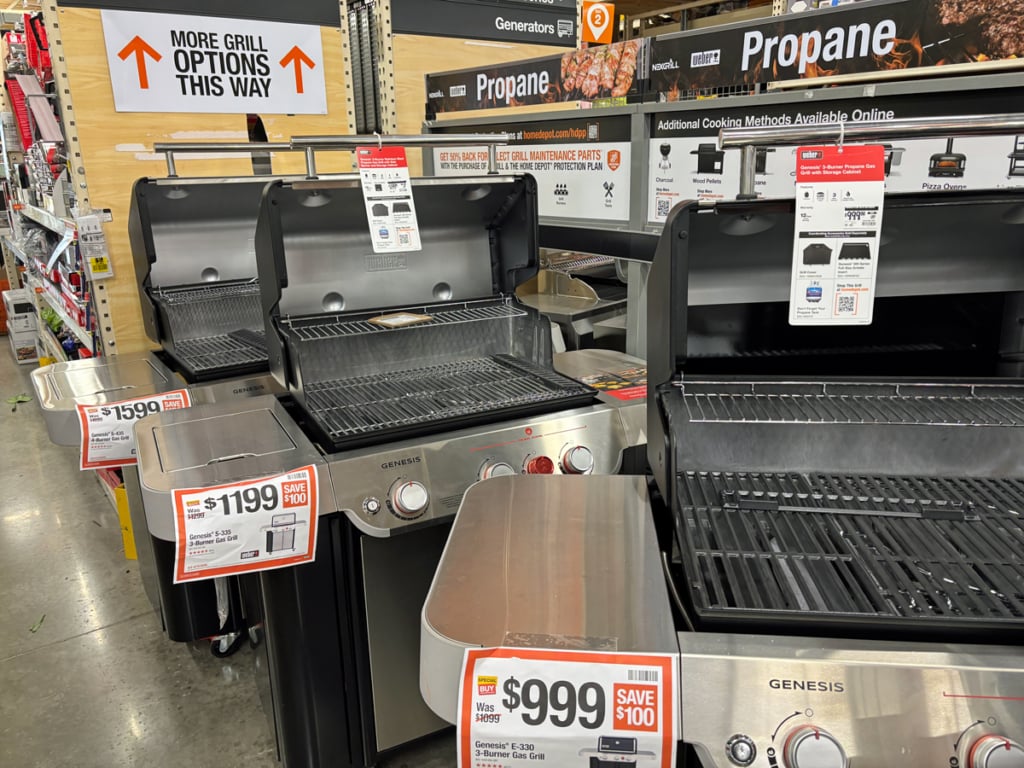
Price. Because the mechanisms are more complex, gas grills tend to be more expensive than comparable charcoal grills, assembly of new gas grills is more complex than charcoal grills, and there are more parts to break and be replaced. As for fuel cost, it is hard to compare the two. Charcoal is often on sale, especially in spring, and propane fluctuates with petroleum prices. Either fuel is inexpensive compared to the food.
Environmental impact. Propane is a petrochemical that has to be extracted from wells. Charcoal is made from sawdust from saw mills that would otherwise be wasted. Gas produces invisible smoke but it does produce smoke and gases. Charcoal produces white smoke, especially when igniting.
Types of gas. With gas grills you have your choice of liquid propane or natural gas. 15 pounds LP comes in 20 pound steel tanks. If you have an LP grill you should always have a full backup tank on hand. Nothing is more annoying than setting a chicken on the grill, hopping on the lawn mower, and returning in 30 minutes to discover that the tank ran out and the bird is still raw.
Natural gas is mostly methane. It must be delivered to the grill by a pipeline from your house so a certified contractor will be needed to do the installation and the grill must be parked in a permanent location. Propane grills cannot be hooked up to natural gas without an adapter kit and the regulator may need to be adjusted. Some grills come with adapter kits, some sell them as options, and some cannot be adapted. Natural gas is cheaper than LP gas and you never have to worry about running out, unless you don’t pay your gas bills.
Click here for more on what to look for when shopping for a grill and click here for more on what to look for when shopping for a gas grill.
Which to buy?
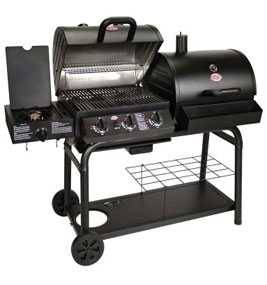
Which to buy? I have both gas and charcoal. Almost all my birds, fish, veggies, pizzas, and breads go on my LP gas grills, almost all my red meats and smoking is done with charcoal.
If taste is paramount to you, then go charcoal. If ease of use is paramount, go gas. Or best of all, get both. In your kitchen you likely have both a conventional oven and a microwave. They serve different functions. Ditto for the back yard. Get one of each.
Or you could buy one of the new combo grills that do both, but the ones I’ve seen so far do neither function properly. But I’ll bet we see better combos in the future.
Either way, before you make a purchase, read my article on How to Buy a Grill and poke around in our searchable database paying close attention to the reviews and awards.
I’m waiting for the sixto. Charcoal, wood, pellets, gas, infrared, and microwave! With a side burner!
There are other fuels
There are other contenders that we did not include in this grudge match:
Whole logs work similarly to charcoal, but logs are not readily available in many places, and working with them can be tricky.
Wood pellets made from compressed sawdust are rapidly gaining in popularity, and although they are thermostatically controlled and superb smokers, they are not very good at direct radiant high heat grilling.
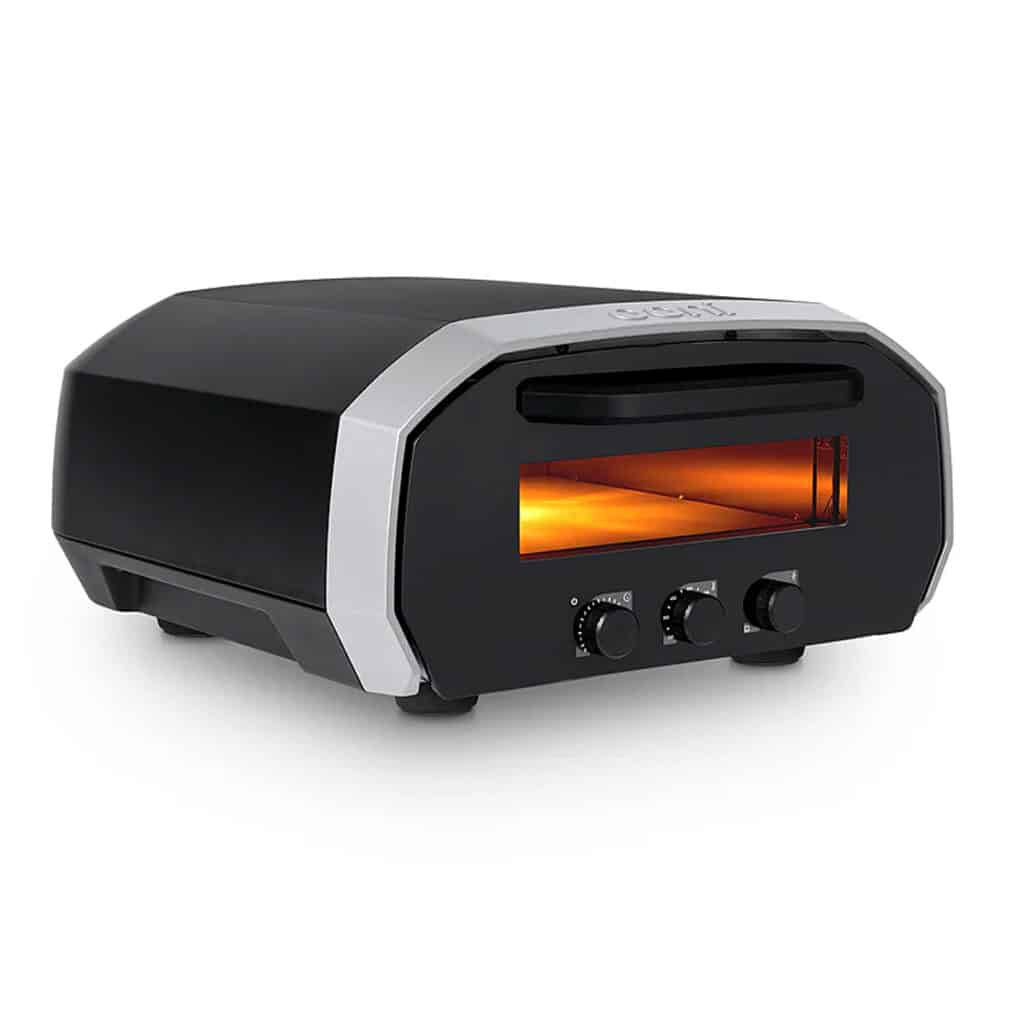
And then there are electric grills, which do not get as hot as either charcoal or gas, and because there is no combustion, do not produce smoke
To learn more about these methods, click the links, but for this day, we’ll let gas and charcoal duke it out and the others will have to watch the fight from ringside.

Before you can post a comment or question you must sign into our commenting partner, Disqus. This helps make sure everyone hanging around the grill is civil. We do not tolerate nastiness, racism, porn, inappropriate language, or attacks on others. All comments are the property of AmazingRibs.com and we reserve the right to quote them, edit them, delete them, and block people from making future comments.
Please leave comments and questions on the same page that is devoted to that subject so others can see questions and our answers when they are reading about the subject. You must enable JavaScript to use the comments section, and you must accept cookies to post comments. Note: the software that runs Disqus is different from the Pitmaster Club, so members need to sign into the Pitmaster Club separately.