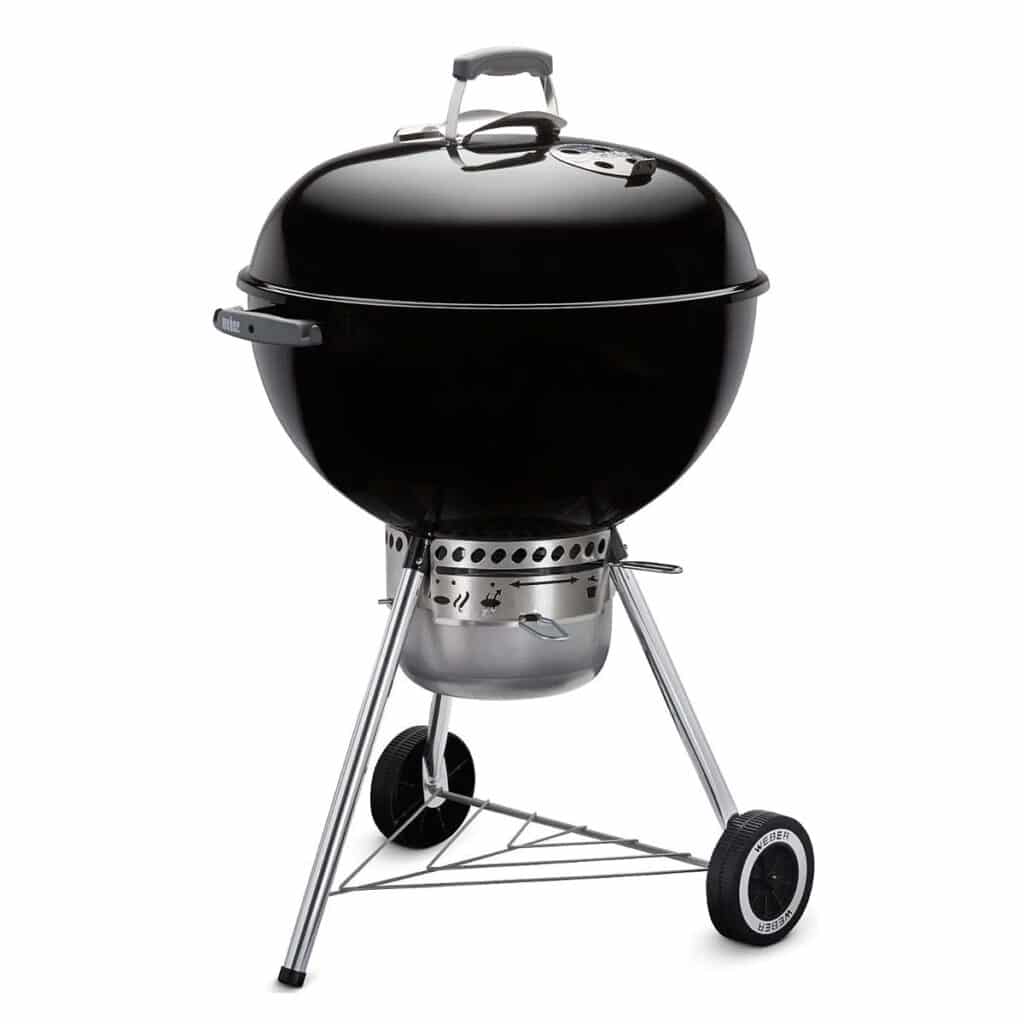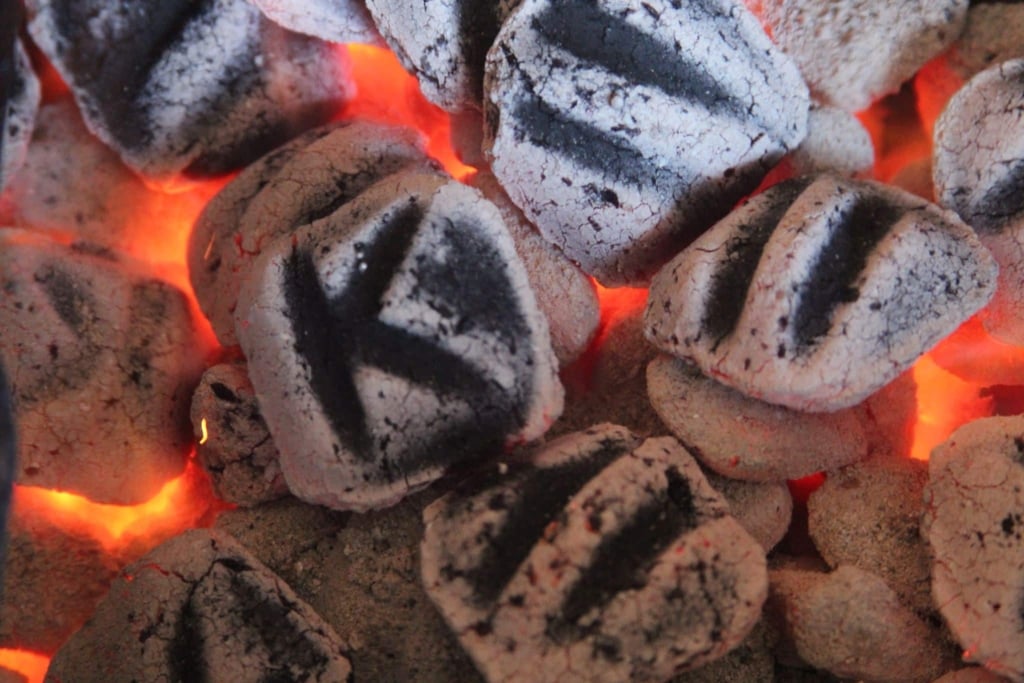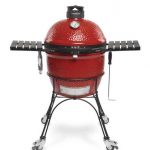


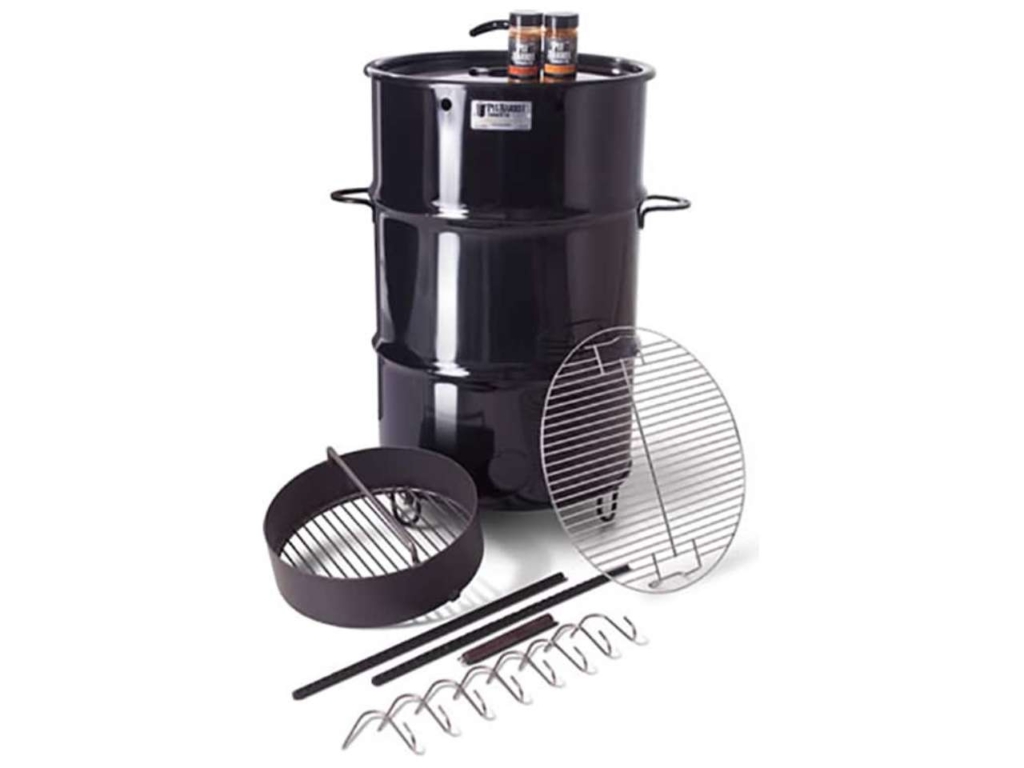
You can make damned good smoked meats on an all-purpose charcoal grill (click here for tips) or gas grill (click here for tips). But to make the most amazing ribs, salmon, bacon, pulled pork, turkey, you need a specialized smoker so we are here to guide you through how to buy a smoker.
With a high quality modern barbecue smoker, and a little practice, you can make food better than the ribs, brisket, etc. holding in the warming ovens of restaurants. With a good modern smoker you no longer need to hover over your machine for five hours, constantly monitoring the temp, fiddling with the dampers, shoveling coal, adding wood, and spritzing your meat with a mist of secret moisturizer. With a good smoker you can get your food on the table on time and without fear that it is over-cooked (an expensive waste) or under-cooked (dangerous). Here is a checklist of what to look for before you buy, and of course, you can read reviews of individual devices in our equipment reviews and ratings database.
Price. What is the bottom line for back yard tools? Prices range from $100 for cheapo charcoal cookers up to $10,000 for all-in-one smoker/grill combos. You usually get what you pay for. You can get a nice gas unit for under $200, a good charcoal unit for about $300, and a nifty pellet smokers start at about $600.
Temperature control is the most important thing to look for. Delivering the meal on time is more important to your spouse and guests than paying homage to your heritage by digging a pit and setting George Washington’s cherry tree ablaze. That’s why, first and foremost, you should look for a smoker that makes it easy to control temperature. The problem is that damn few outdoor ovens have that most basic standard equipment feature on every indoor oven: A thermostat. The exception of note is pellet smokers. Better models have a highly reliable thermostat. Pick a number and set it, forget it.
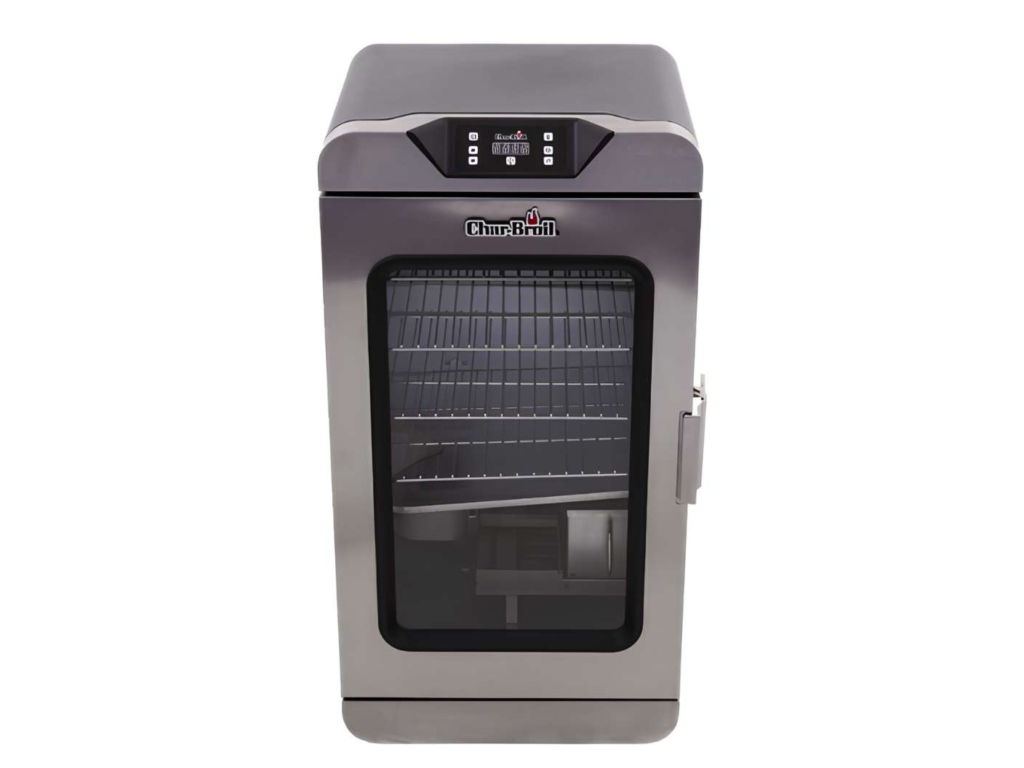
Electric smokers have thermostats, and food cooked on an electric can be wonderful, but, frankly, for most foods, the flavor is inferior to wood, charcoal, and even gas.
Some charcoal smokers make it easy to control temp, and if you want to make it really easy, there are third party thermostat add-ons that really work. The fanciest can be driven from your smart phone from miles away.
Gas smokers produce great flavor, they are fairly easy to set and forget, and they are cheap.
If you dream of competing on the barbecue contest circuit, you must cook with wood or charcoal. Most competitions don’t allow electric or gas smokers. They’re too easy. The notable exception is South Carolina where gas and electric cookers are allowed. For competitions, the easiest way to go is with a pellet smoker which are legal because the fuel is wood, even though they need electricity to control the feed mechanism and thermostat.
Thick metal, insulation, and seals. Thick steel absorbs heat and distributes it evenly around the cooking chamber and then radiates it back. It moderates fluctuations. The best smokers are heavy from thick steel. Better smokers have doors and dampers that close tightly. Cheap units leak. Your heat and smoke escape. And that makes it hard to stabilize temperatures and manage the amount of smoke flavor. Leaky smokers can still produce great food, but the results are just a bit less predictable. So study the insulation, seals, welds, and thickness of the metal before you buy.
Materials, workmanship, and durability. How are the welds? Does it have sharp edges? Sturdy legs and wheels? Big hinges and latches? Is the paint going to remain waterproof and rustproof? Do the moving parts look like they’ll last? Will the screws rust? Is there a lot of plastic? Stainless steel looks cool, but is not always the best choice. Click here for more thoughts about stainless steel.
Even heat. Sometimes there is a large difference in temp in the unit, especially with offsets where it can be 50 to 75°F hotter near the firebox than on the opposite side. Is the temp the same at the top as at the bottom in the cabinet or bullet?
Thermometer. Make room in your budget got a high-quality thermometer that you can place at grate level, where the food will go, not high in the lid. You also want something that has a probe that can be moved from side to side. If you buy one of those long offset smokers, you need two thermometers at grate level because the temp on the left and right can be very different. The sad fact is that most grill and smoker builders skimp on thermometers and they are usually totally unreliable. I have seen them off by as much as 50°F. Click here to read my buying guide to thermometers.
Temperature range. Can you crank it to 325°F for cooking turkey? Can you get it to 500°F over direct heat for searing a steak or sizzling and caramelizing sauces?
Dampers. With wood and charcoal cookers, you will control the heat by cutting back on the oxygen supply to the fire. To do this, you need to have a damper on the firebox and another on the chimney. Make sure they are easy to reach and operate and that the seal tight when closed.
Accessories. Does it come with tools? Tool hooks? Does it come with a cover? Will it last more than a week? Can you leave it uncovered without it getting wet inside or rusting? Most eggs offer deflector plates, extra racks and other add-ons. Better offsets may offer deflector plates that help you tune the heat distribution, counter weights that make the heavy lid easier to open, and baskets to hold the charcoal. One pellet smoker company even sells a solar panel and battery pack!
Work surfaces and storage. Some cookers come with built-in tables and other work surfaces. You need these to put tools on, sauces, cutting boards, mitts, etc. The more work surfaces, the better. Some cookers also come with storage bins and cabinets for wood, tongs, etc. These are nice.
Warranty and support. What kind of warranty and/or guarantee does it come with? What is the dealer’s reputation? Is there a phone number and email for tech support? Is the website informative? How about the manual? What if you need parts? How long have they been in business? Will they have parts in five years?
Safety. It must be child and pet safe. Are electrical parts safe from rain and snow? Do wheels lock? Are handles cool? Wood handles disintegrate. Coiled stainless steel handles are the best because they last and disperse heat easily so they remain cool.
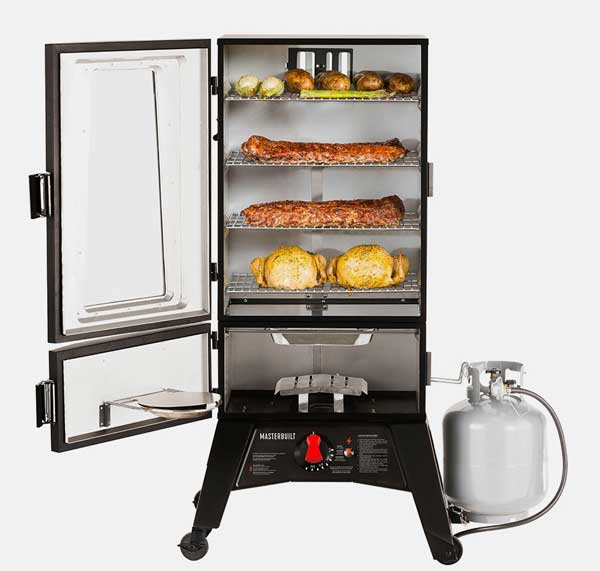
Access. Look for easy access to the firebox to add fuel if you buy a charcoal or wood smoker. If you use chips, chunks, or pellets for smoke, you will need easy access to the place they go to smolder. Most important, you want easy access to the food to move it and check its temp. Front-loading, cabinet-style smokers give you much easier access to all shelves than top-loading bullet-style smokers.
Capacity. If all you cook is an occasional slab of ribs for you and your spouse, then a small bullet will do the job. But if you throw an annual Fourth of July party, you may need more capacity.
Footprint. Don’t forget that you need plenty of space around your smoker so you don’t set something on fire and because ventilation and airflow are important. A bullet shaped smoker will only take up a space of about 3′ x 3′, allowing for a little space around it. That means it will fit on a balcony. On the other hand, a small offset can take up 12′ x 5′ with space around it.
Wide enough for long slabs of ribs. Some slabs can run up to 16″. If the racks are narrower you may have to trim the slab or cut it in half. They’ll still taste good, but the edges tend to get a bit overcooked so there will be a bit more overcooked meat if you have to cut slabs in half. If the shelves are square or rectangular, measure the diagonal.
Tall enough for large turkeys. You will want enough interior room to smoke a turkey, so make there is enough headspace between a rack and the top of at least 12″.
Wheels. You may want to move the thing when you set it up, perhaps to store it over the winter, so it should have wheels or it should break down easily. If it has wheels, how sturdy are they, and are they large enough to roll smoothly on a rough surface such a deck, concrete, pavers, or the lawn?
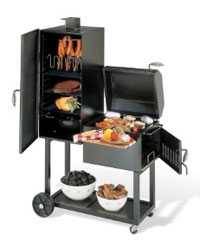
Grill. Some offsets have a rack that allow you to use the firebox as a grill like the Char-Broil Bandera shown here. Some bullets can be easily converted to a grill by removing the water pan and the center section. This is a nice feature. If there is a grill, can you control the heat? Can you move the fire closer to or away from the meat or move the meat closer to or further from the fire?
Movable shelves. It’s nice to remove shelves to adjust the interior configuration so it can handle large slabs of ribs, half slabs, or pork butts and even large objects like turkeys. Removable shelves also make cleanup easier.
Can you add fuel, wood, water, and check the meat easily? A good smoker should allow you to add charcoal, wood, and water easily. This can be a real problem with bullets and cabinets.
Water pan. Many smokers, especially bullets, have a pan that is placed above the heat source. You can fill it with water, beer, wine, herbs, but water is all you should use. The liquid moderates the temperature fluctuations in the oven. The moisture raises the humidity in the unit and helps keep the meat from drying out while the aromatics penetrate the meat, adding subtle flavor. It also condenses on the meat helping smoke stick, and it mixes with combustion gases improving flavor. Water pans or the ability to add a water pan are important. The bigger the better.
Drip pan. Fats and other fluids often drip from the food. Sometimes it is nice to have these liquids fall onto the fire and create steam and smoke. Sometimes it is nice to gather the drippings for sauces (see my Ultimate Smoked Turkey recipe for an example). Most of the time we just want to get rid of drippings, and a good smoker should have a way to collect them for disposal. The water pan often doubles as the drip pan.
Easy cleaning. Cleaning the exterior is optional. But cleaning the interior is not. If you invest in a shiny stainless-steel exterior, you’ll probably want to cover it between uses and polish it so that it shines brighter than Uncle Bill’s bald head. If you don’t want the hassle, get the black finish and don’t worry if there are bird droppings on it. The inside is another thing altogether. When you cook, fat, seasonings, and juices will drip off and splatter. They can become breeding grounds for bacteria and burning rancid grease can make your food unpalatable. Cranking the heat up will kill most everything, but you still want to clean out all surfaces that come into contact with the meat. That means grates. Stainless is easiest to clean, chrome plated grates will wear out with time and then rust. You don’t want to put these things in the dishwasher. The grease will coat everything in there and never come off. Can you hose down the interior? How easy is it to remove ash? Will water get into the insulation or electronics if you hit it with a hose or power washer? Before you buy, study the unit and ask yourself how you will clean it and if you are willing to do the work. If not, then you won’t, and you’ll be wasting your money.
Bottom line. Don’t buy on looks. Don’t buy crap. Buy something that will last and that is easy to control. Otherwise it will be in the trash within a year.