


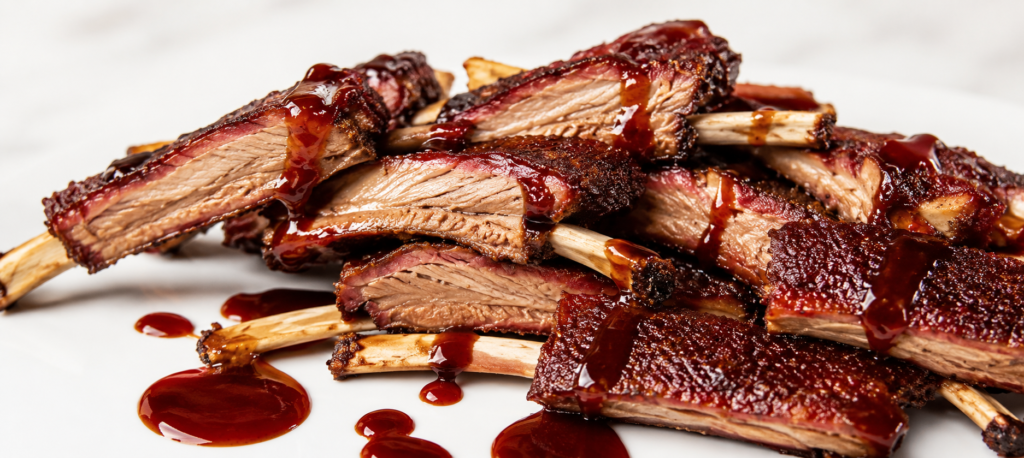
This recipe for dinosaur-sized BBQ beef ribs will surely wow the crowd at your next cookout!
Just how popular is this BBQ beef rib recipe? So much so that people make pilgrimages from all over the world to the tiny dusty town of Taylor, TX, home to 15,000 people, the National Rattlesnake Sacking Championship, and a classic old American pit stop, Louis Mueller’s Barbecue.
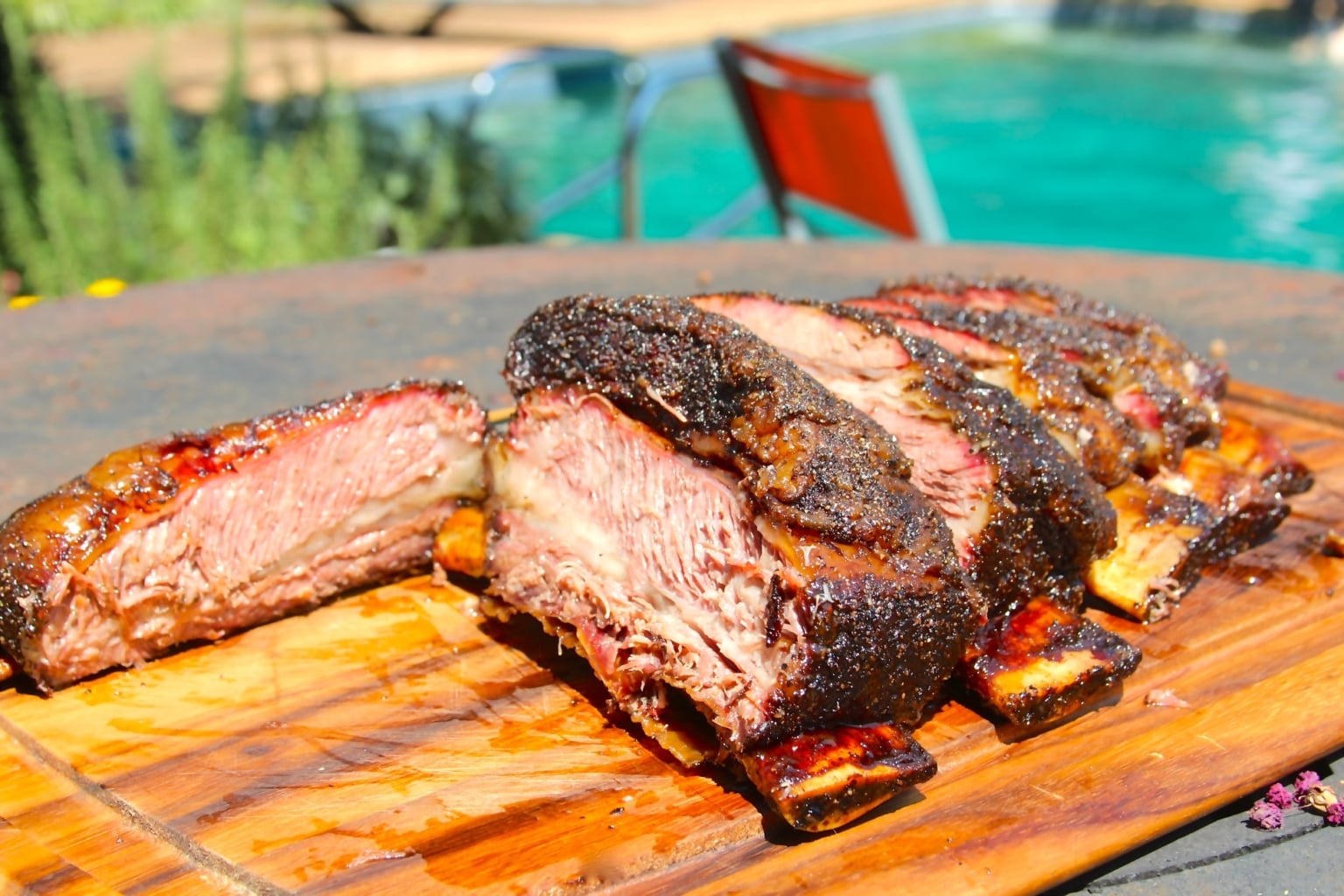
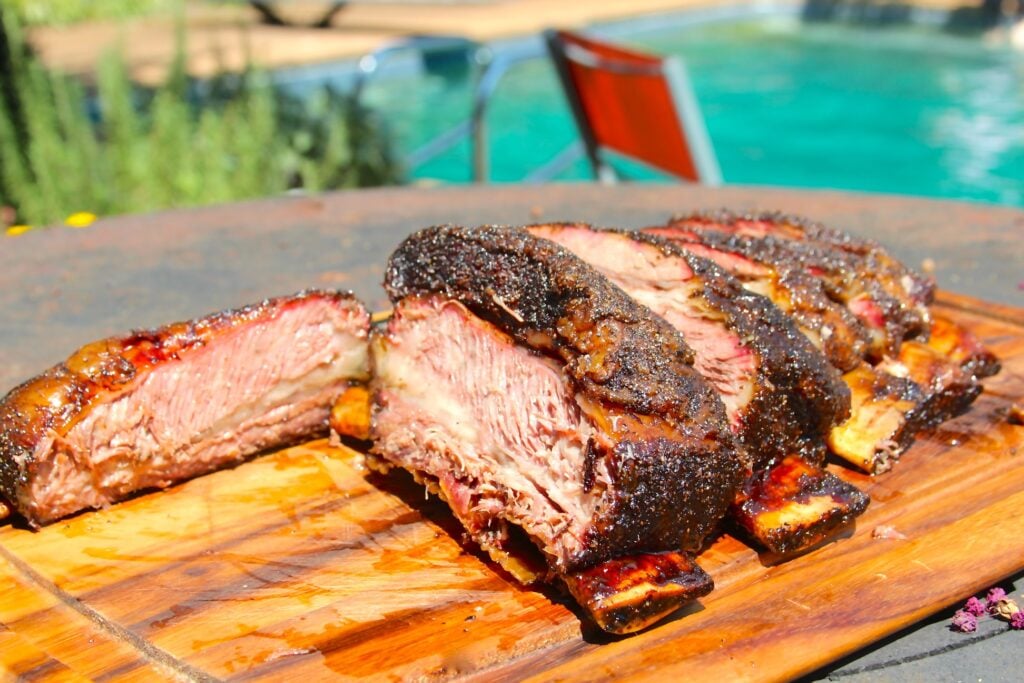
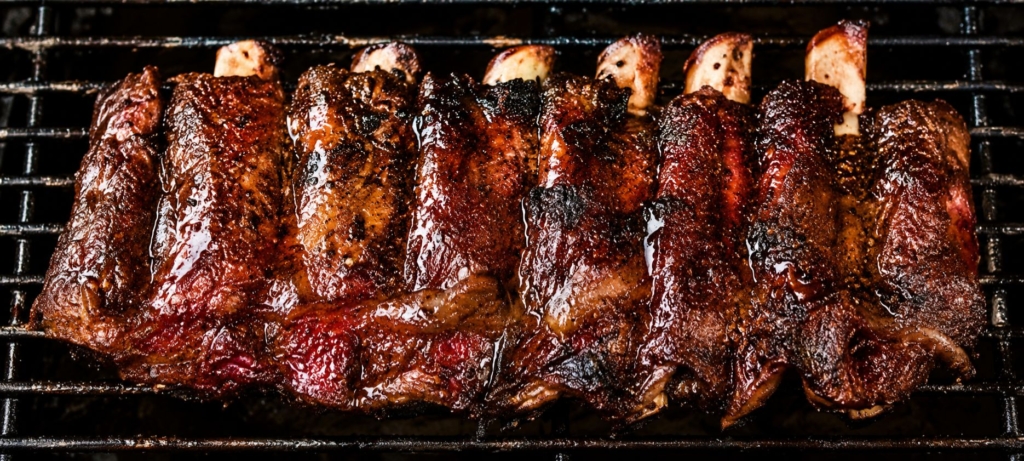
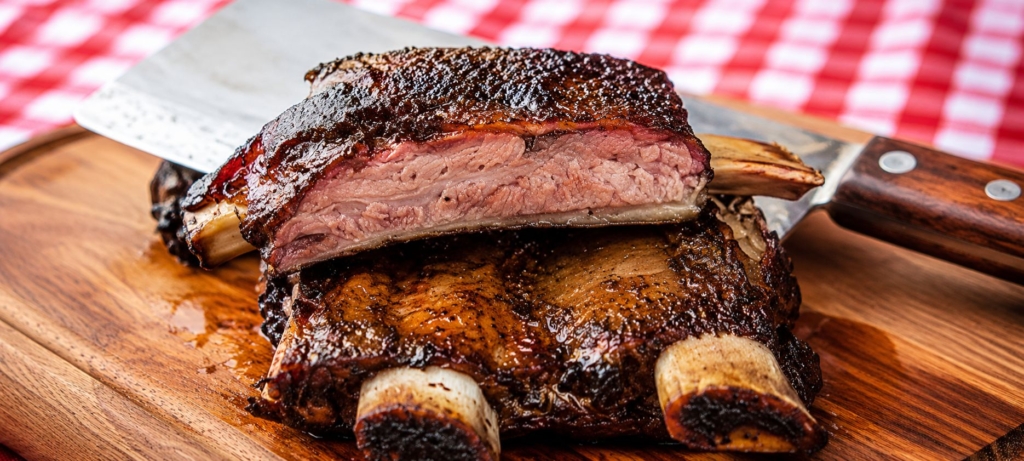
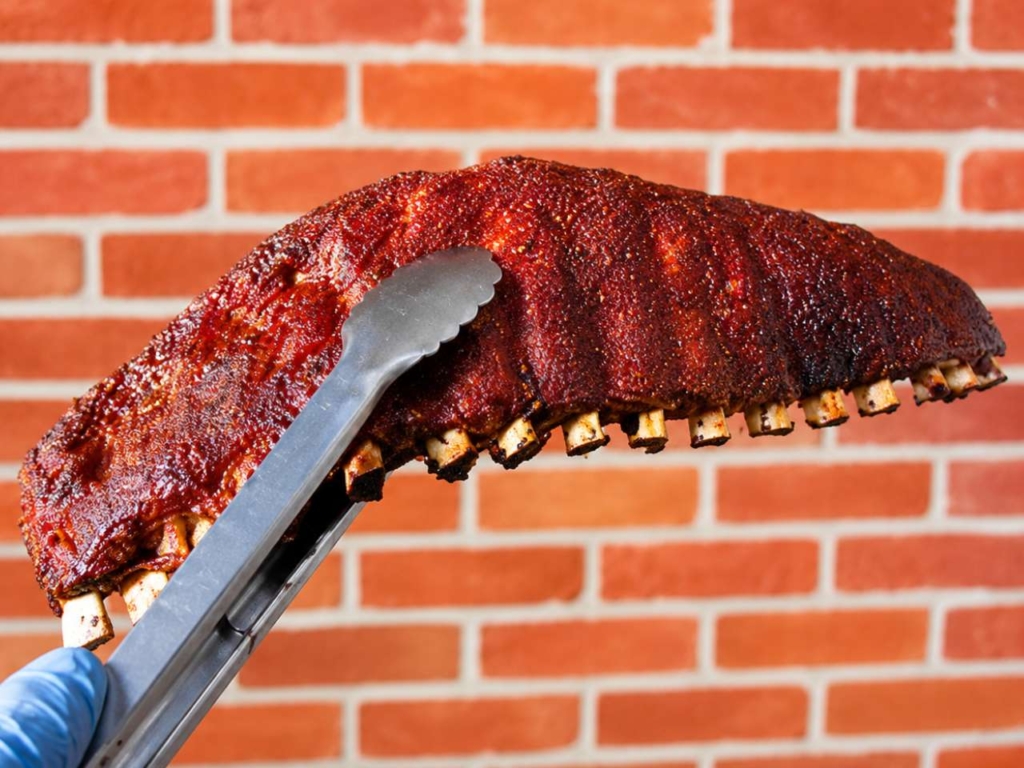
More than a few wayfarers come to Taylor just to worship the BBQ beef ribs at Mueller’s. The technical butcher name for this cut is “beef short ribs,” but these bones are not short. They run 6 to 8 inches long, the meat on top can be as much as 2 inches thick, and an individual bone with meat can weight up to 1 1/2 pounds raw! When cooked nice and slow, these “Dino Ribs” ribs come out tender, juicy, and infused with the flavor of wood smoke.
Get cooking now with our authentic Texas-style smoked BBQ beef ribs recipe.

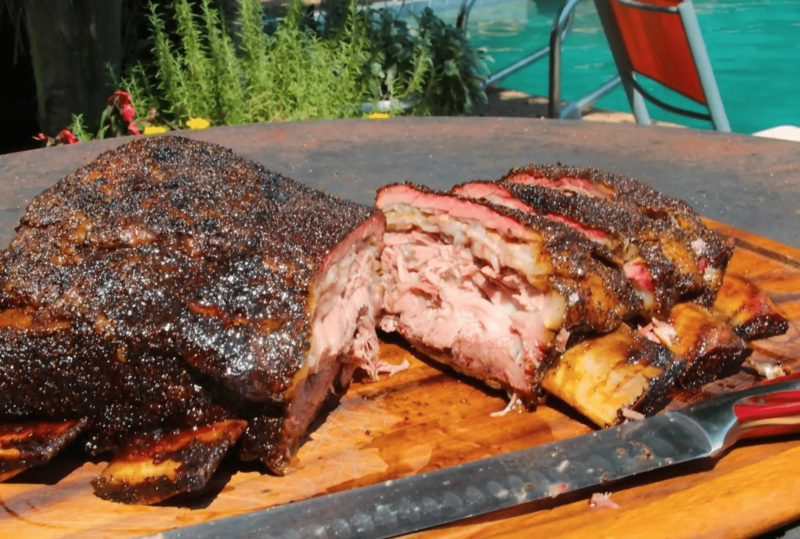
Authentic Texas-Style Smoked BBQ Beef Ribs Recipe
Makes
About 4 pounds (1.8 kg) edible meatIngredients
Method
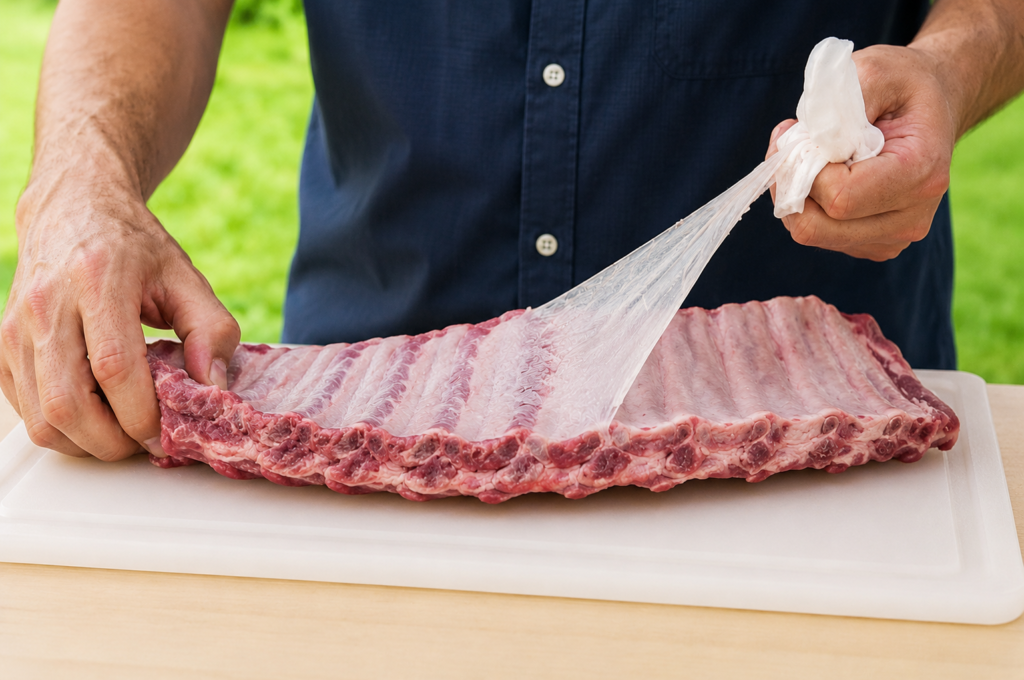
- Prep. Begin by removing the fat and the very tough silverskin from the top of the meat. All of it. It will not melt and penetrate. No need to remove the membrane from the exposed side of the bones as you do with pork ribs. If you do the meat can fall off. Then cut slabs into individual bones or double bones if they did not come cut up. You can cook them in a slab, but they take a lot longer, and for Texas style, I like to expose more surface to heat to tenderize and develop brown Maillard reaction flavors. I prefer to cut them into two bone sections. Inevitably some bones in a package have little meat and lotta fat. Trim them anyhow and cook them.
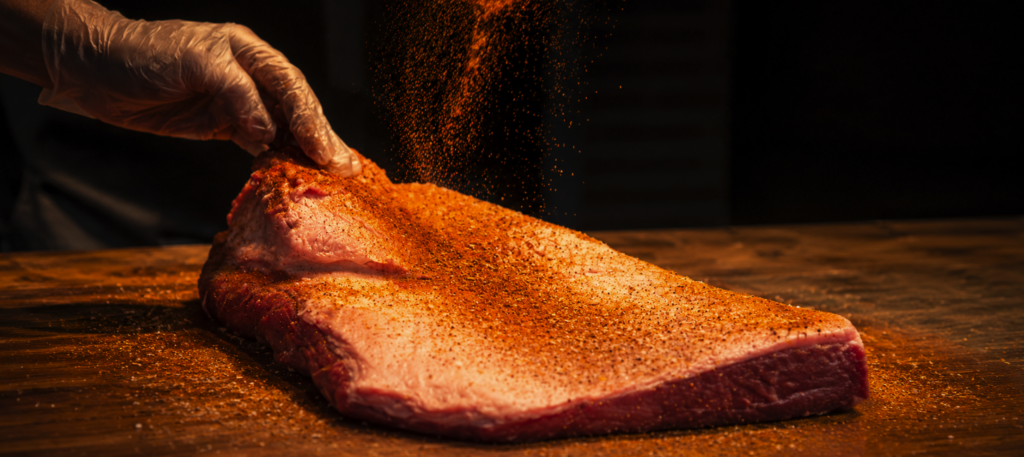
- Salt the meat in advance, up to 24 hours. This is called dry brining and it is important for water retention (juiciness) and flavor enhancement. Just before cooking, wet the surface of the meat lightly with water and flavor the meat with my Big Bad Beef Rub. Most commercial rubs are primarily salt: avoid them. While you may be tempted to use my recipe for Meathead’s Memphis Dust, don’t: it’s perfect for pork, but too sweet for beef. Sprinkle the beef rub on the tops and sides, and coat the meat generously.
- If you wish, you can tenderize the meat with a meat tenderizer such as Jaccard. The narrow blades sever long tough strands and do a pretty good job. I normally do not recommend this tool because, if there is contamination on the surface of the meat, the blades can drive the bugs into the center and they will not be killed at 130°F (54.4°C), medium rare. But at 165°F (73.9°C) the meat is pasteurized through and through and you will be cooking this cut to more than 200°F (93.3°C).
- Fire up. Setup your cooker for indirect cooking and preheat to 225°F (107.2°C), hot enough to kill bacteria but not too high to evaporate all the moisture.
- Put the meat on the indirect heat side of the grill, bone side down, and add the wood. Oak is traditional in Texas and it makes sense because it is mild, but other woods work fine. I like cherry. As always, go easy on the wood. Too much smoke will ruin the meal. Add no more than 2 to 4 ounces (56.7 to 113.4 g) on a tight cooker, double that if it leaks a lot. Put the lid on. You will not need to add more wood and you will not need to turn the meat over.
- The exact length of the cook depends on variables such as the composition of the meat (each steer is different). As an estimate, 1"- (2.5 cm-) thick meat should hit 203°F (95°C) in about 5 hours; 1.5-inch (3.8-cm) thick meat should hit 203°F (95°C) in about 7 hours; and 2-inch (5.1-cm) thick meat should hit 203°F (95°C) in about 10 hours.
- Despite what you may read elsewhere, skip the Texas crutch. Wrapping it in foil or butcher paper can turn it to pot roast.
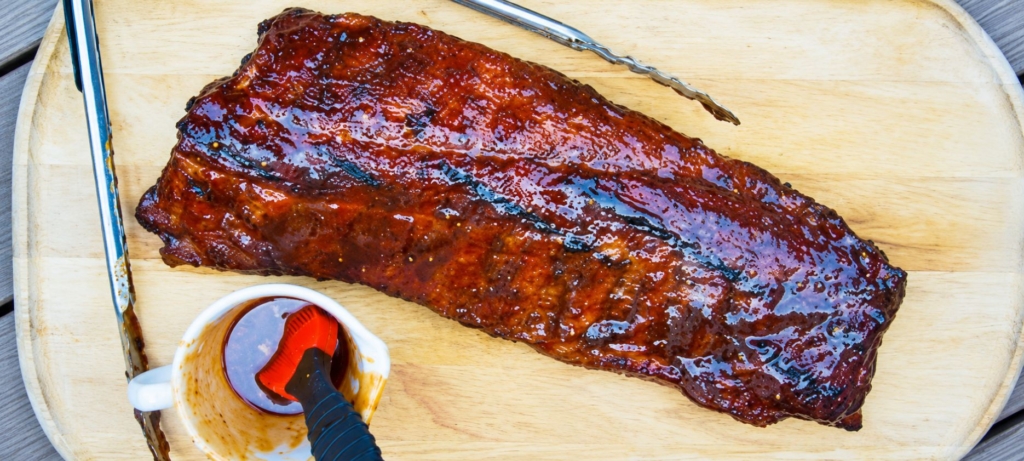
- Once fully cooked, skip the BBQ sauce if you're going for authentic Texas smoked beef ribs. If you must use a sauce, try what they use in Texas, a thin beef stock based sauce, like my Texas Barbecue Mop Sauce.
- Serve. Once the ribs have finished cooking, remove them from the smoker or grill. Many folks like to hold them for an hour or so in a beer cooler (faux cambro) thinking that this helps retain juice and tenderize, but you can serve them immediately.Need more assistance with your beef ribs? Check out this video from the folks at Slow N Sear making beef ribs.
Notes
Approximate Nutrition
Tried this recipe?
Let us know how it was!Even More About Beef Ribs
Don’t Mess with Texas, Especially When it Comes to Smoked Beef Ribs! (click here to share this on Twitter!)
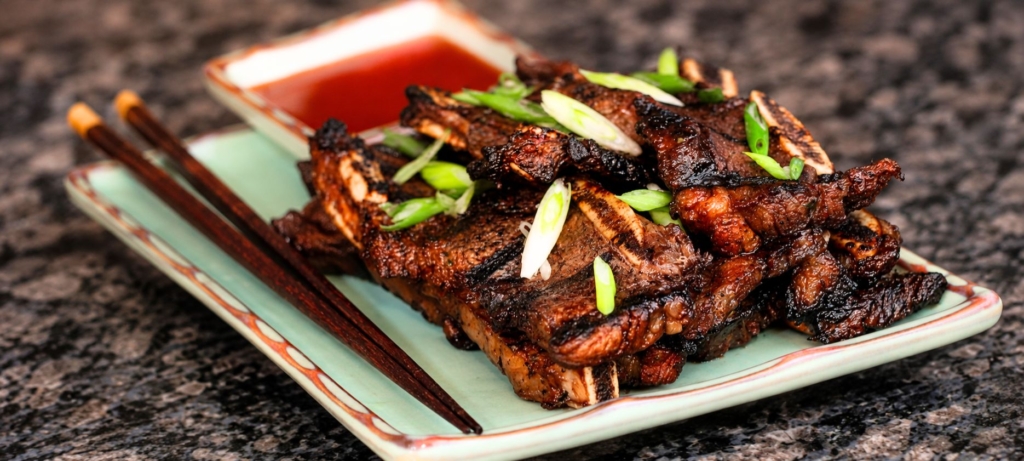
There are plenty of fancy French-influenced restaurants in this world that made their reputations on short ribs braised in flavorful liquid for hours, and every Korean restaurant serves Galbi (a.k.a. Kalbi), marinated slivers of beef short ribs. But smoke roasted low and slow is pretty much a Texas exclusive. Want to make smoked beef ribs at home? All you need is a decent cooker (even a Weber Kettle will do), quality meat, a BBQ beef rub, and a good meat thermometer. Soon, you’ll be serving tender, juicy, flavorful, beef ribs better than most pit stops in Texas.
Hungry for more ribs recipes, tips, and techniques? Click here to download our ebook “Amazing Ribs Made Easy” $3.99 on Amazon (free Kindle app runs on all computers and devices). Or, get this book and others FREE as a member of the AmazingRibs.com Pitmaster Club. Click here to join.
But first, read my article, The Science of Beef Ribs to learn more about the different cuts of beef ribs (including plate ribs and back ribs) and cooking styles, as well as my Food Temperature Guide. That’ll give you some background so your ribs come our perfect the first time. After that, read the recipe below and start cooking!
BBQ beef back ribs
Back ribs are usually cut from the prime rib roast, a very thick, desirable and expensive cut that is often roasted whole cut into boneless ribeye steaks. When you remove the rib bones, very little meat stays on the bones. As much as possible goes to the more expensive rib roast or steaks.
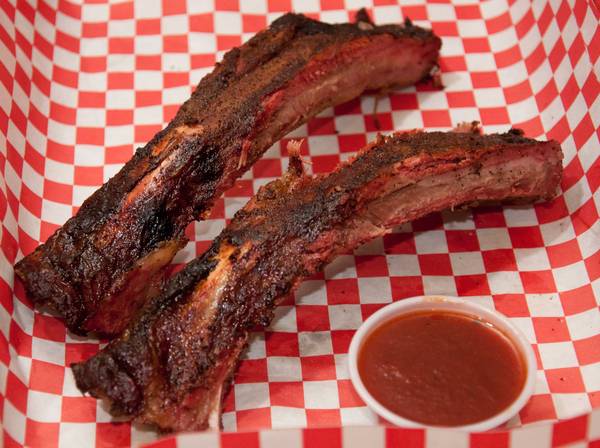
But there is some tasty stuff between the bones, and often back ribs can be found in slabs of 8 or more 8″ (20.3 cm) long bones. For my Texas beef ribs recipe, I prefer the meatier short ribs, but when I see a deal on back ribs, I grab them. They are quite spectacular when served in a slab and you should cook beef back ribs in a full slab to retain moisture. Otherwise, treat them much the same as short ribs. Depending on how much meat is on them and the thickness of the bones, they cook faster and can finish in as little as three hours.
The problem with beef ribs
Beef short ribs have more meat than beef back ribs, which I discuss further down the page. You can buy slabs of shorties with more than one bone connected, or individual bones, or even riblets, 2 to 3″ (5.1 to 7.6 cm) long. Some grocers will have one or the other or even all of them.
Beef short ribs have little in common with pork ribs. They have much more flavor, meat, fat, connective tissue, and they can be much tougher. But if cooked properly, they don’t have to be tougher.
What short ribs do have in common with pork ribs is that they are best cooked at low temps so the connective tissue and fat can melt, and the protein doesn’t knot up and get even tougher. And they must be cooked well past well-done, waaaaay past well-done in order to tenderize them, just like beef brisket and pork ribs.
But short ribs have a lot of fat and connective tissue. Undercooked fat is waxy. But when it starts to melt, much of it drips off and what remains lubricates the muscle fibers, and carries flavor to the taste buds. Connective tissue (collagen) is tough and sinewy when undercooked, but when it starts to melt at about 160 or 170°F (71.1 to 76.7°C), it forms a succulent gelatinousness that also, pardon the pun, beefs up the flavors and rounds out the texture.
Short ribs Texas-style
Texas barbecue is all about smoke roasting. The goal is to get the meat to the temp where both fat and collagen have melted. They treat the meat just like pork ribs, pork shoulder, and beef brisket, by taking it as high as 205°F (96.1°C).
At that temperature for BBQ beef ribs, much of the fat renders off, the melted collagens replace the water as a moisturizer, and the seductive flavors of smoke and spice rub carry the tune.
Texas barbecue restaurants have to balance quality with the realities of a production environment. Mueller’s, Cooper’s, and many of the best are still using old-fashioned brick pits burning post oak. They have to cook everything from pork ribs to sausage to brisket, even if there’s a line waiting. To handle commercial production demands, Mueller’s cooks at 275 to 300°F (135 to 148.9°C) for 1.5 to 2.5 hours in racks of four ribs.
To make killer-style Texas-style beef short ribs at home, I recommend you cook a bit lower and slower to reduce shrinkage (why do I always think of George Costanza when the word shrinkage come up?). I do them at 225°F (107.2°C), and bring the meat up to about 203°F (95°C) internal, a process that can take up to 8 hours depending on the thickness of the meat.
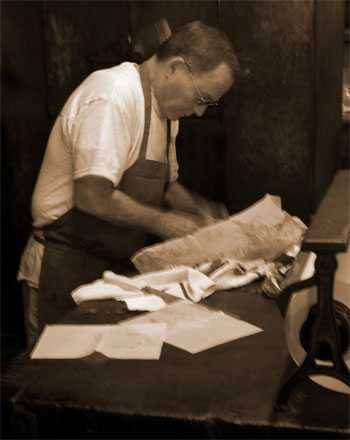
Remembering Bobby Mueller
Bobby Mueller (above), legendary pitmaster and son of the founder of Louis Mueller’s Barbeque in Taylor, TX, died way too young at age 69 on September 6, 2008. I had the pleasure of meeting this artisan and maestro of barbecue and especially beef short ribs in 2008 and photographed him and his restaurant.
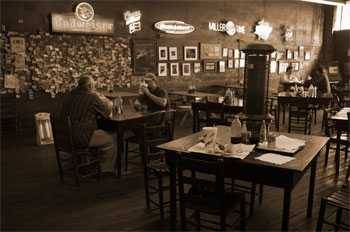
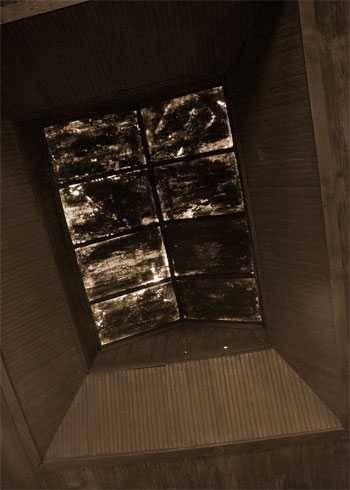
Louie Mueller Barbeque looks just about the same today as when Louis moved his business into the cavernous old gymnasium in 1959, 10 years after he started it in the alley and parking lot next to his father’s grocery store just a block away. All 18 tables and several of the original chairs have been there since the opening, and it is doubtful the place has been painted since then because the walls and ceilings are all sepia from smoke and soot. Even the business cards on the bulletin board are brown.
Bobby came to work there in 1965 and he was known to put in 90 hours a week. It paid off. Word of mouth carried his reputation around the world and barbecue fanciers came to this tiny dot on the map to taste his handiwork. In 2006 his restaurant won a James Beard Foundation Award as an “American Classic”. People often call Beard Awards the “Oscars for food”.
Louie Mueller Barbeque Today
His wife, Trish, and his son, Wayne, are now running the show. Wayne says “fans of our beef ribs seem to be creating a mythos regarding them, an interesting phenomenon to witness unfolding”. Count me among the mythologizers.
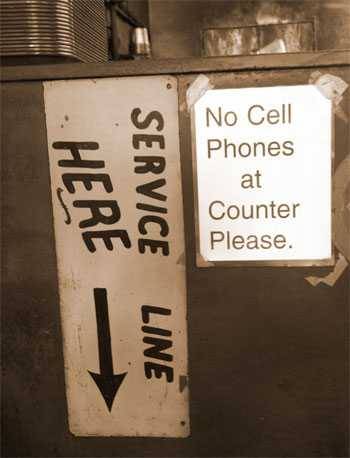
Their home-made sausages are also a draw, not to mention the beef brisket, ribeyes, chicken, turkey, pork spareribs, pork tenderloin, and pork shoulder steaks. Below are some pictures of the legendary home of transcendent Texas beef ribs as well as our own smoked Texas beef rib recipe so you can make them in your own backyard.
Before you can post a comment or question you must sign into our commenting partner, Disqus. This helps make sure everyone hanging around the grill is civil. We do not tolerate nastiness, racism, porn, inappropriate language, or attacks on others. All comments are the property of AmazingRibs.com and we reserve the right to quote them, edit them, delete them, and block people from making future comments.
Please leave comments and questions on the same page that is devoted to that subject so others can see questions and our answers when they are reading about the subject. You must enable JavaScript to use the comments section, and you must accept cookies to post comments. Note: the software that runs Disqus is different from the Pitmaster Club, so members need to sign into the Pitmaster Club separately.