
barbecue & grilling accessories
Techniques Recipes Buyer's Guides Ingredients One Nation Under Sauce
Misc BBQ Articles Weights, Measures, Conversions Links Advertising Newsletter Updates Meet Meathead

Not an Elitist Jerk Beef Jerky

While writing this recipe, a song kept coming to mind, The Rodeo Song, written by Gaye Delorme and released in 1980, here it is performed by Gary Lee & Showdown in 1994 (I think), and apparently sung by a cow. It contains strong words, the least of which is jerk. That's the connection. Weak, but if you're not super sensitive, you'll like it.

Jerky is a fun snack, but it is far more versatile than you might imagine. Like BLT sammies? Bench the bacon and play the jerky. Like bacon in your salad? Jerk it and replace it. You get the picture. Many things bacon can do, jerky can do too. Often better! Think of homemade jerky as lowfat bacon.

And it is a lot healthier than you think. Start by looking at the ingredient list of a bag of jerky in the store. Now look at the ingredient list below.

Jerky is dried meat that retains much of the nutritional value of fresh meat but weighs less than half and takes up a lot less space. USDA calls it "nutrient dense." We eat it as a treat nowadays, but it was once an important source of protein.

Nobody knows how long man has been making jerky, but it has probably been around since soon after man started eating meat since it kept for days or weeks without refrigeration. It became famous in the US as cowboy food for long cattle drives. Cowboys could pack it in saddle bags and snack on it while mounted. It was lunch.

According to the historians jerky has been around since since ancient Egypt. Early hunter-gatherers and nomadic tribes made jerky from animals that were too big to eat all at once. It was probably just thin strips of sun dried meat. It probably didn't take long for these tribes to discover that smoking it made it taste better and keep longer. Soaking in salt water was also probably an early innovation. Biltong is dried meat popular in many African countries. Amerindians ground dried meat and dried fruit to make pemmican. The word "jerky" is believed to have come from the Spanish word charque which means roughly "dried meat."

Over the years the process has been reinvented to improve safety, shelf life, and flavor. Most storebought jerky is dry and leathery because it is salt cured, chemically preserved, smoked or treated with liquid smoke, and processed to meet USDA standards for storage at room temp. Homemade jerky, properly made, can be better tasting, and probably better for you. Let's look at the different methods of making jerky.

Dry cured. This is the true, classic, traditional cowboy jerky, and jerky elitists and survivalists will tolerate no other approach. When done properly, it is tasty, salty, has a shelf life of a year or more at room temp in the bomb shelter, and it is home on the range or in backpacks. This method is best reserved for commercial producers because the meat is not cooked and can harbor pathogens if not handled properly. Here's a rough overview of the process, although there are many variations: Thin slices of meat are packed on all sides with a mix of salt, sugar, spices. The meat is refrigerated for at least two days, and then it is cold smoked and dehydrated at low temps for days. Many folks consider this method risky, and they use a commercial product called Morton's Tender Quick as a preservative. It contains salt, sugar, sodium nitrate and sodium nitrite as curing agents, and propylene glycol to keep the mixture uniform.

Wet cured. Considered a shortcut by some elitists, the meat is sliced and soaked in a concentrated salty brine that has been flavored with spices and a sweetener like sugar, molasses, or honey. Liquid smoke is a common addition. The meat is then removed and dried in a cold smoker, dehydrator, or oven. Tender Quick can also be used. This is the method preferred by commercial producers.

Marinated. My favorite method is easy, safe, and more flavorful. It is a lot like wet cured, only the salt concentration is lower, the flavorings are more intense, and there are no preservatives. Although these jerkies must be refrigerated for long term storage they can be taken out long enough to accompany you to the game, concert, or camping trip. The recipe below has a lot of flexibility, but I recommend you stick close to my plan the first time out. Then riff away.

Marinated Beef Jerky Recipe

Makes. About 1 1/2 pounds
Preparation time. 45 minutes
Marination time. 12 to 24 hours
Cooking time. 2 hours
Drying time. 6 to 12 hours depending on how thick you sliced the meat.

Ingredients
2 to 3 pounds eye of round beef
1 cup soy sauce
1/2 cup molasses, honey, or sorghum
1/4 cup Bourbon, Scotch, dark rum, brandy, or other dark whiskey
5 tablespoons fresh ginger, peeled and grated on a box grater
3 tablespoons Kansas City style (sweet tomato based) barbecue sauce
3 tablespoons Meathead's Memphis Dust
1 tablespoon hot sauce

The Alton Brown dehydrator

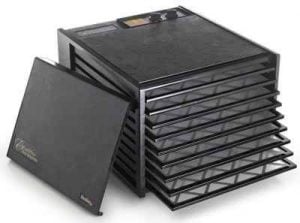
I you make a lot of jerky you might want to invest in a small kitchen dehydrator which can also be used to dry fruits. As an alternative, you can jury rig your own. Food Network chef Alton Brown made his by placing the cooked meat on paper air conditioning filters (not fiberglass filters) and then he fastened them to a box shaped window fan with bungee cords. A clever idea, but you will have to discard the filters after each use (although they might make the house smell nice if you put them in the AC unit...).

Making the meat safe

Pathogens start dropping dead at about 130°F. But at that temp, it takes a long time to kill them. Meat held at 130°F in the center for 121 minutes is considered pasteurized and sterile (107 kill rate). The time needed to pasteurize gets lower as the temperature goes higher. So beef at 140°F degrees in the center will be sterile in just 12 minutes, while at 160°F in the center, pathogens are destroyed in just 7.3 seconds, hence the USDA guidelines for the consumer to cook all beef to 160°F . This recipe recommends you take the meat up to 145°F.

Center Temp Time to Sterilize
130°F 121.0 minutes
135°F 38.3
140°F 12.1
145°F 3.8
150°F 1.2
155°F 23.0 seconds
160°F 7.2
165°F 2.3

Click here for the USDA guidelines for commercial jerky production.

Another technique I have read about, but not tried, is to boil the meat for 60 seconds in the marinade before drying instead of smoking or cooking it.

Other uses

Sometimes I will not smoke and dry all the meat. Sometimes I will set some aside and just grill it over high heat and then:

1) Throw it on a sammie with lettuce and tomato.

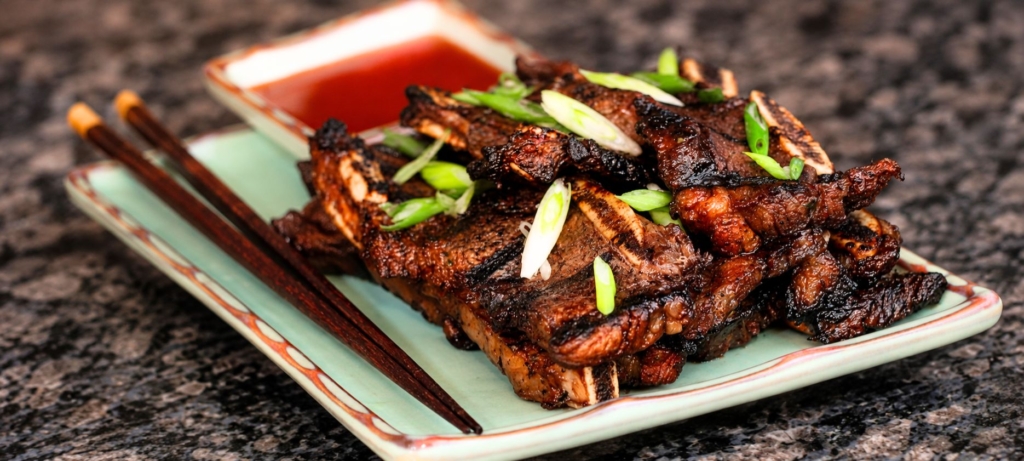
2) Throw it on a bed of rice like Korean Kalbi with thinly sliced green onions, toasted sesame seeds, and some orange zest.

3) Serve it a wrap of lettuce leaves or a wrap of tortilla.

4) Use it in tomato sauce.

Tell me how you use your jerky below.

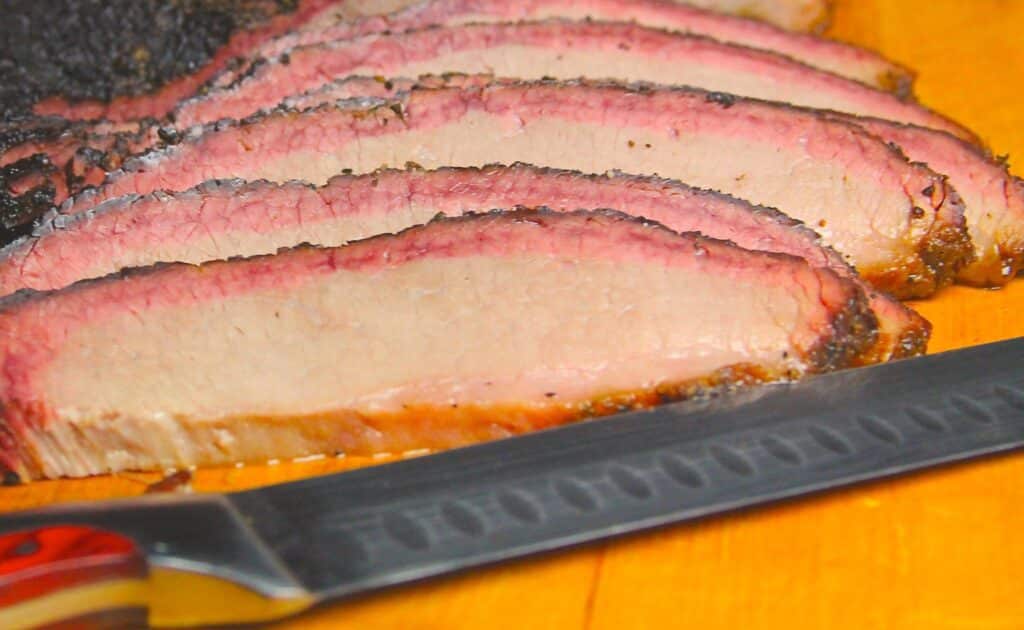
About the beef. Since fat will not dehydrate and it gets funky with age, the best meats are lean muscles that are well trimmed. I recommend eye of round, top round, or bottom round. I am told that or flank steak and lean brisket from the flat section are also good, but I have not used them. Do not use ground beef. Pick something that is on sale. This is also a great use for hunks of meat that have been in the freezer a long time. When they defrost they tend to give up a lot of moisture and are therefore less desirable than fresh meat. Jerky is a great use for them.

Other meats. Turkey breasts are good for making jerky. Rabbit loin and lean cuts from venison, elk, antelope, deer, caribou, moose, and buffalo also work very well. Bear is too greasy my hunter friends say. The Oregon State University Extension Service says game meats should be frozen for at least 60 days at 0°F to kill parasites.

About the soy sauce. Soy sauce is the salt source in this recipe and it is important as a microbial inhibitor. Make sure it is more than half the contents of your marinade. Get a good fermented soy sauce like Kikkoman.

About the ginger. Please DO NOT skimp on the ginger and DO NOT substitute ginger powder. It really ads to this recipe.

About the booze. None of the alcohol will remain in the meat after drying. Alcohol evaporates at a lower temp than water. But it does add oaky flavor, especially if you dry the meat indoors or without smoke. The alcohol helps pull moisture from the meat, however, and this is good.

Optional. If you can't smoke it, you might want to add 1 tablespoon of liquid smoke. Worcestershire is another popular addition.

Do this
1) Slicing the meat. Put the meat in the freezer for an hour or two to stiffen it and make it easier to cut. Cut the meat in disks about 1/8 to 1/4" thick. Strive to make them uniform in thickness. You don't want them paper thin because they will shrink in in half, but you don't want it too thick or it will take forever to dry. I like to cut across the grain to make it less chewy. Some folks cut with the grain to give their mandibles more of a workout. They won't be long strips like bacon. Odd shapes are good. They tell people that it is home made. Put the meat a 1 gallon zipper bag.

2) Marinating. Mix the marinade by whisking all the ingredients together. Pour it into the zipper bag. Put the bag in a bowl or pan in the refrigerator to catch any leaks. Let the marinade make love to the meat all night long at least. Occasionally pick up the bag and roll it around massaging it for several minutes to make sure the liquid is contacting all the meat surfaces. This is important. It can stay in the marinade for up to 2 days if you wish. When you are ready to cook, drain the meat in a colander and discard the marinade. Do not save it for another day.

3) Cooking, smoking, and killing the bugs. Jerky elitists don't like the idea of cooking the meat, but it is absolutely necessary to make the meat safe if you are not using a preservative. Smoke is not necessary, but it adds flavor and improves shelf life in the fridge. A good digital oven thermometer is important for this phase unless you've been hankering to get up close and personal with Salmonella, E. coli O157:H7, and Listeria monocytogenes. You cannot trust your grill's bi-metal dial thermometer. It can be off by as much as 50°F.

Set up your grill for 2-Zone or Indirect cooking shooting for 160°F to 250°F in the indirect zone. Go for the lowest temp at which you can produce smoke but USDA recommends you keep it above 160°F. Get that wood right on the heat source to make sure it smokes. On a gas grill you will want to put it in an aluminum foil packet and poke holes in it. If you wish, you can prop open the lid of your cooker to let heat escape in order to keep the cooking temp down. This will also increase air flow. If you normally use a water pan, skip it today. The goal is dehydration not moisturizing.

Spread the meat on a wire rack. Make sure the meat is not folded over on itself or overlapping. Smoke for about 60 minutes. That'll kill the bugs and add smoke flavor. If you are using a grill and the heat is on one side, then you may need to rotate the meat so the stuff on the cooler side goes to the hot side after about 30 minutes. This will get the center of the meat up past the kill zone and start the dehydration.

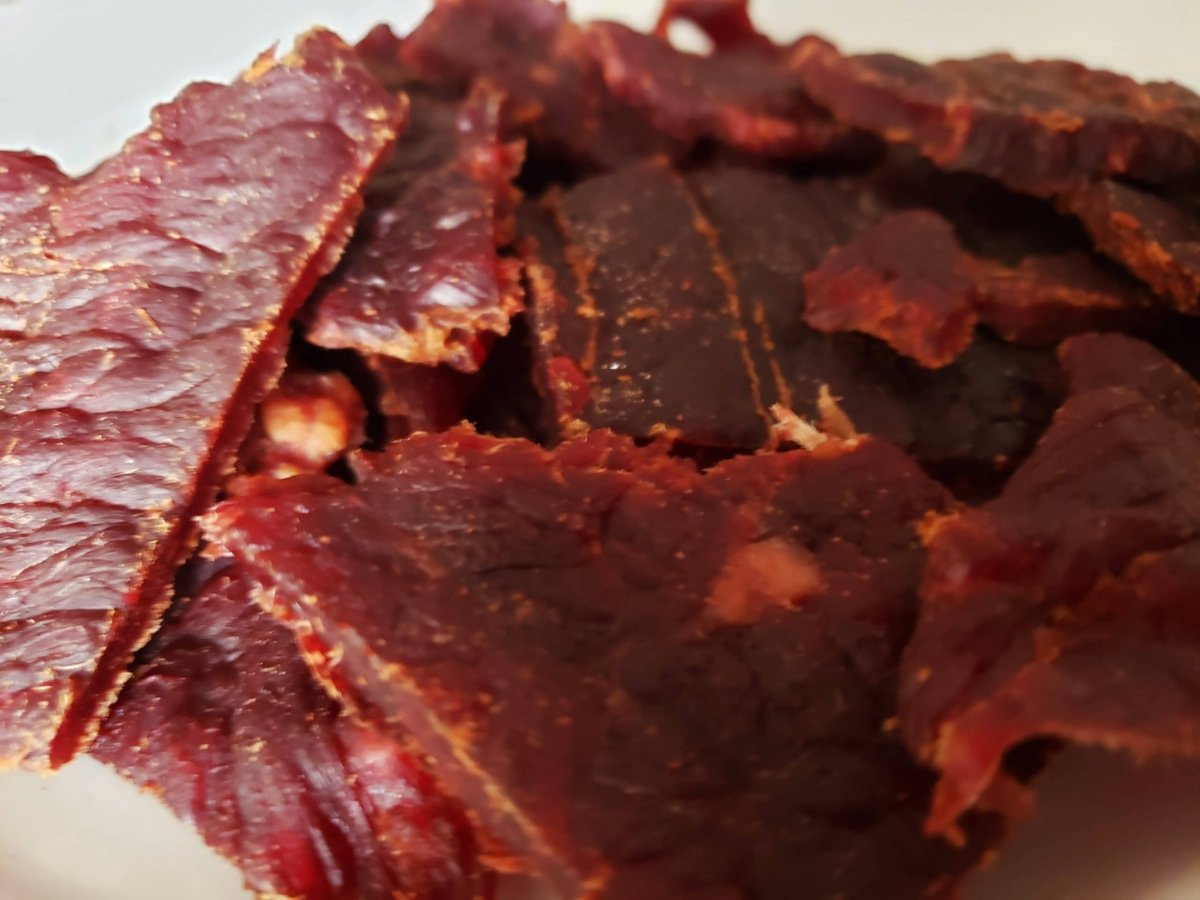
4) Drying. The final step is dehydration. You can stop smoking and cooking and dry the meat to jerky consistency. That means dark, almost black, but not carbonized, pliable but breakable, but not so brittle that it shatters. Drop the temp to no lower than 140°F and hold it there. If you have a small kitchen dehydrator, you can move the meat there at this stage. They are great because they have a fan and that can reduce drying time to less than 6 hours. Or you can put it in your oven, just leave the door cracked open a bit. Drying on a grill or in the oven can take as long as 12 to 18 hours depending on the temp and how thick the meat is. I dry at about 175°F on my gas grill with one burner on low and the lid propped open about 4" for about 10 hours.

During the process, it will start out tan in color, progress through rosy, and eventually blacken. But it is not really black. It is just really really dark. You want to remove it right after the last bit of rose color disappears. But that's my preference. It will also lose about half it's weight. As it starts to go, start tasting. Learn what texture you like best. This might require a lot of tasting. And beer. And friends to offer their opinions. The drier it gets, the longer it keeps. How long? If you have been careful about cleanliness and hit the temperature guidelines above (this is especially important for game), USDA says it can be stored safely a month or two at room temp. I keep mine in the fridge just to be sure. And yes, it can be frozen.
This page was revised 8/4/2010


facebook Be my
Friend
twitter Follow
on
Twitter
google_plus_logo My posts
on Google+
Huffington Post Food Read me
in
HuffPost
amazingribs barbecue & grilling favicon My free email
newsletter
amazing ribs barbecue & grilling RSS Feed My current
RSS feed

Add to Google Add to My Yahoo! Add to My AOL

Read this before posting a comment please:

1) If you are looking for info, please use the table of contents or the search box, at the top of every page before you ask for help.

2) Please don't ask any questions that involve temperature unless you tell us that you are using a digital thermometer! Dial thermometers are often off by as much as 50°F! If you are not using a good digital you have no idea what the temp really is so I can't help you. If you are still using a dial thermometer, please read this article about thermometers, then buy a good digital, and then, if the problem persists (chances are it won't), hit us with your questions. Please tell us everything we need to know to answer your question like the type of cooker you are using.

3) Please don't ask "What grill (or smoker) should I buy?" Read our Buyer's Guides and the buying checklists and follow the links. We've shared just about everything we know. Pay attention to the awards I have given my faves. We cannot pick the right cooker for your needs any more than we could pick the right car or spouse for you.


Barbecue & Grilling Accessories


Important Info About This Website

AmazingRibs.com is all about the science and zen of barbecue, grilling, and outdoor cooking, with great BBQ recipes and techniques: Baby back ribs, spareribs, pulled pork, beef brisket, steak, burgers, chicken, smoked turkey, lamb, barbecue sauces, burgers, steaks, rubs, and side dishes, with the world's best buying guide to barbecue smokers, grills, and accessories. It is edited by Meathead.

AmazingRibs.com is published by AmazingRibs, Inc., a Florida Corporation.

Our philosophy about food is simple. First of all it must taste great. It must be easy to make and emphasize fresh seasonal products with a minimum of processed ingredients. We think that people need to know why as well as how, so we spend a lot of time explaining things, and we believe that there are no rules in the bedroom or dining room.

Gold Medal for barbecue & grilling awardAbout Product Reviews and Best Value Gold, Silver, and Bronze Medals. These are highly recommended products based on features, quality, and especially value. Rest assured that when we recommend a product, it is really because we like it, not because someone has paid us to say so because we do not accept advertising from products we review. We purchase many products we review although occasionally suppliers send us samples. We have always been transparent about when we are reviewing a product sample, even before the Federal Trade Commission Required it in 2009. Click here to read more about our medals.

About links on this site. Other than clearly marked ads, links and recommendations on this site are all products, services, and websites we truly admire, and are never paid endorsements. Your suggestions are always welcome. If you would like us to link to your website, click here to read our links policy first.

Federated media Advertising on this site. AmazingRibs.com is one of the 100 most popular food websites in the US according to comScore, Alexa, and Quantcast. It is by far the most popular barbecue website in the world and pageviews increase rapidly every year. Advertising on AmazingRibs.com is a great way to build your brand or make direct sales. We do not accept ads from products we review and we keep a strict wall between editorial and advertising, so, for current pricing and availability of prime space, contact our agency, Federated Media, by clicking the logo at right. Click here for analytics, stats, demographics, and advertising options.

Our Privacy Promise. AmazingRibs, Inc. promises to never sell or distribute any info about you individually without your express permission, and we promise not to, ahem, pepper you with email or make you eat spam. Click here for more details of our privacy promise.

Disclaimer. The information on this website is for educational purposes only. All material within comes without warranties of any kind. The authors are human and capable of mistakes, omissions, or errors, so we make no guarantees as to the accuracy, completeness, or safety of the information. Under no circumstances are we liable for any damages that result from use of the site (so you can't sue us if you don't like a recipe or if you burn your tongue on hot ribs, OK?).

Copyright © by AmazingRibs, Inc. Unless otherwise noted, all text, recipes, photos, and code are owned by AmazingRibs, Inc. and fully protected by US copyright law. This means you need written permission to republish or distribute anything on this website. But we're easy. To get reprint rights, click here. Note: Some photos of commercial products such as grills were provided by the manufacturers and are under their copyright.


LeaderDog.org ad on BBQ site
Meathead the Barbecue & Grilling Lover Cartoon

Get Smoke Signals, my free eletter with tips and recipes. No spam. Guaranteed.


Save this link to
keep this site free!

http://tinyurl.com/amazingribs

This link takes you to Amazon and tags anything you buy with a code so we get a referral fee. It works on anything from grills to diapers and it has zero impact on the price you pay. The best reasons to buy from Amazon are low prices, fast often free delivery, fair return policies, and often there is no sales tax. But clicking on that link before you shop helps us devote more time and money to you. Thanks!


Hot Stuff Barbecue & Grilling Award
Look At These AmazingRibs.com Best Value Gold Medal Winners

Here are some great products that have earned The AmazingRibs.com Best in BBQ Gold Medals. These are not ads!

Award Winning Meat Temp Fridge Magnet

National Barbecue Association AwardThe prize for Best BBQ Tool at the 2012 The National Barbecue Association conference went to a simple inexpensive fridge magnet by Meathead. It includes the latest USDA recommendations as well as chef recommendations (and they often differ) as well as color photos of the different stages of doneness for red meats. The temperatures are the same for both indoor and outdoor cooks. Click here for more info and how to order it.

meat temperature magnet for grilling

GrillGrates Take You To The Infrared Zone

GrillGrates are the best new product I have tested in years and the best thing to happen to beef since salt and pepper. The base superheats, eliminates hot spots, and blocks flareups. This is the concept behind the expensive new infrared grills. A must for gas grills. Click here for more about GrillGrates.

barbecue grill grates

The Smokenator: A Necessity For All Weber Kettles

If you have a Weber Kettle, you need the amazing Smokenator and Hovergrill. The Smokenator turns your grill into a first class smoker, and the Hovergrill can add capacity or be used to create steakhouse steaks. Click here to read more.

Weber Barbecue Smokenator

ThermoWorks Pocket Thermometer - No More Guessing

A good thermometer is why I never serve overcooked or undercooked food. This one has a very thin tip with a tiny thermocouple so it gives an accurate reading in just six seconds. I cannot recommend it more highly. It will improve your cooking overnight and pay for itself in a hurry. And it is inexpensive. Click here for more about thermometers.

barbecue & grilling thermometer


Steakhouse Knives

These are the same knives used at the best steakhouses (Peter Luger, Smith & Wollensky, Morton's and others). Machine washable, temper-ground, serrated, high-carbon stainless-steel, full-tang blades with excellent cutting edge retention, beefy hardwood handle, rust and stain resistant, and they stay shiny without polishing. And now they have the AmazingRibs.com imprimatur. Click here for more info on these wonderful knives.

steak knife set for barbecue


Donate to keep
this site free!

barbecue & grilling hatWith a $30 donation you'll get a 100% cotton brushed twill adjustable low profile cap with the AmazingRibs patch sewn on. I'll even toss in a small bag of BBQ'rs Delight wood smoke pellets. Click here for more info.


Advertisement


Big Poppas Smokers Grilling & Barbecue Ad