




Close your eyes and think of the best hamburger you’ve ever had. In a restaurant, right? Let’s fix this. Let’s all go from Grasshopper to Burger Zen Master by learning how to make the perfect burger.
Let me guess what is in your memory: You needed two hands and two napkins. The toasty charry beefy scent wafted to your nose as it was escorted to your table. The perfume told your mouth to start the lube moving the moment the plate became visible. It almost smelled burnt, but it was not.
As you lifted the top of the bun to add ketchup, you saw that the patty had a mahogany skin and the bun was wet with dark juices that looked like Suwanee River. It was crunchy when your teeth pierced it. The warm salty juices flowed over your tongue followed closely by an assertively deep prime steak flavor, like a steakhouse steak framed by the irresistible bracing flavor of roasted beef fat. The bun was warm, buttery, and crispy on the inside, and condiments amped up the experience, but you really can’t remember them. It was the succulent brawny beef that sticks in your mind. The experience ended, reluctantly, with licking the juice off your elbows.
My Platonic Image of the perfect burger is the Pinesburger from the Glenwood Pines in Ithaca, NY, circa 1980, a complete well rounded meal with carbs (Frenchbread bun), veggies (lettuce, tomato, onions), dairy (American cheese), and protein (the 6 ounce patty of fresh ground chuck, 85% lean), accented by 1000 island dressing. The Pines is under new ownership, but I am told the Pinesburger is still a winner for only $5.25.

So what are the secrets of a Zen Master’s Burger? Finding out has taken me a whole year, a longer odyssey than any other cooking technique I’ve tried to conquer on your behalf. Whooda thunk the humble burger was such a pain?
Don’t expect perfection the first time you try my methods, but do expect improvement. You’ll get closer each time you do it. By the third attempt you should have everyone’s attention.
Remember, in any form of experiment, you must set up a repeatable system in which you can change only one variable at a time. If you make your first batch on a charcoal grill, don’t switch to a cast iron griddle and change the meat blend at the same time. One variable at a time.
Soon you’ll know what the restaurants and I know: You’ll know the gestalt of the Zen Master’s Burger and be well on your way to making your home a hamburger heaven.
Begin by throwing out all your preconceived notions about cooking burgers.
E-coli can kill. Here’s how to be safe
Undercooked ground meat and sausage can kill. It can happen to you or someone you love. In 1993 four children died from hamburgers contaminated by the virulent bacteria pathogen Escherichia coli O157:H7 purchased at Jack in the Box restaurants. According to health officials as many as 70,000 Americans fall ill from E-coli O157:H7 each year, most of them as a result of tainted hamburger meat. According to USDA, “the very young, the very old, and those with immune systems that have been weakened by cancer, kidney disease, and other illnesses are most at risk and vulnerable to illnesses associated with contaminated food.” If someone shows symptoms of illness, do not hesitate, get to the emergency room in a hurry.
We’ll call this common bug E-coli for short from now on, although there are many other strains of E-coli that are harmless. In addition to E-coli, Salmonella, Campylobacter jejuni, Listeria monocytogenes, and Staphylococcus aureus, can be found in ground beef and can cause illness. They cannot be seen or smelled. There are also spoilage bacteria that are harmless to humans, but deteriorate the meat’s quality.
In meat, E-coli comes from fecal matter in the intestines of the cow. It gets on the surface of the meat during butchering from (1) fecal matter that is on the hide because feed lots are crowded with cattle and their waste, (2) fecal matter in the intestines if they are accidentally sliced open during butchering, (3) fecal matter that spilled from intestines onto the floor of the slaughterhouse or butcher shop, or (4) from knives, grinders, other equipment, other meat, or hands that have come in contact with fecal matter.
E-coli O157:H7 is primarily a problem in ground meats, not steaks. It is found only on the surface of the steaks. They do not work their way into the muscle or fat far beyond the surface. They die rapidly when you cook a steak’s surface past 160°F, even if the interior is red rare. Even if your grill is at a low 225°F, the exterior of a steak will hit 160°F fairly quickly and be safe. The problem arises when meat is ground. Then the outside gets inside and rare burgers or medium rare burgers carry risk with them because they are not cooked to 160°F. Because grinding is how the bug gets into the meat, E-coli is a problem for all ground meats and sausages unless they have been pre-cooked like hot dogs.
Industry and government inspection for E-coli is not very thorough. The detection process is expensive, there are not enough inspectors, and USDA inspects only meat headed for interstate commerce. Some meat is inspected by state inspectors, and most is not inspected at all. If your trusted grocer is sold contaminated meat and grinds it, it can contaminate the grinder and all the meat ground that day. Knowing your butcher is not a guarantee of safety.
It is important to remember that “sell by” dates are no guarantee of safety. USDA recommends that you store ground meat at 40°F or lower and that you cook or freeze it within two days after purchase. E-coli does not reproduce at cold temps.
Now here’s an interesting question: Some fast food joints promote the fact that their burgers are never frozen. So which would you rather eat, a burger that is frozen right after grinding and shipped to a franchise three states away, or a burger that is not frozen and shipped three states away?
You can read more about E-coli, how it gets into hamburgers, and the nature of the problem in an excellent and frightening article in the New York Times. Click here to read the USDA article on ground beef safety.
Are rare and medium rare burgers over-rated?
Food safety experts want us to cook ground meats to at least 160°F to kill bacteria. Burger fiends want them red in the center, which means they are risky.
There is good reason to serve rare to medium rare steaks. Steaks are tougher and drier when cooked to medium well or well done. But the quest for rare burgers may be wasted effort. If trimmed and ground properly, ground beef is never tough. It has been pre-chewed by the grinder. If cooked properly and you use a high fat blend, it will remain juicy. Even at 160°F.
But what about flavor? The fact is that browned ground beef has more flavor. Browning is the result of chemical reactions and the result is more flavor. Think back to the last time you tasted raw ground beef and the last time you tasted browned ground beef. Which had more flavor? Which would you rather eat, uncooked ground beef, or browned ground beef? If you must have medium rare burgers, there are four ways
If you must have medium rare burgers, there are four ways
To kill bugs in burgers, according to USDA and every book on the subject, you need to take the inside above 160°F. That’s well done. To tell the temp of the burger, there is no substitute for a good digital instant read thermometer.
But the 160°F guideline is a simplification. Pathogens start croaking at about 130°F. But at that temp, it takes a long time to kill them. Ground beef held at 130°F in the center for 121 minutes is considered pasteurized and sterile (107 kill rate). The time gets lower as the temperature goes higher. So beef at 140°F degrees will be sterile in just 12 minutes, while at 160°F degrees, pathogens are destroyed in just 7.3 seconds, hence the USDA guidelines for the consumer. Take it up to 160°F for as little as 7 seconds and you’re safe.
| Center Temp | Time to Pasteurize |
|---|---|
| 130°F | 121.0 minutes |
| 135°F | 38.3 |
| 140°F | 12.1 |
| 145°F | 3.8 |
| 150°F | 1.2 |
| 155°F | 23.0 seconds |
| 160°F | 7.2 |
| 165°F | 2.3 |
If you want medium rare burgers, there are some options:
(1) Buy irradiated beef. My study of the subject tells me irradiated beef is perfectly safe and healthy. But it is hard to find because a lot of people are scared of radiation in all forms (except when they get their teeth and bones X-rayed, and that’s a LOT higher dosage). Click this link for more information on irradiation from the National Institute of Health.
(2) Pasteurize the meat. Food scientists say that if you dip a piece steak in boiling water (212°F) for 10 seconds before grinding it yourself, it is made safe. I have tried it, and although the exterior turns gray, it grinds well and makes fine flavorful rare patties.
(3) Sous vide. You can also have rare burgers by using the sous vide method of slow cooking the patties in a vacuum bag in an immersion bath of 131°F water for two hours.
(4) Perfect control. If you had a really accurate thermometer and perfect control over your grill temp, you might be able to grill a big fat burger at, say 225°F, when it hits say, 125°F, crank the heat back to 135°F, hold it there for 40 minutes, and then sear the exterior on high heat for flavor.
If you must have lean burgers
I like my burgers juicy so I grind the meat myself to about 25 to 30% fat.
If you like your burgers lean, you risk dry, hard hockey pucks. To combat this, finely chop onions and mix them in the patties. They add moisture. Or grind in bacon!
The smart folks at America’s Test Kitchen and Cooks Illustrated have come up with a very clever way to keep lean beef from drying out, by adding a panade (a paste of bread and milk) to the ground beef. Here’s how:
For 2 burgers, remove and discard the crust from half of one slice of high-quality white sandwich bread, and chop it into 1/4″ pieces, to make about 1/4 cup. Add 1 tablespoon of whole milk and mash it into the bread until you have a paste. Mix this in with the meat. As strange as it seems, this mash holds moisture in well-done burgers.
Key concepts of cooking hamburgers
The way to get your burgers done properly is the same way you get to Carnegie Hall: Practice. Practice. Practice. You may have to experiment three or four times to perfect your technique. But you’ll get it, and then all who know you will prostrate themselves in your path.
The secret to any experiment is to change only one variable at a time and take notes or keep a cooking log. For example, if you are cooking with charcoal, count the briquets so you can use the same amount every time. If you are using gas, use the same settings every time. But remember, wind and air temp will influence the cooking. If you cook in a frying pan, use the same pan every time. A black cast iron pan will produce different results than a shiny stainless steel pan. If you oil the pan with beef fat, do the same thing every time. Butter and cooking oil have different heating and flavor characteristics.
Most importantly, at the experimental stage, never vary the thickness of your burger or the temp at which you cook it. Then you will get a sense of how long it takes to get it done properly, and you can learn the color of the outside and the feel of the meat that tells you when the inside is ready. As you approach perfection, you can fine-tune cooking temp and thickness.
To achieve Burger Zen Master status, you must understand the concepts covered in my articles on meat science and thermodynamics of cooking. A short recap of germane points:
The perfect burger has two parts, the exterior, and the interior. You want the exterior as dark as possible, but not black, and you want the interior juicy and safe. You want beefy flavor unmasked by condiments and mix-ins.
The exterior. The surface is significantly impacted by the cooking method. If the meat is cooked on a hot griddle, as it is in most diners, the surface is in direct contact with the heat and it cooks by conduction, browning evenly across the surface. If it is cooked on a grill, most of the meat cooks by radiant heat. The small amount of surface where the meat is in contact with the grates cooks by conduction.
First, generously season the exterior with salt just before cooking. Then spread a thin layer of oil on the exterior. If you oil the patty you make it harder for moisture to escape, plus the oil transmits heat faster to the meat, so you don’t need to oil the griddle, pan, or grates. Fat helps the Maillard reaction and caramelization, two chemical changes that create dark brown color, crunchy texture, and a deeper, richer, sweeter flavor.
The interior. The center of the burger doesn’t care much about which method of cooking you use because it cooks by heat conducted from the exterior. As the surface gets hot, moisture and fats transfer the heat like a bucket brigade from the outside in. You cannot tell by the color of ground meat if it is cooked safely. Some burger interiors turn brown as low as 130°F, so a brown burger can still be rare.
Size matters
There are two very different cooking methods depending on whether you are doing thick Steakhouse Steakburgers or thin Diner Burgers. For details, read my articles on Steakhouse Steakburgers and Diner Burgers.
Making lots of burgers?
If you are making lots of burgers the famous chef Heston Blumenthal of The Fat Duck in the suburbs of London, England, recommends a process like this:
Gather the strands as they come out of the meat grinder and lay them parallel on a sheet of aluminum foil in a strip. Stack the strips until they are about 5″ high and 5″ wide. Roll the foil so they form a log about 4″ in diameter. Twist the ends like a Tootsie Roll. Toss in the freezer for about 15 minutes to firm it up. Then, with a serrated knife, slice the roll right through the foil into 3/4″ disks. Then remove the foil. You will have a loosely packed patty with the grain running top to bottom with lots of air pockets.
Never buy “hamburger” or “ground beef” for burgers
If top quality is your goal, never ever ever nohow noway buy something labeled “hamburger” or “ground beef” for making burgers. Save these for chili or sloppy Joes.
Hamburger or Ground Beef can legally come from practically any muscle on the animal. You know the old joke about “lips and sphincters?” You got it. They usually contain up to 30% fat, may include seasonings and flavor additives, may be treated with ammonia (yes, ammonia), may be frozen and then defrosted.
Technically the difference is that, if the meat is packed at a USDA inspected plant, “hamburger” can have fat scraps added and “ground beef” cannot. But the USDA inspects only meat that crosses state lines, so if it is ground by your grocer, practically any muscle can be in there. Butchers toss trimmings from any old cut in there, and much of the stuff in preformed patties comes from old bulls and no longer productive dairy cows, not known for the tastiest meat.
A maximum of 30% fat by weight is allowed in either hamburger or ground beef and both may have seasonings, but no water, phosphates, extenders, or binders added. I prefer to add my own seasonings.
Much hamburger and ground beef comes from processing plants many miles away and if it is not frozen, it can be several days old when you buy it.
Keep in mind that your grocer and butcher may grind and package their own meat at a central warehouse or in the store, and their facilities are not USDA inspected unless they ship across state lines. The fat content laws, however, apply to all grinders.
Buy meat and have your butcher grind it for you
If quality is your goal, whenever possible you should ask your butcher to grind your meat while you wait. You pick the steak, and she grinds it.
Pre-ground meat, even some of the better cuts of pre-ground meat, such as ground chuck, may have been ground miles away and days ago. Once meat is ground, it begins to oxidize.
If you want to buy ground meat, try to buy it at a store with a butcher in the back room who can grind for you. In grocery stores, butchers usually come in early in the morning, and leave before 5 p.m. They are probably not on duty on Sunday. Find out when your butchers are in, and get to know them by name. Ask them to grind meat for you.
You want at least 20% fat, not 15% as called for in many cookbooks and online recipes. Many top chefs now recommend 20 to 30% fat, especially if you cook the meat to USDA recommended safe temps of 160°F. That’s right, you do not want lean burger because fat brings a lot of flavor, moisture, and crispness to the party, and it helps hold the patty together. Face it, burgers are not diet food so we can’t eat them every day. But when we do crave one we want a good one, and that means at least 20 to 30% fat.
The easiest thing to do is pick a nice looking “choice” grade chuck, with plenty of fat, and if necessary, ask the butcher to add some fresh white fat trimmings to get the blend up to 20 to 30%. Go ahead. Get it 30%. Especially if you plan to cook it well done.
If you grind yourself, here is a calculator that will help you get to the desired % fat. You need the calculator, you can’t do it in your head.
Ground Meat Calculator
Ask for a coarse grind, using the 1/4″ holes, only once through the grinder, and ask for it to be packaged loosely. Many butchers grind beef fine or grind it twice. Not for you. It should come out looking like thick wavy spaghetti. Coarser grinds and looser pack make for an uneven surface plus air pockets inside, and that’s good.
If you can’t get your meat ground to order, buy pre-ground chuck which is usually about 15 to 20% fat. Ground round is usually about 10 to 15% fat. If you buy ground sirloin, you are getting only about 5 to 10% fat. Alas, these are not precise standards. The fat content can vary from one store to another, from one steer to another.
While you’re at it, ask for some suet (beef fat) to freeze and mix in the next time your meat is too lean. I have never been charged for it. Your butcher may even grind it for you. If not, you can grind it easily in a food processor. Don’t get just any fat. You want fresh white fat, not yellow fat. I’ve been known to freeze fat trimmed from my briskets and add it to my burger grind. Wrap it tightly in plastic first, and don’t keep it for more than 60 days or it can start to taste funky. You can also use suet to coat your griddle or pan if you are making Diner Burgers.
Another option for lean meat is to add finely choped raw bacon into the blend. Select the fattiest strips. This is an amazingly effective trick, and bacon brings flavor and salt. That’s why we love bacon on top of our burgers.
Better still, grind your own
The best way to control quality is to grind your own hamburgers. That way you can select the exact cut from the counter, control the fat to lean ratio, get the freshest meat, reduce oxidation, and even reduce risk. Click here for my article on grinding your own hamburger meat. It’s easier than you think.
The best cuts and grades for grinding
Don’t waste money on the tenderest steak cuts from along the back of the steer: Ribeye, filet, or strip. The grinding process will make tough cuts tender. The Hamburger Zen Master wants inexpensive meat that has great beefy flavor like short ribs (side), chuck (shoulder), flank steak (belly), skirt steak (mid-chest), sirloin (hip), hanger steak (diaphragm), or brisket (front-chest).
Vogue Magazine’s esteemed food writer Jeffrey Steingarten reports that most of New York City’s best burgers are a blend of chuck and brisket, with some chefs adding hanger steak or short rib meat. His personal house blend is two parts chuck, two parts short rib, and one part brisket. That seems like a lot of trouble to me.
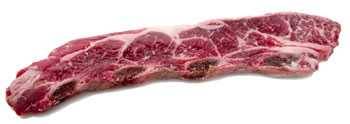
Short ribs. This is my favorite cut of meat for hamburger taste wise. It packs good steak flavor, and, even though it is a tough cut of meat, if ground and cooked properly, it can produce excellent burgers. My favorite burgers are 100% shorties. But this is a more expensive cut than chuck (below) unless you can catch it on sale.
Short ribs come from the short plate, from the side of the steer, and are usually heavily marbled with 20 to 30% fat. Read my article on The Science of Beef Ribs. Most of the time they come with a bone attached, so you’ll have to cut it off and save the bones for soup or stock. Sometimes you can get them boneless. First you have to cut the top layer of fat off because there’s a tough “silverskin” below it most of the time. You want to see meat on the top. Then you cut it off the bone. There’s a leathery cartilage between the meat and bone, so leave it behind. Bone in, there’s about 50% waste after you cut the meat off the bones and discard the silverskin. But you can simmer the bones with carrots, celery, and onion to make a nice beef stock. I have had problems grinding short ribs in my stand mixer because there is some gristle that clogs the plate, so I often ask my butcher to grind it with her heavy duty grinder.
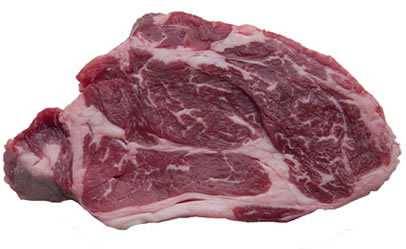
Chuck. This is the cut most of the top burger joints use. Ground Chuck comes from the shoulder and usually ranges from 15 to 20% fat. It has good flavor and texture, especially if freshly ground. To grind your own or have your butcher grind, get either boneless or bone in, it doesn’t matter. But get chuck steaks not chuck roast. Chuck roast has too much sinew, and if you try to grind it yourself the leathery sinew will just clog the grinder. Look for steaks that have, to your eyeball, 20 to 30% fat. That’s an 8 ounce chuckeye steak below from the part of the shoulder just in front of the ribeye (they are pretty tasty grilled at a much lower price than ribeye—check out my recipe for grilled chuck steak here.
Flank, skirt, hanger, and sirloin. These are really beefy tasting cuts, but they are lean. So I often ask for extra white fat from the butcher or blend bacon fat into the patties.
Brisket. Brisket has a big hearty flavor. There are two parts of the brisket (described in detail in my article on Texas Brisket). The “point” cut of brisket has about the right fat to lean ratio for burgers, and a lot more fat on top of it. You’ll need to trim the fat cap off to get to the right ratio. The “flat” cut of brisket is a slab of lean meat with a 1/4″ or so thick fat cap on top. Because the fat and lean are easy to separate, you can measure and blend the ratio you want fairly accurately.
Ground Round comes from the rump and usually runs 10 to 15% fat. It can be dry and tough, but has a nice beefy flavor. You will want to add fat
Ground Sirloin comes from the area just in front of the hip, and is usually about 5 to 10% fat. Tends to be dry because it is so low in fat. Can be pricey. You will want to add fat.
The bottom line. The esteemed cookbook author Michael Ruhlman says the cut is not as critical as the ratio of beef to fat. “Beef is beef and, unlike pork, beef tastes like beef no matter where it comes from on the animal. I know people will disagree. I believe the only critical ratio is the meat to fat, so I buy a nice fatty relatively inexpensive chuck steak, and that gives me a great burger every time. Short ribs will give you a great burger as well. So will sirloin and brisket if you’ve got the right amount of fat.”
Go for choice grade beef, not the more expensive prime grade, the fabulously expensive kobe, or wagyu. Expensive cuts are so dear because they have more fat between the muscles than choice beef. But you can add fat to ground meat, so why spend much much more on prime, kobe, or wagyu? Certified Angus is at least choice in grade, so even though it is slightly more, it is a good choice.
Mix-ins

There is a raging controversy over the wisdom of mixing ingredients into the patty. On one side, there’s FoodNetwork’s Bobby Flay, author of the cookbook Bobby Flay’s Burgers, Fries, & Shakes, and owner of nine restaurants, among them three locations of Bobby’s Burger Palace. He’s a minimalist. His patties are nothing but chuck, and he sprinkles salt and pepper on the exterior just before cooking. He once told me “I don’t put anything in my burgers like onion, eggs, breadcrumbs, anything. That’s meatloaf.” And that’s harsh!
On the other side is James McNair. Nobody has tasted more burgers than McNair, Honorary Chairman and Head Judge of Sutter Home Winery’s Build a Better Burger Contest, founded in 1990, and by far the biggest and most important burger competition in the world, with $50,000 prize going to the best beef burger, and $10,000 to the best “alternative” burger (pork, salmon, turkey, etc.). McNair is also the author of two books on burgers that are still available, Build A Better Burger: Celebrating Sutter Home’s Annual Search for America’s Best Burgers, and his most recent, co-authored by Jeffrey Starr, Burger Parties: Recipes from Sutter Home Winery’s Build a Better Burger Contest. He told me “To incorporate flavor into every bite, thoroughly mix seasonings into the ground ingredients. Contrary to popular culinary myth, salting ground meat a few minutes before cooking will not draw out the moisture and create a dry burger. For our tastes, one teaspoon of kosher or coarse sea salt to every pound of meat is a perfect ratio, but if you’re adding other salty components, reduce the amount of salt you use.”
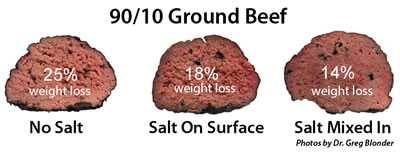
McNair’s assertion is contested by the AmazingRibs.com science advisor Prof. Greg Blonder who did a study of what happens to burger meat when you mix in salt. It helps retain just a little water, but fat is where most of the juicy sensation comes from. The real impact is on texture. You get a baseball.
But there should be no rules in the dining room or the kitchen, so I say there’s room in the firmament for what I call the Homestyle Burger. It’s the burger Granny made, with chopped onions, peppers, and more. Watch for my recipe.
Kenji’s Mix-ins
J. Kenji Lopez-Alt is an MIT grad, a chef and an Editor at SeriousEats.com, and he knows a lot about burgers. He has done some fascinating experiments with them and as a result has convinced me not to mix salt into patties. Does he put anything in his burgers? The answer is surprising, but not really when you think about it:
“I add a bit of anchovy to the meat before grinding at home, about half a filet per burger… anchovy is just a seasoning, like salt and pepper, a flavor enhancer. It doesn’t change the actual flavor of the burger the way something like Worcestershire sauce or onions do, it just adds a bit of umami that makes the beef “beefier,” if you know what I mean. I could probably get the same results using powdered MSG, but people seem a bit queasier about MSG than anchovies.”
Umami, in case you are not familiar with the term, is the savory flavor produced by glutamates found in anchovies, soy sauce, aged parmesan cheese, mushrooms, and meats.
SUMMARY: Tricks hamburger Zen Masters know
- It will take several practice runs to get your technique down. Be patient and persistent.
- Freshly ground meat produces the best beef flavor. Chuck is a good choice. Never buy anything labeled “hamburger” or “ground beef”.
- Go for 20 to 30% fat if you want really moist meat.
- Don’t grind it too fine. You want to leave sections of muscle intact for moisture retention and texture.
- Do not mix salt into the meat but put plenty on the outside just before cooking.
- Keep the other mix-ins simple and few. Let the beef shine. Do consider adding 1/2 teaspoon Ac’cent (MSG) per pound of meat. It amplifies flavor. Don’t believe all the scary stuff you read about MSG. It has never been proven in lab conditions to cause any headaches or illness, and nobody in China gets sick from MSG. Glutamate is found naturally in many foods.
- Keep the meat cold until you are ready to cook. The risk of E-coli illness is greater than you think. It can happen to you.
- Use the 2-zone cooking setup. Have one side of the grill hot with direct heat below, the other not so hot with no flame below. This gives you temperature control. You can move them from side to side.
- Size matters. You must cook thin Diner Burgers (4 ounces or less) differently than thick Steakhouse Steakburgers (6 to 8 ounces).
- For Steakhouse Steakburgers, do not crank the heat to warp 10. Start low and slow, at about 225°F. Bring it to within 10°F of the desired finished temp and then sear at the rear of the cook.
- Diner Burgers are often best cooked on a griddle or frying pan at about 350°F where they can get crisp on the outside from contact with high heat.
- On a grill, don’t mash the patty when it is cooking.
- On a griddle, do mash the patty when it is cooking, but only once per side, right after it hits the surface, to maximize contact with the surface.
- Use high quality soft buns and butter and toast them for texture and flavor. Try our Homemade Brioche Hamburger Buns.
- Use quality condiments, but don’t hide the beef flavor with a lot of junk. Two solid choices: our Big Mac Sauce and our Burger Glop.

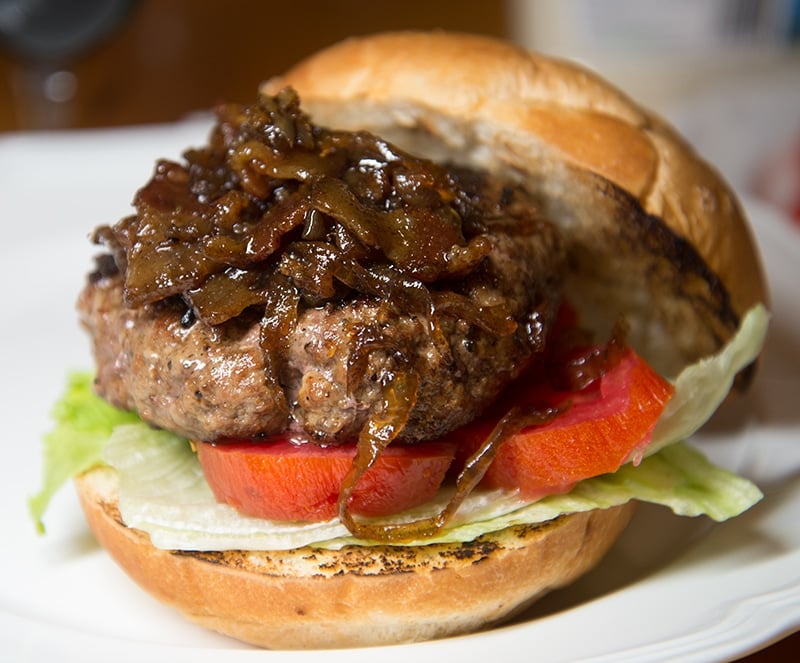
Meathead’s Perfect Burger Patty Recipe
Ingredients
Method
- Prep. For Steakhouse Steakburgers, put the meat in a bowl, sprinkle in some of the spice mix and stir it with a fork to keep it fluffy. For Diner Burgers, you can mix them by hand and pack them tight.
- Forming the patties. Learn to make uniform sized burgers every time so you can get a sense for how long it takes to cook them properly. Do not use cold water on your hands as is popularly advised. We don't want wet meat which can also retard crisping.
- Steakhouse Steakburgers go 6 to 8 ounces (170 to 227 g) each and pack them loosely with your hands so there are pockets to hold the juices. Make them 1/2 to 3/4" (1.3 to 1.9 cm) thick.
- It has become fashionable to make indentations in burgers on the theory that they will puff out. Don’t do it. Click this link for specifics about Steakhouse Steakburgers.
- For Diner Burgers, which are cooked on a griddle or in a pan for maximum surface browning, you need thinner burgers, and to keep them from falling apart, you need to pack them a bit tighter. Make 4 ounce balls and chill them in the fridge for 20 minutes or more. The cold center will help keep them from overcooking. Click this link for specifics about Diner Burgers.
- If you wish, you can use an ice cream scoop. They have numbers on them. A #8 holds 4 ounces (113 g)(a quarter pounder, just right for a Diner Burger). Two scoops and you've got a Steakhouse Steakburger.
Before you can post a comment or question you must sign into our commenting partner, Disqus. This helps make sure everyone hanging around the grill is civil. We do not tolerate nastiness, racism, porn, inappropriate language, or attacks on others. All comments are the property of AmazingRibs.com and we reserve the right to quote them, edit them, delete them, and block people from making future comments.
Please leave comments and questions on the same page that is devoted to that subject so others can see questions and our answers when they are reading about the subject. You must enable JavaScript to use the comments section, and you must accept cookies to post comments. Note: the software that runs Disqus is different from the Pitmaster Club, so members need to sign into the Pitmaster Club separately.