


Chile, chili, chilli, chilies, pepper, paprika, aji, capsicum, chiles pasado, pimento, pimiento, paprika. Let’s straighten out this mess.
In Central America the Nahuatl (Aztec) Indians grew a number of plants whose fruit they used in foods and medicines. They named it chil and its use spread across the region and Caribbean.
In 1492 Columbus discovered the Arawak Indians growing them on Hispanola and wrote that “They deem it very wholesome and eat nothing without it.” He brought them back to Spain where the “e” was added to chil, and within 50 years its’ cultivation had spread around the world. Today there are scores of varieties, sizes, shapes, colors, flavors, and they all have a spicy heat of varying degrees. Horticulturists named the plant Capsicum, derived from the Greek word kapto, which means “to bite” and scientists named the active ingredient that bites capsaicin.
Here are the definitive definitions describing the differences between chiles and chilis, some info about how hot the common ones are, and some tips on using them.
Chile
There are three definitions for “Chile”, with the concluding “e”:
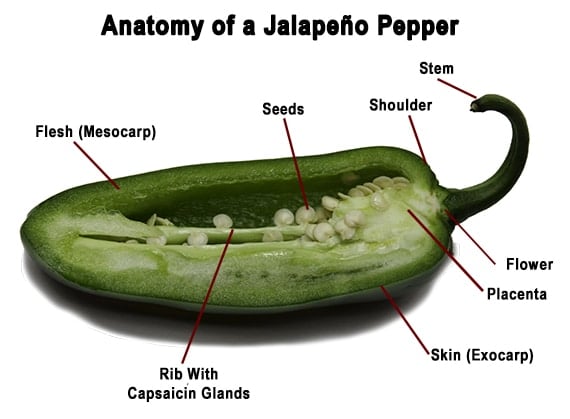
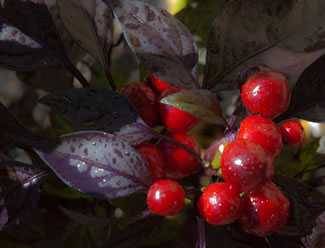
1) Chile is the colorful fruit (it is technically not a vegetable) of the Capsicum plant, also called a pepper (that’s a jalapeno pepper above). But this pepper is not at all the same as the black pepper we put next to the salt shaker. Black pepper is the powder made from grinding peppercorns, the fruit of the Piperaceae plant.
Most chiles are spicy hot, which they get from a chemical irritant named capsaicin, which, interestingly, is also used in ointments as a pain reliever for such ailments as shingles because it can numb nerves. Let that sink in for a moment. A few peppers, like the common green and red bell peppers, have no heat and can be quite sweet.
Let’s bust another myth: Many people believe that the heat of a chile is all in the seeds. While the seeds do have some heat, by far most of the capsaicin is in the ribs that hold the seeds.
Most of the seeds are held in a bunch near the stem in a pod called the placenta. The closer the veins get to the placenta, the hotter they are. So if you have a low tolerance to heat, slice open the chile and gut it by removing the seeds and veins.
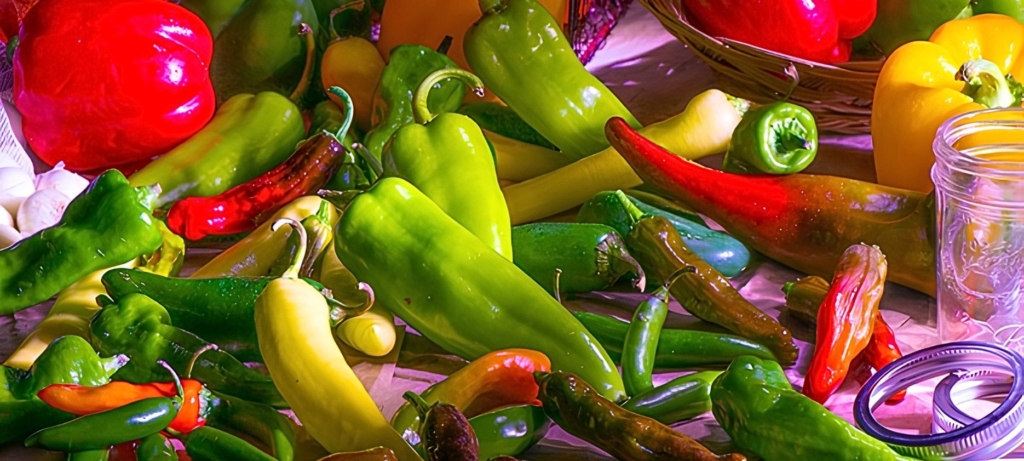
In the northern hemisphere, most chiles are harvested between August and October, and the biggest producers are New Mexico and California. Most are harvested when green, but the longer they ripen the redder they turn. Some are purple, yellow, and orange. When shopping for peppers, look for smooth skin, a sign of freshness, and select those that are heaviest. The main exception is the jalapeño, whose skin is often marked by thin woody brown cracks, which detract not at all from their quality.
Fresh peppers have very different flavors than dried peppers, chiles pasado. For that reason you should not substitute anchos, which are dried poblano peppers, for fresh poblanos in a recipe, or vise versa.
There are scores of different types of chiles, and they range in heat from mild to incendiary (see the table below).
Other definitions of chile:
2) Chile is also the name for powdered chile peppers in most countries. In Mexico and Asia and Europe, chile powder is simply ground dried red chiles.
3) Chile is a sauce made mostly of chile peppers. It is usually chiles chopped or pureed, mixed perhaps with some garlic and salt, but not much else. This definition is common in New Mexico and Texas, where chile sauce slathered on everything except marshmallows.
4) And of course, Chile is a sovereign nation in South America.
Chili
Chili, with the concluding “i”, is used almost entirely in the US, and it also has multiple definitions:
1) Chili or American chili powder is a powdered spice mix made from dried chile peppers, cumin, garlic, and other spices.
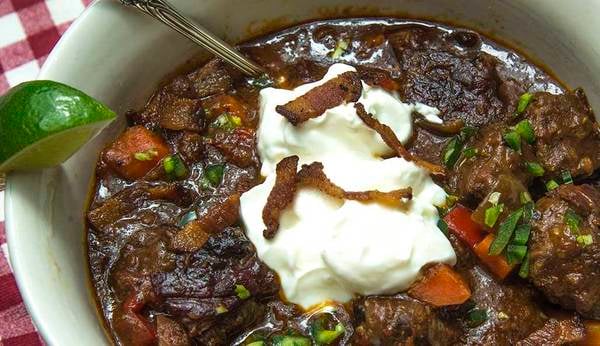
2) Chili is also savory meat stew, usually beef, seasoned with American chili powder. It is the national dish of Texas.
3) Chili is a band: Red Hot Chili Peppers.
4) And Chili is a restaurant chain: Chili’s Grill & Bar.
About Chili Powder
In Europe this is usually just ground hot chiles. In the US it is a blend of chiles and other spices.
Chilli
Sometimes restaurants and recipes spell chili or chile with two Ls. It is wrong.
Bell Peppers and pimento
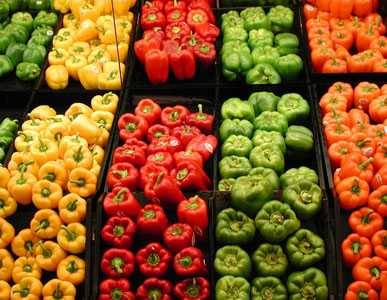
Those softball sized thick fleshed green and red peppers in your grocery store are indeed chile peppers even though they are called both bell peppers and sweet peppers. They start out green with an herbaceous, vegetal, and grassy flavor. As they ripen they turn red or orange or yellow and develop more fruity and floral characteristics. In general, as they ripen they also get hotter.
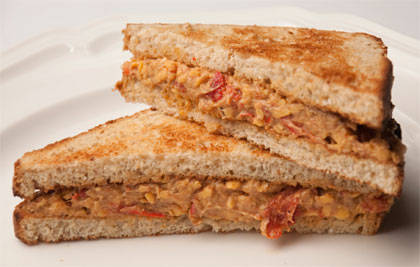
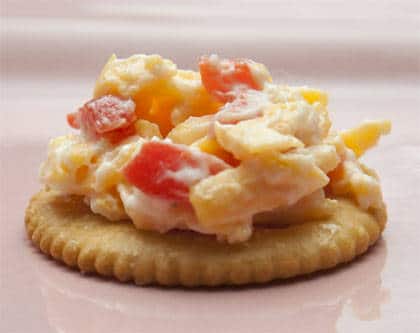
The stuff in the middle of your martini olive is a slice of pimento which is a ripe red pepper which gets its name from the Spanish word pimiento, which means pepper. Pimento cheese sandwiches are common in the South and traditional at the Master’s golf tournament in Augusta Georgia. It is made with chopped pimento, cheddar cheese, and mayonnaise.
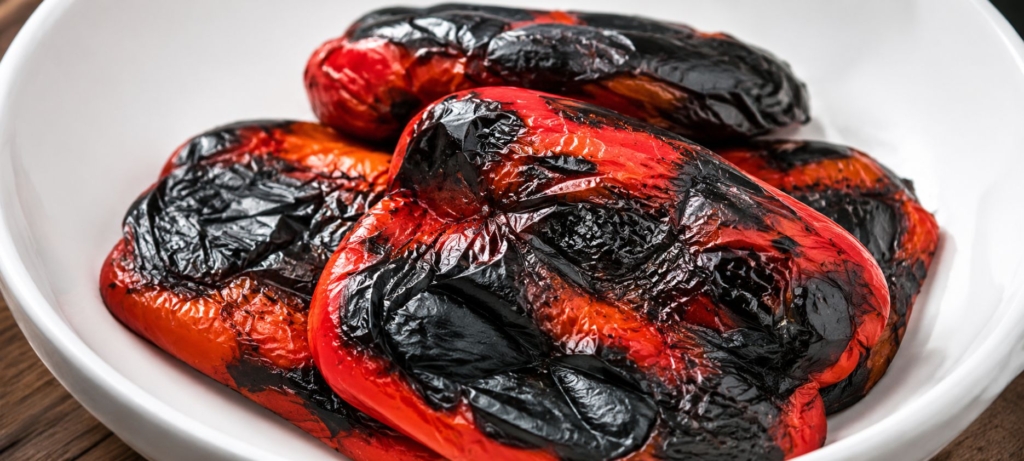
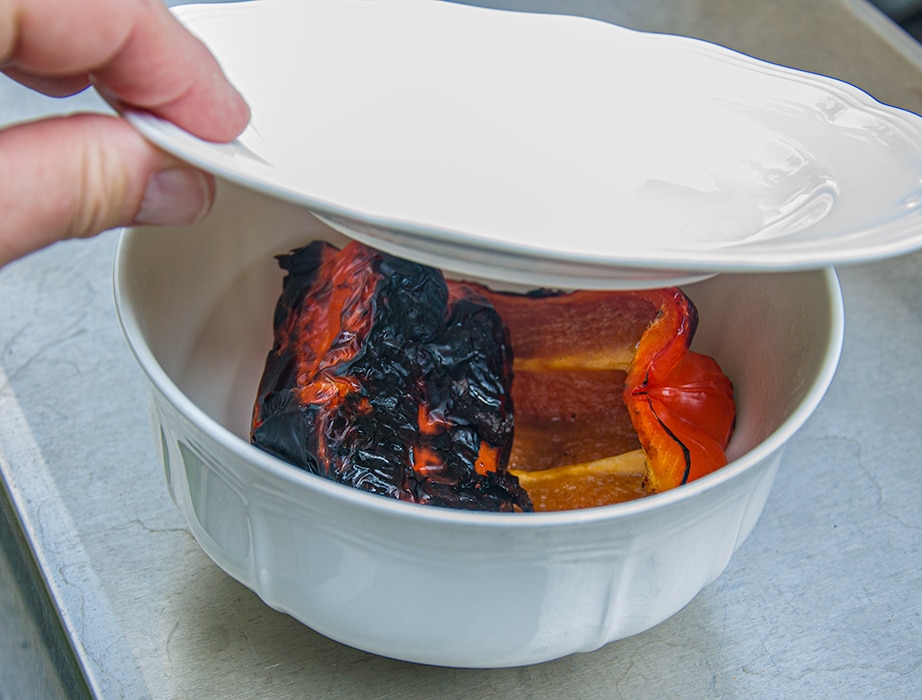
Sweet peppers can be roasted on the grill in the summer, allowing the skin to burn, then peeled, and frozen for use all winter. We usually put them in zipper bags with a splash of olive oil.
If you haven’t tried them yet, I strongly recommend you experiment with orange bell peppers. They are rich, sweet, and have a hint of cinnamon. I love em.
My favorite hot pepper sauces are blends of both hot chiles and sweet peppers. Frank’s is a great example.
Buying and storing peppers
Try to buy firm fleshed peppers with tight skins like a botoxed face. A few peppers, like Scotch bonnets and habaneros have undulating surfaces, but small wrinkles are usually a sign of a pepper that is not fresh. Beware of soft flesh and bruises. They can be mushy or moldy inside. Moisture is the enemy of fresh peppers. Store them in the fridge in a paper bag for about a week. Plastic bags promote mold growth.
About paprika
The nomenclature for paprika can be confusing. In some countries paprika means fresh sweet chile peppers, in others it can mean hot chile pepper powder, but in the US it is always a powder and it is never hot unless it is so labeled.
When I refer to paprika or American paprika or sweet paprika in my recipes, I mean the simple mild reddish orange powder on most American grocery store spice racks. It is made from dried sweet red peppers. Much of it comes from Spain and Hungary and it resembles Spanish paprika or Hungarian paprika. When fresh, it has a mild flavor, and is used primarily for color. When old, it is just flavorless red dust. The McCormick spice people say that, pound for pound, paprika has a more Vitamin C than citrus fruit.
Then there’s hot paprika, which has some hot peppers in the blend. There’s also smoked sweet paprika and smoked hot paprika. They are made from peppers that are slowly dried in the presence of hardwood smoke, and they are easy to make at home. Just smoke hot red peppers at a low temp, preferably about 225°F for four to six hours until dry enough to grind. I usually remove the stem, split it lengthwise, and scrape out the seeds. This helps it dry faster and gets more smoke to the party. Show some style and make a blend of sweet red pepper and hot red pepper, and throw out that store bought dust.
How hot is that chile?
Peppers start green and as they ripen turn red, orange, yellow, or purple as they ripen. In general the smaller the chile the hotter, the greener, the hotter, the skinnier, the hotter. The most notable exceptions to the rule are the habanero and the Scotch bonnet, both of which are broad shouldered, medium sized, orange or red, and very very hot. Recent research indicates chiles are hotter when grown in hot humid climates.
The amount of heat in a chile pepper is measured on a culinary Richter scale called the Scoville Heat Units (SHU) scale. One part per million of capsaicin is equivalent to 15 Scoville units. About 85% of the capsaicin in a chile pepper is concentrated in the ribs on the inside of the pepper, about 10% is in the seeds, and 5% in the meat and the skin. This means that you can get the flavor of a jalapeño, for example, without the heat, by removing the seeds and ribs. Measuring SHU is not very precise. To measure SHU, peppers are dried, ground, and mixed with alcohol to produce an oil extract. The oil is diluted with water and sugar and tasted. The Scoville measurement is the level of dilution where tasters can no longer sense the heat. Since the heat of a pepper can vary from one valley to another, from one bush to another, and since this system relies on human taste tests, it is highly inaccurate. The American Spice Trade Association (ASTA) uses chromatography to measure the concentration of heat producing chemicals. Conversion to SHU is not precise, however.
When chopping hot chile peppers it is wise to wear rubber gloves, and be sure not to touch your eyes, pick your nose, use the urinal, or make love before you wash thoroughly. On the last two items, I could relate stories I have heard, but this is a family website.
Cooking chiles usually diminishes the heat.
Chile sauces will change color and flavor with age, but the heat will not diminish.
How hot is it?
Here are some benchmarks:
| SHU (estimated) | Chile |
|---|---|
| 16,000,000 | Pure capsaicin |
| 5,300,000 | Police grade pepper spray |
| 1,000,000 | Bhut Jolokia “Indian Ghost Chile” |
| 210,000 | Orange Habanero chiles |
| 150,000 | Red Habanero chiles |
| 100,000-250,000 | Scotch Bonnet chiles |
| 80,000 | Dave’s Insanity Sauce |
| 50,000-100,000 | Thai chiles |
| 30,000-50,000 | Cayenne |
| 15,000-30,000 | Habanero hot sauces |
| 15,000-30,000 | McCormick’s Crushed Red Pepper |
| 25,000 | Serrano chiles |
| 5,000-15,000 | Del Arbol chiles |
| 5,000-15,000 | Tabasco Sauce (original) |
| 5,000-10,000 | Chipotle powder, Sandia chiles |
| 5,000 | Standard Jalapeños |
| 4,000 | Pasilla (dried Chilaca) |
| 1,000-3,000 | Big Jim, Anaheim |
| 1,000-3,000 | New Mexico #20, New Mexico 6-4 |
| 1,000-1,500 | Poblanos, Anchos (dried Poblanos) |
| 1,000-1,500 | Typical American chili powder |
| 100-500 | Pickled pepperoncini |
| 0 | Green bell pepper, red bell pepper, Carmens for paprika |
Putting out the fire
Capsaicin is not water soluble, so if your mouth ignites when eating hot peppers or hot sauce, beer and cold water are not very good at putting out the fire. They only distribute the capsaicin oils. On the other hand, lipids in fats bind with capsaicin, so milk, yogurt, butter, and other fats do a better job of damping the flames. Ice cream and Indian fruit lassis are the perfect fire extinguishers. Reader Bob Walsh of Shoreview, MN, sent me this tip: “When your trying hot sauce have some chocolate chips on hand. If it’s too hot pop one or two in your mouth. For most people it will tame it right away.”
Here are some common peppers and their SHUs. Actual heat may vary depending on the sub-varieties, climate, and vintage. A more complete listing can be found on chilehead Scott Roberts’ site (scroll down the page to see it).
To make your own signature hot sauce, start with my recipe for Controlled Burn Hot Sauce.
Making your own pepper flakes and powders
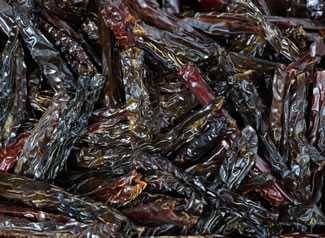
Stop spending money on chile pepper flakes that are old and mostly flavorless seeds. It is a snap to make your own. You can even make your own paprika.
The technique is simple. Gloves on, split the peppers in half, remove the seeds and stems. Leave or remove the ribs depending on how much heat you want. Put them in the oven at a temp below boiling, about 200°F for about 4 to 6 hours. You can also place them on a grill in the indirect heat zone or in a smoker. Smoked flakes or powder is wonderful. I grind them in a coffee grinder but you can also use a blender of food processor. But the coffee grinder does a better job.
You can use whatever chiles you want, any color. We make these every year:
Cayenne. We dry them and flake them without the seeds. Far superior to grocery store pepper flakes.
Carmen. This is a thin-skinned no-heat pepper gets ripe and sweet and red in my cool climate garden every year. It grows about 6″ long, about 2-3″ at the shoulders and pointy at the tip. When dried it has a rich raiseny character. We make flakes that we use in things like tuna salad or potato salad where they reconstitute in the moist environment. We also powder Carmen for paprika, with a bright reddish orange color, better tasting than anything from Hungary or Spain in the grocery stores. We also smoke it to make smoked paprika.
Jalapeños. I smoke them, red or green, and make chipotle powder. My first choice for pizza and pasta.
Poblanos. When you dry these meaty green peppers they are called anchos, and they have slight chocolatey prune flavor. Anchos are the cornerstone of chili powders and molé sauces, when added to a stew they bring a richness and depth. They are only slightly hot.
Black Pearl Peppers!
Mrs. Meathead and I first saw black pearl peppers in a garden at the Smithsonian in August 2006. We were very impressed with the beauty of the new hybrid.
The leaves are shiny purple black, the peppers start out shiny purple black like eggplants and then turn candy apple red late in summer although they never get bigger than a marble. These suckers are pretty durn hot, but unlike a lot of hot chiles they have thick walls and good flavor. Don’t ask me how hot because they are at my upper limit.
We have a plant we started in spring 2007 in a pot and we bring it in for the winter, put it back out in spring. It is till alive and it is still putting out fresh peppers year round.
It is a new hybrid from the Agricultural Research Service (ARS) in Beltsville, MD, released in 2005, and it is now showing up in seed catalogs. Click here to order Black Pearl Seeds.
The favorite hot sauces of a wimp

Let’s get this fact up front: I’m a wimp. I cannot eat habaneros and too much hot sauce makes me cry like a teenage girl who’s been stood up for the prom. But I do like complexity in my food, so I make my own signature Controlled Burn Hot Sauce. For recipes on this site I use commercial hot sauces that you can find almost anywhere. They perk the palate without pummeling it. All are winners of my coveted “Meathead’s Gold Award“.
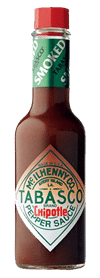
Tabasco Chipotle Pepper Sauce. Tabasco Chipotle is made from smoked jalapeño peppers in vinegar and has a wonderful smoky flavor, a strong vinegar bite, and, of course, the capsaicin kick. It is my go-to hot sauce and you will see it in many of my recipes. I much prefer it to the original Tabasco which was, according to company records, first made in the 1860s after Edmund McIlhenny planted hot peppers on his family’s property on Avery Island, LA. By 1868 McIlhenny started to market Tabasco Sauce. His process is still used today, and Avery Island remains the headquarters for the worldwide company that is still owned and operated by direct descendants of Edmund McIlhenny. Avery Island is about 2.5 hours west of New Orleans, and the charming spot is open to visitors. 1,500 – 2,500 Scoville Heat Units (see definition below)
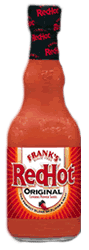
Frank’s Original RedHot Cayenne Pepper Sauce. Frank’s started making hot sauce in 1918 from Louisiana peppers and today its peppers come from New Mexico and Mexico where it is made into a mash and shipped to Springfield, MO, where it is cooked, seasoned, and bottled. Frank’s claims it is “the secret ingredient in the original Buffalo wings created in Buffalo, NY in 1964.” I think its secret to success is the proper balance of heat and flavor. Unlike so many hot pepper sauces that seem to be just capsaicin and vinegar, Frank’s has a distinct bell pepper flavor. 450 SVU
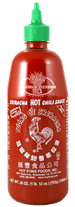
Sriracha. This is a thick mild chile paste made from red chile peppers, garlic, vinegar, sugar, and salt. I like it because it is not just pure fire as are many hot sauces. This stuff is rich and complex. It can be mixed with lime juice, hoisin sauce, or even ketchup and barbecue sauce. It comes in a squeeze bottle and I use it as a condiment as well as an ingredient in marinades and sauces. 2,200 SVU
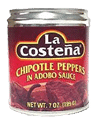
Chipotle in Adobo Sauce.
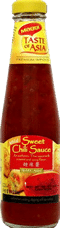
Maggi Sweet Chili Sauce from Thailand.
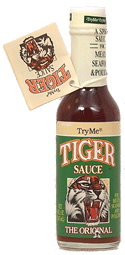
Tiger Sauce.
Harissa. This hot pepper paste is easy to make and I use it on more and more foods all the time. Click the link for my recipe.
Penzey’s Chipotle Powder. Chipotle powder is made by grinding dried, smoked jalapeños. It brings flavor, heat, and an exotic smokiness. I just put a shaker bottle of this amazing stuff on the table at most meals. It’s amazing on anything with tomato sauce especially pizza and pasta. Sprinkle it on beans, stir fries, anything except ice cream.
More on chiles
- Fiery Foods magazine.
- Growing Chiles.
- Chile Pepper Institute.
- Make your own hot sauce with this recipe Controlled Burn Hot Sauce



Before you can post a comment or question you must sign into our commenting partner, Disqus. This helps make sure everyone hanging around the grill is civil. We do not tolerate nastiness, racism, porn, inappropriate language, or attacks on others. All comments are the property of AmazingRibs.com and we reserve the right to quote them, edit them, delete them, and block people from making future comments.
Please leave comments and questions on the same page that is devoted to that subject so others can see questions and our answers when they are reading about the subject. You must enable JavaScript to use the comments section, and you must accept cookies to post comments. Note: the software that runs Disqus is different from the Pitmaster Club, so members need to sign into the Pitmaster Club separately.