"Our body temp is 98.6°F and good chocolate melts at 93°F. That means we were created to eat chocolate." Michael Canady, Canady Le Chocolatier
Working with chocolate is tricky, but the rewards are worth it. There are all kinds of rewards for making things with chocolate, chief among them, shall we call it "affection"?
Here's what you need to know about how it is made and how to handle it.
Not all chocolate is the same. Not by a long shot. As in wine, the source of the fruit and how it is handled makes a massive difference in taste and price. Chemically it is amazing stuff, and working with it can be tricky. It's important to know how it is made.
How chocolate is made
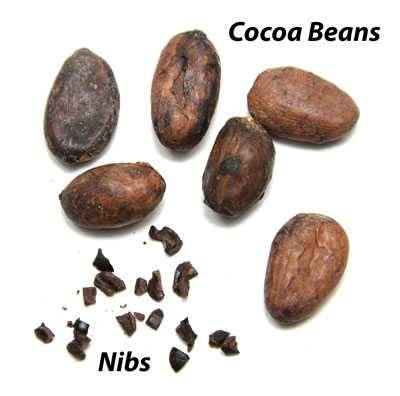
Chocolate comes from the ripe football shaped fruit of the cacao tree, Theobroma cacao, which translates roughly to "food of the gods". It can be grown only within 20 degrees of the equator. Both the species of tree (Criollo, Forastero, and Trinitario are the most common), the soil, climate, and grower's expertise influence the quality. The bright red, green, and orange fruits, called cocoa pods, have a thick skin, about 50 hard almond shaped purple beans inside, and a thick white jelly like sweet pulp surrounding them.
After harvest, the beans and pulp are fermented in bins and the heat turns the beans brown and develop complex flavors. The beans are then spread in the sun for about a week to dry after which they are shipped to chocolate manufacturers around the world.
There they are roasted like coffee in revolving drums, shelled, and the center, the nib, is extracted. The nibs are ground and liquefied, producing something called chocolate liquor, which, despite the name, contains no alcohol. It is then pressed and filtered and separated into cocoa solids and a complex oil called cocoa butter. Neither are sweet.
The manufacturer then creates blends by mixing varying beans from different plantations around the world and different amounts of cocoa solids, cocoa butter, milk extracts, flavorings, sugar, and emulsifiers. Soy lecithin is the most common emulsifier, small amounts of which are needed to help hold the blend together, and vanilla is the most common flavoring. Each rarely exceeds 1%.
The blend is then conched, a process of squishing or polishing the liquid chocolate with rollers that further develops flavor and makes the texture even finer. This conching can be done for a few hours or for as long as a few days. The final step is tempering, when the chocolate goes through heating, cooling, and stirring cycles to help form the desired texture. It is then ready to be made into bars or chunks called couverture. Couverture is the high quality tempered chocolate with about 32-39% cocoa butter at least 22% cocoa solids from which candies are made. In other words, cocoa butter and cocoa solids must be at least 54% with almost all the remaining content sugar plus tiny amounts of lecithin and vanilla. The total "percentage" cited on many brands of chocolate is made up of some combination of cocoa butter to cocoa solids (cacao). In order to be properly labeled as "couverture", the percentage of cocoa butter must be between 32% and 39%, and the total percentage of the combined cocoa butter plus cocoa solids must be at least 54%. Sugar makes up the remainder, and up to 1% may be made up of vanilla, and sometimes soy lecithin.
Couverture is used for dipping, enrobing, molding, and garnishing.
So many things influence the quality. The species of tree, how and where it is grown, how the beans are fermented and dried, how long they are roasted, graded, and liquefied, and then the ratio of the ingredients in the blend and the fineness of the grind from conching all contribute to producing each house's signature style.
Not all chocolate dishes are sweet. Here's a video from Jacques and Hasty Torres and they have a salmon recipe with unsweetened cacao nibs, onion, and leeks that will make you drool. Jacques is Mr. Chocolate in New York and Hasty runs Madam Chocolat in Beverley Hills. She gets a special shout out for editing this page for me.
The different types of chocolate
Here are the different types of chocolate.
Cocoa powder is mostly cocoa solids although it can contain 10-35% fat. It is very dense and is used in baking, cooking, and making chocolate drinks.
Dutch process cocoa is a type of cocoa powder that has been processed with an alkaline to lower its acidity and change its color. Because it is chemically different than other chocolates, it should be used only when the recipe calls for it.
Unsweetened chocolate contains only cocoa butter and cocoa solids. It is used in baking and cooking.
Semisweet and bittersweet chocolate contain cocoa butter, cocoa solids, and sugar. The amounts vary from company to company, but US law requires at least 35% cocoa product. They are used in baking and cooking and can be eaten straight.
Dark chocolate contains cocoa butter, cocoa solids, sugar, and occasionally vanilla. The best dark chocolate blends are at least 70% cocoa solids and cocoa butter. It is popular as a candy.
Advertisement
Milk chocolate contains cocoa butter, cocoa solids, sugar, vanilla, and milk powder or condensed milk. Milk chocolate usually contains about 50% cocoa product, but the law says it can be as little as 10%. Invented in Switzerland, this is the most popular type in the US.
White chocolate contains cocoa butter, sugar, vanilla, and milk powder or condensed milk. There are no cocoa solids in the blend. White chocolate is about 33% cocoa butter. It is used as a candy and in baking.
Compound chocolate usually contains cocoa solids, vegetable oils rather than cocoa butter, imitation vanilla, milk powder or condensed milk. It is used in cheap candies.
Flavored chocolates can be made from any grade by adding flavors including caramel, mint, coffee and fruits such as raspberry or orange.
Different kinds of chocolate candies
The wonderfully talented alchemists who make chocolate candies form it into a wide range of treats. Here are some of the more common varieties.
Bars, chips, kisses. Solid hunks of chocolate, dark, white, milk, sweet, semi, etc.
Truffles. These are soft, rich balls made mostly of genache, a mix of chocolate and cream, perhaps with flavoring. Sometimes they are enrobed in hard chocolate, often they are just rolled in cocoa powder or ground nuts, coffee, coconut, powdered sugar, etc. They are remarkably easy to make at home and a great way to express your love. Click here for my simple recipe and instructions for Raspberry Truffles.
Bark. Sheets of chocolate, usually about 1/4" thick, with nuts embedded.
Bonbons and dipped chocolates. These are hard chocolate shells wrapped around a filling. The fillings can be fresh fruits, dried fruits, creamy fondants, caramel, ganache, marshmallows, malt balls, nougat, coffee beans, nuts, toffee, even bacon and whatever the heart desires. Bonbons are more difficult to make at home because they require tempering the chocolate for the shell, a time consuming and precision temperature procedure. In the picture above, that's a chocolatier emptying excess chocolate from a mold to make cups for filling bonbons.
Working with chocolate
Advertisement
Which brand? For making chocolate truffles, I usually use Scharffen Berger or Ghirardelli Chocolate Chips, because they are readily available at my local grocer. My friend, Chef Tom Beckman, a baking instructor at Chicago's branch of Le Cordon Bleu recommends Callebaut or Valrhona. Michael Canady of Canady Le Chocolatier in Chicago, one of my favorite chocolatiers, prefers Valhrona.
You should store chocolate at room temp, not in the fridge. Ideal temp is 60 to 70°F, so if you have a wine cellar, put it there.
Because chocolate is such a complex compound, it can be tricky to work with. It melts at body temperature, which is why hard chocolate becomes molten in your mouth. If you get it to hot or get too much water into it, it can do weird things, like "seizing" and separating into hard chunks swimming in oil, and you cannot put it back together. This can be a terribly expensive mistake.
The best advice I can give you is to work with a well tested recipe from a reputable source, use high quality ingredients, and follow the recipe exactly. Don't experiment, make substitutions, or try variations. For example, unsweetened chocolate is 100% cocoa solids and cocoa butter. But bittersweet may be only 50%. So if a recipe calls for unsweetened and you use bittersweet, it will have only have as much chocolate flavor as intended.
There are several ways to melt chocolate.
1) Microwave. Many pros prefer the microwave. First chop it to peasize, put it in a microwave safe bowl and heat on half power for 30 seconds. Then stir it for at least a minute. The chocolate melts slowly from the heat within. If it does not dissolve thoroughly, give it another 30 seconds. Stir for another minute. Repeat as necessary.
2) Double boiler. Chop it to peasize. Bring the water in the bottom to the lowest simmer possible and then take it off the heat. Now put the upper half in and add the chocolate. Whisk constantly until it is melted.
3) Bowl over a pot. You can make a double boiler by sitting a glass or metal bowl into a pot with a smaller diameter. The bowl should not touch the water. Chop the chocolate to peasize. Start water simmering as low as possible in the pot and take it off the heat. Add the chocolate to the bowl. Whisk constantly until it is melted.
If the recipe calls for adding milk or cream, warm it first, but do not boil it. Never add cold or boiling milk or cream. When the chocolate is melting, you must stir constantly to make sure the heat is even throughout.
Whatever you do, you must keep water and steam out of the bowl. It's like garlic to vampires.
1) If you are looking for info, please use the table of contents or the search box, at the top of every page.
2) Don't ask me any questions that involve temp or time unless you tell me that you are using a digital thermometer! Bi-metal dial thermometers are often off by as much as 50°F! If you are not using a good digital you have no idea what the temp really is so I can't help you. If you are still using a dial thermometer, please read this article about thermometers, then buy a good digital, and then, if the problem persists (chances are it won't), hit me with your questions. Then, please tell me everything I need to know to answer your question. Like the type of cooker you are using. Remember, I am not a mind reader.
3) Please don't ask me "What grill (or smoker) should I buy?" Read my Buyer's Guides and the buying checklists and follow the links. I've shared just about everything I know. Pay attention to the awards I have given my faves. I cannot pick the right cooker for you any more than I could pick the right car or spouse for you.
AmazingRibs.com is all about the Zen of barbecue, grilling, and outdoor cooking, with great BBQ recipes and techniques: Barbecue baby back ribs, spareribs, pulled pork, beef brisket, steak, burgers, chicken, smoked turkey, lamb, barbecue sauces, burgers, steaks, rubs, and side dishes, with the world's best buying guide to barbecue smokers and grills. It is written, photographed, illustrated, and coded solely by Meathead.
AmazingRibs.com is published by AmazingRibs, Inc., a Florida Corporation.
Our philosophy about food is simple. First of all it must taste great. It must be easy to make and emphasize fresh seasonal products with a minimum of processed ingredients. We think that people need to know why as well as how, so we spend a lot of time explaining things, and we believe that there are no rules in the bedroom or dining room.
About Product Reviews and Best in BBQ Gold, Silver, and Bronze Medals are highly recommended products. Awards are based on features, quality, and value. Rest assured that when we recommend a product, it is really because we like it, not because someone has paid us to say so or because the company is an advertiser or sponsor. We purchase most products we review although occasionally suppliers send us samples. We have always been transparent about when we are reviewing a product sample, even before the Federal Trade Commission Required it in 2009.
About links on this site. Other than clearly marked ads, links and recommendations on this site are all products, services, and websites we truly admire, and are never paid endorsements. Your suggestions are always welcome. If you would like us to link to your website, click here to read our links policy first.
Advertising on this site. AmazingRibs.com is one of the 100 most popular food websites in the US according to comScore, Alexa, and Quantcast. It is by far the most popular barbecue website in the world and pageviews double every year. Advertising on AmazingRibs.com is a great way to build your brand or make direct sales. I keep a strict wall between editorial and advertising, so, for current pricing and availability of prime space, contact my agency, Federated Media, by clicking the logo at right. Click here for analytics, stats, demographics, and advertising options.
Our Privacy Promise. AmazingRibs, Inc. promises to never sell or distribute any info about you individually without your express permission, and we promise not to, ahem, pepper you with email or make you eat spam. Click here for more details of my privacy promise.
Disclaimer. The information on this website is for educational purposes only. All material within comes without warranties of any kind. The authors are human and capable of mistakes, omissions, or errors, so we make no guarantees as to the accuracy, completeness, or safety of the information. Under no circumstances are we liable for any damages that result from use of the site (so you can't sue us if you don't like a recipe or if you burn your tongue on hot ribs, OK?).
This link takes you to Amazon and tags anything you buy with a code so I get a referral fee. It works on anything from grills to diapers and it has zero impact on the price you pay. The best reasons to buy from Amazon are low prices, fast often free delivery, fair return policies, and often there is no sales tax. But clicking on that link before you shop helps me devote more time and money to you. Thanks!
Donate to keep this site free!
With a $30 donation you'll get a 100% cotton brushed twill adjustable low profile cap with the AmazingRibs patch sewn on. I'll even toss in a small bag of BBQ'rs Delight wood smoke pellets. Click here for more info.
GrillGrates are the best new product I have tested in years and the best thing to happen to beef since salt and pepper. The base superheats, eliminates hot spots, and blocks flareups. This is the concept behind the expensive new infrared grills. A must for gas grills. Click here for more about GrillGrates.
The Smokenator: A Necessity For Weber Kettles
If you have a Weber Kettle, you need the amazing Smokenator and Hovergrill. The Smokenator turns your grill into a first class smoker, and the Hovergrill can add capacity or be used to create steakhouse steaks. Click here to read more.
ThermoWorks Pocket Thermometer - No More Guessing
A good thermometer is why I never serve overcooked or undercooked food. This one has a very thin tip with a tiny thermocouple so it gives an accurate reading in just six seconds. I cannot recommend it more highly. It will improve your cooking overnight and pay for itself in a hurry. And it is inexpensive. Click here for more about thermometers.