



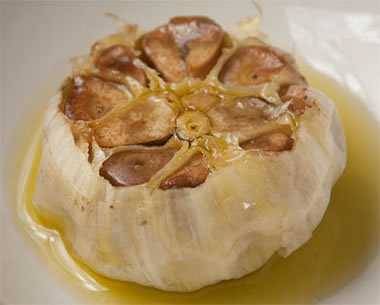
Fresh common garlic (Allium sativum) is the most aromatic member of the onion family and it adds a lot of flavor to many dishes. When raw it can be powerfully pungent, but when cooked it can be savory, mellow, nutty, and even sweet. There is a growing body of research that ascribes health benefits to the plant. Because garlic is known to repel vampires, one should keep plenty on hand. It’s a matter of life and death.
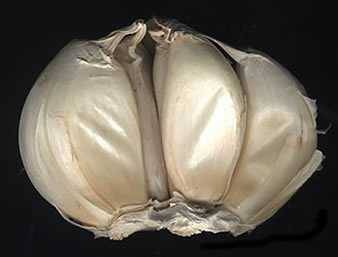
Fresh garlic
A head or bulb of common white garlic is pictured here. Like an orange, it contains numerous small sections called cloves. There are usually 10 to 12 per head. Unless the recipe says otherwise, you want to remove the papery skin from each clove and cut off the woody base. If it has begun to sprout, remove the green parts which can be bitter.
Garlic can be stored at room temp, in the refrigerator, or even frozen. It can also be packed in vinegar or white wine. This “pickled” garlic is great for use in sauces and salad dressings. I like to make roasted garlic and freeze it.
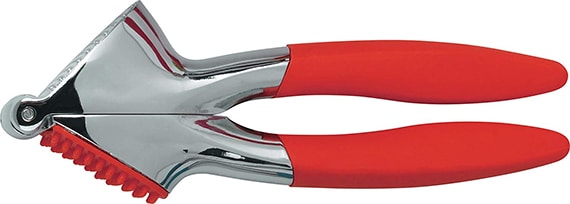
When a recipe calls for garlic to be crushed, minced, or pressed, I use a garlic press. A good garlic press is an important tool because it releases more oils and flavors than mincing with a knife and pressed garlic coats the food more evenly than mincing. Get one that is sturdily built, that is easy to grip, that is easy to clean, and has a large hopper to hold big cloves. Avoid non-stick models. I have a well-used Trudeau Garlic Press
Pressed garlic undergoes a transformation with as little as 30 seconds in warm oil. Cooking it in oil for two minutes or more can turn it dark brown, crunchy, and even bitter. If your recipe calls for sautéing onions and garlic, add the onions first, wait til they are ready, and add the garlic for just a minute. Then add the rest of the ingredients quickly before the garlic gets bitter.
If the recipe calls for raw garlic and taste of garlic is too strong for you, simmering whole garlic cloves in water, broth, or milk can mellow it in about 15 minutes. Then chop or mince it and sauté it.
Sometimes fresh garlic will turn blue when cooked in acids like lemon juice. If you notice blue flecks, don’t worry, they will brown when the liquid evaporates and the flavor will not be altered.
Not surprisingly, just as there are many different types of onion, there are many different types of garlic. Some are more pungent than others, some are sweeter, and some are slightly hot, and their quality varies from climate to climate and year to year.
Common garlic. The common grocery store garlic is called the artichoke garlic and much of it is grown in Gilroy, CA, home of a major garlic festival.
Elephant garlic. One can often find elephant garlic, with huge cloves and a mild, onion-like flavor, not surprising because it is technically a leek.
Garlic chives. Garlic chives are small bulbs with tall stalks that can be chopped like onion chives, but have a garlic flavor.
Garlic sprouts or garlic greens are the stalks of the garlic plant.
Garlic seeds are BB size and they grow in flowers, miniature bulbs on top of the stalks. The seeds are like little tiny cloves.
There are also different colored garlics, purple is fairly common, and the latest rage is black garlic.
If you grow garlic, you can eat the bulbs that grow below ground, the stalks when young, and even the flowers. Gourmet Garlic Gardens is a good source for different cultivars.
Small clove of garlic = about 1/2 teaspoon
Medium clove = about 1 teaspoon
Large clove = about 1 1/2 teaspoons
Extra-large clove = about 2 teaspoons
Dehydrated garlics
There are several forms of dried garlic, usually made by peeling the clove, slicing it, drying it, and milling it to the desired size. Yes, my snobby friends, this is not the same as fresh garlic. But is is a very versatile spice and should not be shunned.
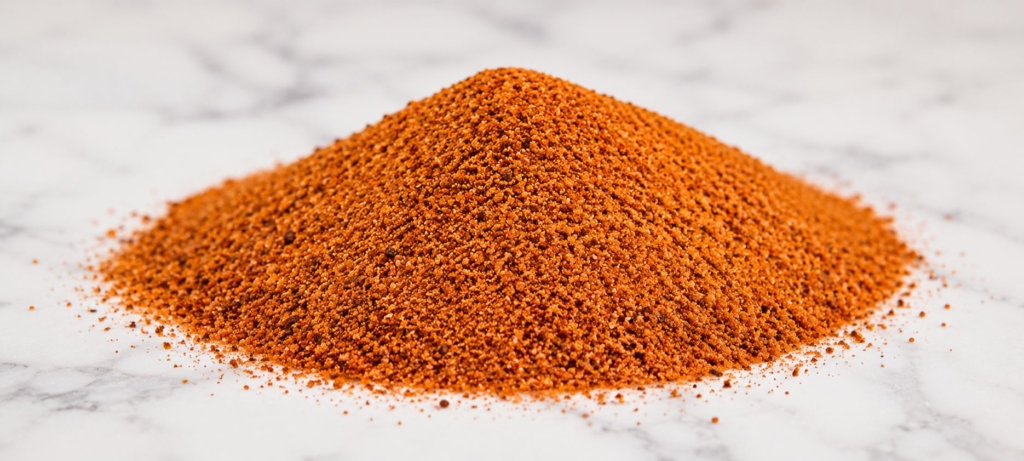
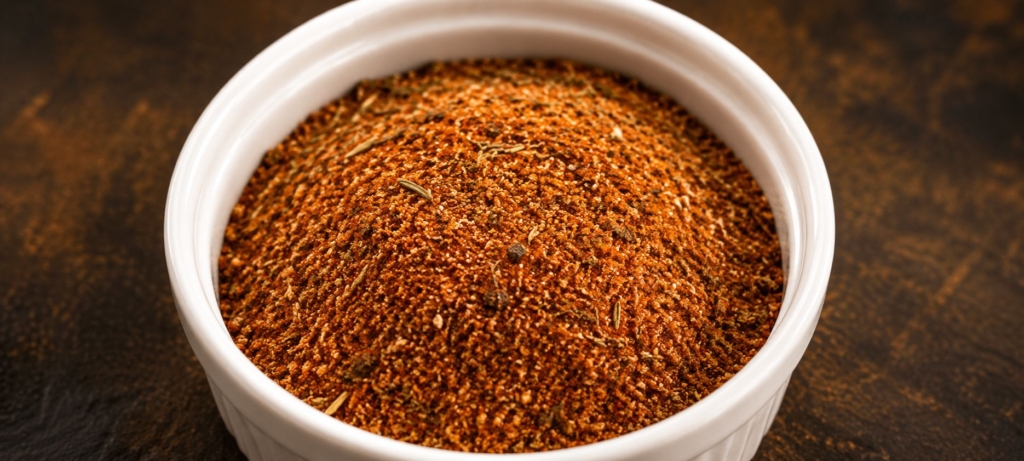
Garlic powder is dehydrated garlic cloves ground into a powder.
Granulated garlic is made from powder but it is coarser, like cornmeal. Because the grains are larger, use twice as much when a recipe calls for powder.
Minced garlic is larger, pencil point size, that add texture as well as flavor when rehydrated or added to cooking liquids.
Garlic flakes are like small fish scales and they rehydrate to a chewy texture.
Garlic salt usually has about 3 parts salt mixed with 1 part garlic powder and an anti-caking agent. I never use it. I prefer using dehydrated garlic and then adding salt as necessary.
Dehydrated garlic takes about 30 minutes to thoroughly dissolve and release its flavor, so it should be added early in the cooking process. Dehydrated garlic tastes similar to fresh garlic, but it is not the same. There are times when it is better than fresh garlic and there are times when fresh is best. If you must substitute, try this formula:
1/8 teaspoon garlic powder = about 1 medium clove fresh garlic
Other forms of garlic
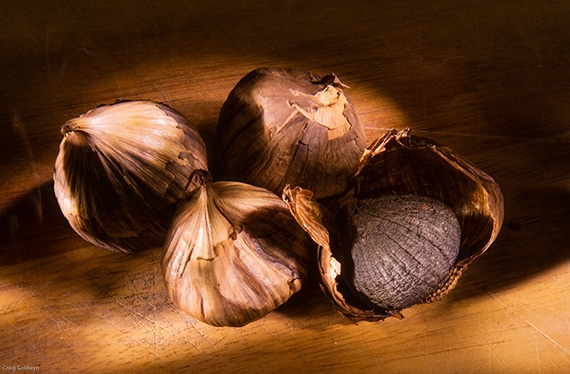
Black garlic (above) is made by slowly fermenting garlic for weeks. The process turns the cloves coal black, give them a soft slightly gummy spreadable texture, and a much mellower, sweet flavor with undertones of balsamic vinegar and molasses. It is a little hard to work with because, when you chop it, it sticks to the knife and to itself, but it is still amazing stuff. I have a marvelous recipe for grilled scallops with black garlic butter in my next book. I have shared it with members of our Pitmaster Club (click the link, non-members are allowed to view three free pages).
Garlic juice is just what it sounds like, the pungent liquid squeezed from the cloves. It is usually sold in spray cans.
Garlic oil is usually olive oil infused with the flavor of garlic by heating cloves in the oil. You should never try to do this at home because, unless the garlic is treated, it can produce Clostridium botulinum, the microbe that causes deadly botulism. Many Italian-American restaurants put bottles of olive oil on their tables with garlic cloves lolling in the bottom. Food safety experts view this warily and cite several outbreaks of botulism as a result of this practice. If you must try it, simmer the garlic in the oil, refrigerate the infusion, and use it within 24hours.




Before you can post a comment or question you must sign into our commenting partner, Disqus. This helps make sure everyone hanging around the grill is civil. We do not tolerate nastiness, racism, porn, inappropriate language, or attacks on others. All comments are the property of AmazingRibs.com and we reserve the right to quote them, edit them, delete them, and block people from making future comments.
Please leave comments and questions on the same page that is devoted to that subject so others can see questions and our answers when they are reading about the subject. You must enable JavaScript to use the comments section, and you must accept cookies to post comments. Note: the software that runs Disqus is different from the Pitmaster Club, so members need to sign into the Pitmaster Club separately.