



Sugar can do much more than just sweeten food and there are several forms of sugars and sweet syrups used in cooking. If you use too much it can destroy its natural flavor, burying it, turning it into a dessert, a common problem with many barbecue sauces. But when used judiciously sugars can amplify scent and flavor.
When used in a barbecue rub it produces childhood memories of roasted marshmallows mixed with the aroma of sexy smoke and roasted meat. In the mouth it is half the balletic tandem of the sweet/acid balance, a core concept in food and drink. Foods that are too tart can be brought to heel with a counter balance of sweetness. The most obvious examples are Chinese sweet and sour dishes. Take the sugar out of sweet and sour pork and it is inedible. Take the vinegar out, and it makes your teeth squeak. This sweet sour tango is what makes most barbecue sauces a treat. Sugar can also do the delicate dance with salt that makes sweet ketchup love salty French fries and honey glazes the perfect pair for salty hams. So it is handy to remember that when the tomato sauce is too tart, when your hand slips as you are pouring the salt into the pot, a sweetener can’t remove the excess acidity or salt, but it can balance them and bring harmony to the world.
There are many types of sugar from many sources. Most sugars have long shelf lives and do not need refrigeration and when there is enough in a sauce, jam, or jelly it can act as a preservative and microbial inhibitor. They can even delay discoloration of some products that oxidize easily. Of course sugar is essential in baking where it feeds yeast for leavening, absorbs moisture, helps gases to form and cake batters to rise, impacts texture and crumb, and combines elegantly with eggs.
And then there is candy. Candy making is an art and one of these days I’ll write more about it, but for now I have included a table of the different stages that sugar goes through when heated in the candy making process at the bottom of this page.
There is a lot of misinformation out there about sugar. I’ll not get into the gory details, but it can be safely said that the best scientists agree that all forms of sugar pack a lot of calories and have little nutritional value, but what is often overlooked is that they can be used to make nutritious foods more palatable. Don’t like veggies? You haven’t tasted my honeyed carrot coins. In large quantities, all forms of sugar can be unhealthy, but there is not any hard evidence that any one form is significantly better or worse if used in moderate quantities. Yes, raw sugar has a few more nutrients than white sugar, but so few as to be negligible.
The four most common forms of simple sugars include:
Glucose (the sugar in our blood)
Fructose (a.k.a. fruit sugar)
Sucrose (a.k.a. table sugar)
Lactose (a.k.a. dairy sugar)
Granulated sugars
White sugar is usually made by a complex refining process from beets or sugar cane. The process removes molasses. White sugar flavorless but all the other forms of sugar have their own unique song to sing. Sometimes substituting one for another in cooking can yield delightful results. Other times, disaster. One of sugar’s best features is that, when heated, the chemistry changes and it caramelizes, creating hundreds of tasty new compounds. Even a very light sprinkling of sugar on the surface of a pork chop can react with the protein and help the surface brown and create a marvelous crust. Click here to read more about caramelization and it’s cousin the Maillard reaction and here to read more about crust and bark formation. Sugar can also make a shiny glaze. Click here to find the recipe for a classy glaze for pork or ham.
Muscovado, sometimes called Barbados sugar, is a dark brown raw cane sugar that has not had the molasses removed. It has a significant amount of molasses on the surface. It is moist and slightly sticky. The molasses gives it a deeper, richer, nuttier flavor than plain sugar.
Demerara and turbinado also have molasses on them but there is not as much and they are paler, blonde, and not as strong. The exact amount of molasses varies significantly from producer to producer, so using them in cooking is tricky since the same recipe can turn out differently each time.
“Sugar in the Raw” is a commercial brand of turbinado. It is not raw sugar.
Brown sugar is simply white sugar with molasses added back. Light brown sugar has less molasses than dark brown sugar. Brown sugar is better for cooking than muscovado, demerara, and turbinado because it is more consistent. Because they are all slightly moist they tend to clump.
Fruits and vegetables
Sugar is found naturally in many foods, especially fruits and vegetables. All green plants produce sugar from sunlight and nutrients from soil during photosynthesis. When ripe, practically all fruits are loaded with sugar. But fruits bring acidity, so be careful when using apples, for instance, to balance something that is too tart, like coleslaw. They can really enliven a salad, but be aware of the vinegar in the dressing and cut back to allow for the acid in the fruit.
Midsummer corn, especially the new hybrids, is loaded with sugars and starches that turn sweet in your mouth. Onions start out sharp and piquant, but the chemistry changes when it wilts under heat and they can get quite sweet when grilled or slowly fried in a pan. Caramelized onions on a burger or a steak? Can I hear an amen?
Sugar Syrups
Simple syrup
Use by bartenders, this is an equal amount by volume of sugar mixed with water.
Honey
True honey is made by honey bees from nectar, the sugary liquid found in some flowers. It is one of the miracles of nature because, in the process, the bees get coated with pollen that they carry from flower to flower and enable them to reproduce. They digest the nectar and regurgitate honey into wax cells in the hive called honeycombs where it is used for food. Most honeybees live in man made hives so the honey can be easily harvested, and many beekeepers truck their hives to orchards and other agricultural areas where they are paid to pollinate. But bees make far more than they need, so we get to steal some. Beekeepers collect the honey by blowing smoke into the hives which makes the bees less aggressive. They then open the hive and remove the combs. The combs are melted, the honey drains away and it can be bottled without any treatment. Pure and natural. Some honeys are heated to pasteurize them to improve shelf life. Some are filtered to remove any remaining pollen and allergens. Honey is composed of mostly fructose and glucose, and has about the same sweetness as white granulated sugar. It can vary significantly in color and flavor depending on the predominant flower in their diets. Clover, orange blossom, buckwheat are common varieties. After it sits idle for months it can crystallize. Submerging the bottle in warm water can melt the crystals and restore it to its natural thick liquid form. Occasionally honey has tiny amounts of dormant forms of the botulism bacterium, so it is recommended that it not be fed to infants. It is an important cooking ingredient and can be used in baking, sauces, drinks, and salad dressings. Try it drizzled over fried chicken, cornbread, pancakes, and hush puppies.
Cane syrups
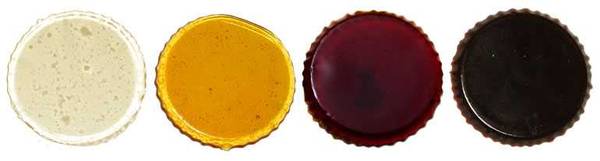
(a.k.a. treacle). Sugar cane is used to make several sweet syrups. Molasses is the most common. Known as treacle in the UK, production was introduced to the West Indies by Columbus in 1493, and shortly thereafter, rum was created by fermenting the stuff. Molasses and rum later became vital trade commodities of the American Colonies and historians tell us that the British Molasses Act of 1733 was every bit as inflammatory as the tax on tea. Molasses was the most popular sweetener through World War I when the cost of granulated sugar fell. In Boston, on January 15, 1919, a tank holding millions of gallons of hot molasses cracked and flooded part of the city. The wave of sticky stuff killed 21 people, injured more than 100, and did millions of dollars in damage. It is known as The Great Molasses Flood of 1919. There are three types of molasses, light, dark, and blackstrap.
Light molasses
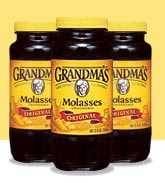
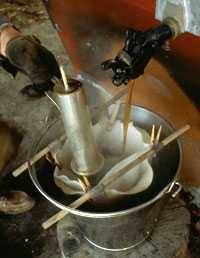
Molasses is made by crushing sugar cane (and to a lesser extent, sugar beets), and extracting the sweet juice. It is then boiled and reduced until thick. After clarifying, this straight cane syrup, called light molasses, is the purest. It is rich, and sweet, with a hint of bitterness. I use Grandma’s Original Molasses in many recipes, the one with the yellow label. It is amber in color, complex, and has just a hint of buttery flavor and a kiss of bitterness.
Dark molasses
After crystallized table sugar is extracted from the juice, usually by high speed spinning in a centrifuge, it can be boiled again, creating dark molasses, occasionally called first molasses. When I want a more robust flavor, I use Grandma’s Robust Molasses, with the green label. It is a dark molasses with a rich, musky, with a distinct bitterness and a slightly burnt taste. I use it in many of my barbecue sauces, especially my Kansas City Classic.
Blackstrap molasses
Further rounds of boiling and extraction yields second molasses, and then blackstrap molasses. Each reduction is less sweet, less pure, and more flavorful. Blackstrap is said to be the most nutritionally valuable and is often sold as a health supplement. It is also often used as cattle feed, and I rarely use it in cooking. Some molasses is treated with sulfur to aid in the sugar extraction and are so labeled. I prefer the unsulfured. Lyle’s Golden Syrup

Maple syrup
Real maple syrup is expensive and it is worth every penny. No imitation pancake syrup I have tasted even comes close. The real thing is made by drilling a hole in the side of sugar maple trees in cold climates in early spring, gathering the watery sap, and then boiling it to reduce it into a thick syrup. It takes about 40 gallons of sap to make one gallon of syrup. Now you know why it is expensive. Vermont, Maine, and New York are the three largest producing states. Canada is also a major producer. All commercial maple syrups are now labeled Grade A and there is no longer a Grade B. There are four sub-grades: Golden, Amber, Dark, Very Dark. Most are about 60% sucrose so they are about 60% as sweet as cane sugar. The paler the color the more delicate the flavor. I prefer bigger bolder, richer flavor of Dark or Very Dark, which used to be labeled Grade B. Store it in the fridge.
Pancake syrup
is usually made from corn syrup with artificial maple flavoring. Once you’ve tasted the real deal, there’s no going back.
Sweet sorghum syrup
is a thick, sweet, dark syrup that looks and tastes a lot like molasses, and it is even sometimes erroneously called sorghum molasses. It is made from a heat and drought tolerant grass named sorghum grown in warm climates. You can use it in place of molasses in most recipes and visa versa.
Agave nectar
Agave nectar is a sweet pale amber syrup collected from agave plant, a spiky succulent found in warm climates like Mexico. It is not as thick as honey, but it is a little sweeter. It is usually more than 50% fructose, more than high fructose corn syrup. The leaves are cut from the core of the plant, the nectar is squeezed out, heated, filtered, and bottled.
Apple cider molasses
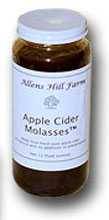
This a rarity, but it has some wonderful nuances and is really worth seeking out. It is especially good in baked goods. According to the owners, John and Carolyn Loveland, apples were plentiful and sugar was not during colonial times, so resourceful cooks made molasses from apple cider by cooking it down. It takes 10 gallons of cider to make 1 gallon of the syrup (technically it is not a true molasses), and they bottle it with no additives, flavorings, or preservatives. To my knowledge, Allens Hill Farm near Rochester, NY, the only producer left. They also make apple cinnamon syrup, a smoky apple glaze, and a spiced apple glaze. I visited them in 2006 and was very impressed with the syrups and the baked goods they made with them.
Corn syrups
I have created a separate page to discuss the facts about these controversial sweeteners.
Other good sweeteners
Hoisin sauce
Called Chinese barbecue sauce or Chinese ketchup, hoisin sauce bears no resemblance to either, other than Chinese cooks use it a lot. If you don’t think you’ve tasted it, chances are you have. This is the wonderful sweet glossy brown glop that you swab on the thin pancakes when you eat Peking Duck or Mu Shu pork. I use it in my recipes Hoisinful Nine Dragon Ribs and Chinatown Char Siu Ribs. This most excellent condiment is made from soybeans, vinegar, rice, salt, flour, garlic, and chili peppers. Lee Kum Kee brand is probably the most popular and the brand I use. If you have trouble finding it in your grocery store, try. Amazon.com
Jams & jellies
Jams and jellies are usually made from sweet ripe fruits with lots of sugar, and they are among the first sweeteners you should reach for when formulating your own super secret house barbecue sauce. They have the added benefit of thickening sauces.
Juice concentrates
Orange juice concentrate, apple juice concentrate, grape juice concentrate, can all add both sweetness and flavor.
Caramelized onions
As strange as it may seem, when cooked onions get sweet. Throw a little butter in a pan, slice up some onions, and slowly let them simmer for perhaps an hour and you have caramelized onions. Of course they deserve a seat of prominence on hot dogs and hamburgers, but they can be mixed in with pulled pork and many other dishes as a sweetener.
Tomato paste
Ripe tomatoes are sweet, and when you concentrate them by cooking them down to a burly paste, you have a sweetener. Next time you tomato sauce or spaghetti sauce tastes too tart, add some tomato paste. It can’t reduce the acidity, but it can hide it.
Ketchup and Kansas City style barbecue sauce
Ketchup is tomato paste with sugar, vinegar, and other flavors added. Kansas City style barbecue sauce is the great red sauce that Americans think of first when the word barbecue sauce is mentioned, but if you haven’t discovered it yet, there are many other rapturous other styles from around the nation based variously on vinegar and even mustard. But the thick red variant is widely called Kansas City style because it was perfected there, and it is often made with a heavy hand on the molasses. Grind up some beef, cook it in a pan, give it a shower of KC sauce, and it’s Sloppy Joe time. Heck, it even makes ground turkey into something palatable: Sloppy Tom. Mix a splash in your next Bloody Mary, or just about anything that calls for tomato paste.
Liqueurs and cordials
A sure fire way to add sophistication to a dish is with a splash of amaretto, Galliano, Kahlua, and my favorite, raspberry liquor. Just beware that too much can make a dish boozy and it is almost always a good idea to cook off most of the alcohol. I know this sounds sissy, but booze can really mask flavors and dominate a dish.
Artificial sweeteners
There are a number of sugar substitutes on the market. Most are used in “diet” beverages because, although they taste sweet, because they are very different in chemical composition and as a result they do not react in the same way as sugars when cooked. My friends who bake recommend that you do not replace all the sugar with a substitute, but try using half sugar and half artificial sweetener. DiabeticLivingOnline.com says “We have the most success with baking blends, such as Splenda Sugar Blend or C&H Light, and limited success with other brands, depending on the length of cooking or baking time. Splenda Granular has proved successful in many recipes, and we have some success with Sweet’N Low, Truvia, and Equal.”
There is controversy over the health risks of using them in large quantities or over many years, but most research has determined them to be safe in moderation.
Sucralose
Best known as Splenda, this is the rare artificial sweetener that retains its sweetness when heated and when mixed with liquids of different pH so it makes an acceptable sugar substitute in cooking some foods. My baker friends tell me that it does not perform well in baked goods but my wife has made very nice macaroons with it. It does not caramelize like sugar.
Saccharin
Best known as Sweet’N Low, it was first produced in 1878 this is the oldest artificial sweetener. I am told it works well in cooking.
Aspartame
Best known as NutraSweet and Equal, it is not very good for cooking because it can lose its sweetness when heated.
Stevia
Best known as Truvia, it is extracted from plants and it was approved in the US in 2008.
Allulose
The hot new sweetener, we will probably be seeing a lot of this stuff. It has the molecular structure of other monosaccharides like fructose and glucose. Unlike sugars, it is not metabolized and is excreted almost completely in urine, and delivers only 0.4 calories per gram, whereas sugar delivers 4 calories per gram. It does not raise blood glucose levels or contribute to tooth decay. Yet it tastes 70% as sweet as sugar and is similar to sugar’s appearance, weight, mouthfeel, browning capability, and freezing point, so it can be used in a wide variety of products from cookies to ice cream. It doesn’t have the bitter aftertaste of some of the other sugar substitutes. To give it a sweetness boost it is likely to be combined with things like stevia which tastes much sweeter than sugar. Allulose occurs naturally in foods such as wheat, figs, raisins, maple syrup, and molasses. For commercial use it is made from corn starch with an enzymatic process. In 2019 the Food and Drug Administration ruled it is not to not be counted as sugar on nutrition labels because it does not produce the same physical effects.
Stages of Sugar Syrup in Candy Making
As sugar heats, the water in its chemistry boils off and it goes through stages of concentration that candy makers need to know. Experienced candy makers use a good digital thermometer and the cold water test. To do a cold water test, use a spoon to portion a few drops of the syrup into a small bowl of ice water. Each step along the way is given a name. Note that caramels and caramelization are not the same. Caramels are chewy confections made from sugar, dairy, and usually corn syrup. The brown color comes from the Maillard reaction and occurs at about 245°F. Caramelization is another reaction that occurs at about 338°F. One word of caution: Be very careful in working with melted sugar. It retains its heat tenaciously, and a splatter on your arm can produce a serious burn. Get some in your eyes and you’d better start learning braille.
| Temp (F) | Makes | Stage | Cold water test |
|---|---|---|---|
| 230-234 | Syrup | Thread | Pulls into threads but will not form a ball |
| 235-240 | Fudge, pralines | Soft ball | Forms a soft ball that will flatten |
| 244-248 | Caramels | Firm ball | Forms a firm ball that will not flatten |
| 250-266 | Gummies, rock, nougat | Hard ball | Forms a hard ball that is still stretchy |
| 270-290 | Taffy, butterscotch | Soft crack | Separates into threads that are not brittle |
| 300-310 | Brittles, toffee, lollipops | Hard crack | Separates into threads that are hard and brittle |
| 320-338 | Caramel liquid | Clear liquid | Liquifies and turns light amber in color |
| 338-345 | Dark caramel liquid | Brown liquid | Turns brown in color |
| 350+ | Burnt marshmallows | Burnt | Turns black and bitter |

Before you can post a comment or question you must sign into our commenting partner, Disqus. This helps make sure everyone hanging around the grill is civil. We do not tolerate nastiness, racism, porn, inappropriate language, or attacks on others. All comments are the property of AmazingRibs.com and we reserve the right to quote them, edit them, delete them, and block people from making future comments.
Please leave comments and questions on the same page that is devoted to that subject so others can see questions and our answers when they are reading about the subject. You must enable JavaScript to use the comments section, and you must accept cookies to post comments. Note: the software that runs Disqus is different from the Pitmaster Club, so members need to sign into the Pitmaster Club separately.