




Charoses (a.k.a. charoset, haroset, haroseth) is a traditional Jewish dish served during the spring feast of Passover. From a culinary standpoint, it is one of the world’s great applesauces or chutneys although Jews never think of it as such, a fine accompaniment to the traditional Passover lamb or brisket, and, Heaven forgive me, it’s a great side dish for pork chops. By the way, has anybody else noticed how many great BBQ chefs are Jews?
The original recipe for Charoses was created thousands of years ago as an integral part, I think the best part, of the Passover Seder. The Seder is a ritual evening meal Jews eat in large family groups to celebrate the Old Testament story of Exodus, the liberation of their ancestors from the Egyptians by Moses, the 40 years of wandering in the desert, and presentation of the 10 Commandments.
The meal contains several required dishes meant to symbolize the events in the biblical story:
Charoses, the applesauce, represents the mortar and bricks the slaves used to build Egyptian homes and monuments. It comes from the Hebrew word cheres, which means clay.
Matzo, a cracker that is similar to the unleavened bread Jews ate as they ran from Egypt in the desert.
Karpas, a green vegetable such as parsley, symbolic of spring, that is dipped in salt water representing tears.
Z’roa, a bone, usually a lamb shank, to remind them of the lamb that was sacrificed and its blood swabbed on the doorways of Jews so the angel of death would pass over (hence, Passover).
Maror, horseradish to remind them of the bitterness of slavery.
Beitzah, a roasted egg which symbolizes, depending on the rabbi you ask, either mourning, or the rebirth of the Jewish people, or the loss of the Temple of Jerusalem, which is a lot of responsibility for one egg.
Kiddush, four glasses of wine are blessed as symbols of blood.
There are numerous recipes for charoses depending on which part of the diaspora your bubbe’s (grandmother’s) family came from, and not surprisingly, learned rabbis argue about every detail: What must be in it, what must not be in it, how to make it, and how it is to be served. I fully expect complaints that, in my charoses recipe, I have not chopped the apples fine enough to make it look like mortar. Oy!
The main course of the dinner is often brisket, a cheap, tough cut of beef that some peasants could afford for holidays. Most Jews braise it in liquid, but in Texas, smoke-roasted barbecue beef brisket is the choice of goys (non-Jews) year round. No reason it can’t be used for Passover now that barbecue season has begun. Another common Seder dish is potato pancakes, called latkes, and they also go great with barbecue.
Charoses tastes just fine as soon as you make it, but it improves with a day or two of age as the apples and raisins absorb the wine and spice flavors. It is traditionally served on matzo (I’m partial to Streit’s Lightly Salted Matzo). If you’re not Jewish and you can’t find matzo, Carr’s Table Water Crackers are very similar and widely available.

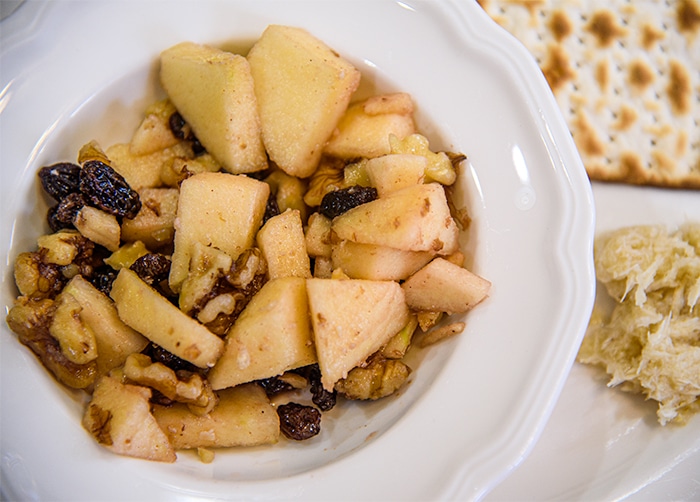
Easy Charoses, Jewish Applesauce Recipe
Rate this RecipeIngredients

Method
- Prep. Finely chop the walnuts, then mix them with raisins, ginger, cin, salt, honey, and wine in a bowl. Stir until the honey dissolves.
- Peel the apple. Cut it into quarters and remove the core and stems. Chop into bits about the size of a pea and mix them in. Taste and add more of anything you wish.
- Serve. If possible, age for a few hours or overnight so the raisins can soak up some of the wine. Serve on matzoh or as a side dish.


Why We Require You To Sign In Before You Can Post Comments
Before you can post a comment or question you must sign into our commenting partner, Disqus. This is helps make sure everyone hanging around the grill is civil. We do not tolerate nastiness, racism, porn, inappropriate language, or attacks on others. All comments are the property of AmazingRibs.com and we reserve the right to quote them, edit them, delete them, and block people from making future comments.
Please leave comments and questions on the page devoted to the same subject so others can see them and our answers when they are reading about that subject. You must enable JavaScript to use the comments section, and you must accept cookies to post comments. Note that the software that runs Disqus is different from the Pitmaster Club so members need to sign into that separately.
Moderators