



Dry brining is a technique popularized by the late great Chef Judy Rodgers of San Francisco’s famous Zuni Cafe. It is different from wet brining, where we submerge the food in a salt water solution of 5 to 10% salinity. Since discovering dry brining steak I almost never wet brine anymore.
With dry brining we simply sprinkle plain old salt the meat a few hours before cooking. No more than you would use at table.
Rule of thumb: 1/2 teaspoon of kosher salt per pound of meat or 1/4 teaspoon of table salt per pound, refrigerate for one to two hours. You do not need to rinse off excess salt. It will all be sucked into the meat. Sounds simple, but something complex and wonderful happens.
Salt does several things to the food. First of all, it amps up the taste because salt is a flavor enhancer. But if you do it properly, it doesn’t make the food taste salty. For more on the subject of how salt impacts food, read my article on The Science of Salt.
But something else happens. Salt is made of sodium and chloride ions that carry electrical charges. These ions attack the proteins, causing them to unwind a bit, a process called denaturing. These altered proteins have a greater ability to retain water, so meat that has been treated with salt remains moister through the cooking process.
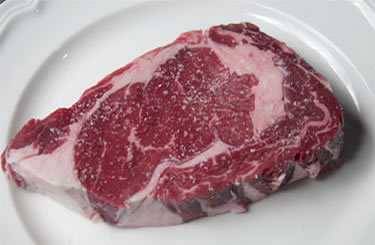
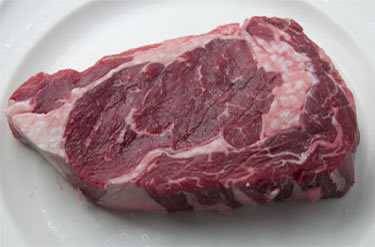
You can see it working in the pictures here. In the top picture the meat has been sprinkled with Morton’s kosher salt. The salt draws water out of the meat. The water dissolves the salt. See how the meat has become shiny with moisture and the fat has become splotchy in the middle picture?
Then, in the bottom picture, the meat re-absorbs the moisture (and much of the juices that have leaked out) bringing the salt in with it. Notice how the color of the fat has changed where the salt has soaked in.
Now watch the whole process in time lapse photography in the bottom frame. When it is time to cook there is noneed to rinse of the salt, it should all be inside the meat.
Once inside the meat it doesn’t go far. As with wet brining, it stays near the surface, but that’s where the moisture is needed because that’s were we apply the most heat.
How does this work? The AmazingRibs.com Science Advisor, Prof. Greg Blonder, explains: “Salt is hygroscopic, which is a fancy way to say it absorbs moisture from the environment. Water is a “V” shaped molecule. It has two positively charged hydrogen atoms on one tip of the V and one negatively charged oxygen on the other making H2O. This asymmetry creates an electric field, kind of like a small magnet. The polar nature of water is why it’s practically a universal solvent.
“When water in the air stumbles in very close to the NaCl crystal, the salt feels the attraction of the water’s weak electric field, grabs it, and then breaks apart into a positively charged sodium ion and a negatively charged chloride ion. When we sprinkle salt on a steak, water molecules, some from the air, but most from the meat, are captured on the surface of the salt crystal, and eventually, accumulate into a pool of briny liquid. Then, as the salty slurry diffuses into the meat, there is less salt on the surface to attract moisture, and the juices return to whence they came. Contrary to popular myth, there is no osmosis or cells breaking.”
How much salt for dry brining steak, chops, and burgers?
It is really hard to give you an exact amount since salt tolerance and preference is really personal. As a rule of thumb, add what you would add if the food was served to you at the table. Obviously roasts will need more than thick steaks which will need more than thin steaks. Sprinkle a little more on thick parts like the breasts on a turkey. Leave the meat uncovered on a rack in a pan. This is especially important for poultry because we want the skin to dry out a bit. Just be careful that vegetables and other raw foods do not come in contact with raw meat. And don’t rinse it off before cooking. After a few hours most of it has gone in and is well past the surface anyhow.
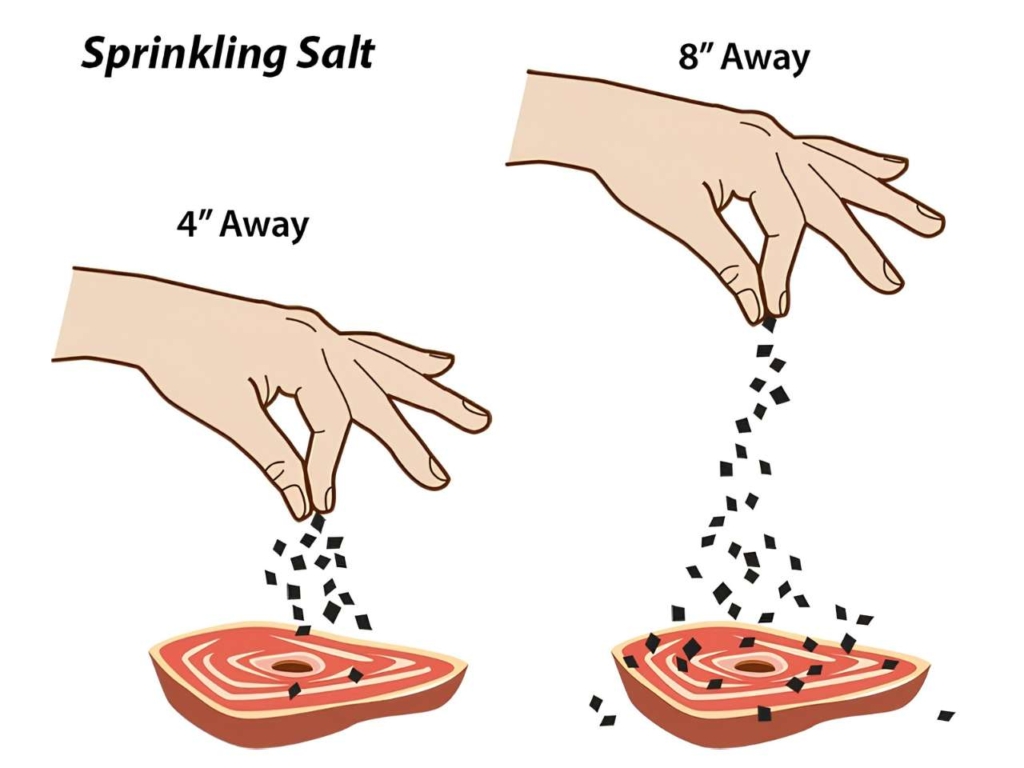
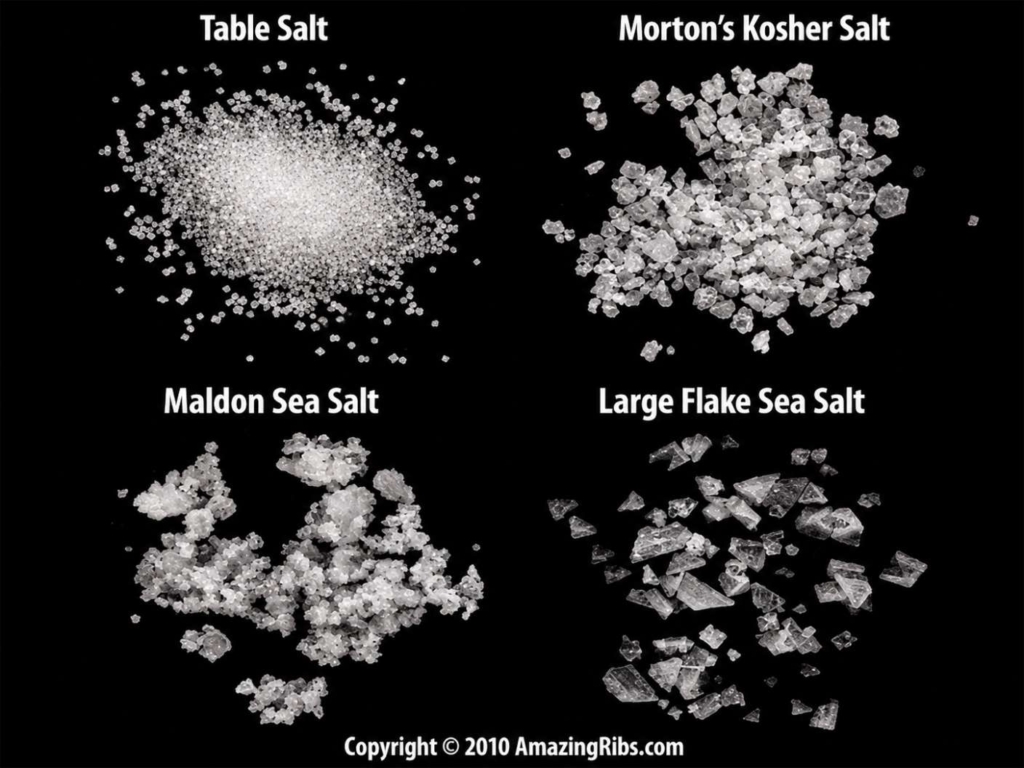
Here’s a rule of thumb: Sprinkle about 1/2 teaspoon kosher salt per pound of trimmed meat. It ‘s a bit hard to measure so here’s how I do it. I use kosher salt which is a larger flake than table salt and it still dissolves easily on the moist meat. Don’t use large grain salts like sea salt. They won’t dissolve easily. I sprinkle from about 8″ above so it is evenly distributed. Do not oversalt, especially on burgers, where too much salt will gel the meat proteins and make for a dense patty. Then back in the fridge. Put it on a wire rack in a pan in the fridge so air will surround the meat. After as little as an hour or two, you’re ready to cook. No need to rinse the meat, all the salt gets sucked in.
For roasts
The thicker the cut the longer it takes for the salt to move to the center, so you want to start the process earlier. For bigger cuts of meat like prime rib, the same ratio, about 1/2 teaspoon of kosher salt per pound of meat. Wrap in plastic and refrigerate 12 to 48 hours.
For chicken and turkey
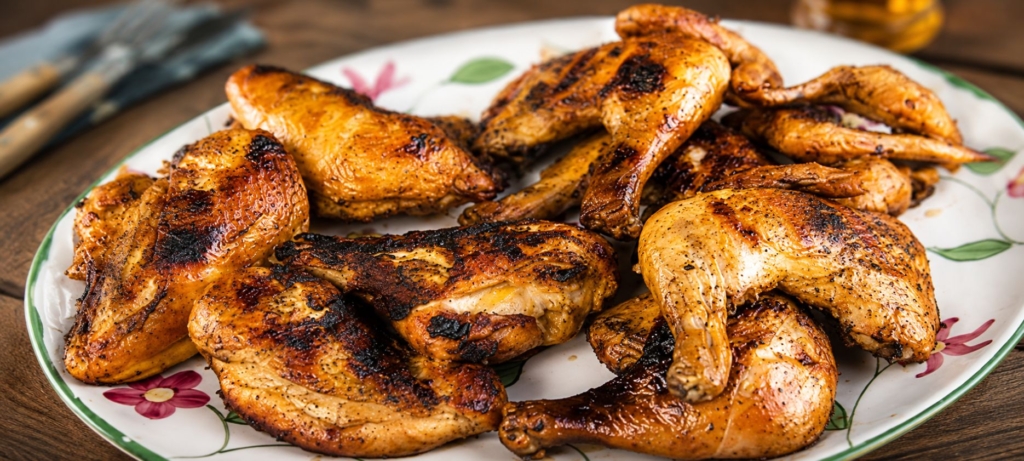
Surprisingly, the AmazingRibs.com science advisor Prof. Greg Blonder has proven that salt penetrates chicken and turkey skin (I am doubtful about duck and goose since there is such a thick layer of fat under them). So go ahead and sprinkle salt right on the skin. It will help make the skin crispy. Breasts need more than thighs because they are thicker. 1/2 teaspoon of kosher salt per pound, refrigerate for two to four hours minimum. Overnight is fine.
For wet cooking methods
It has always been a slap my forehead experience when I read a recipe for braising or slow cooking or stewing that says “Salt and pepper the meat and then put it in the liquid.” Do they really think the salt and pepper won’t wash off? But if you dry brine stew meats overnight or for a few hours, the salt will get into the meat. Osmosis will pull some out, but not all of it, and while it is in there it will denature the proteins.
Timing
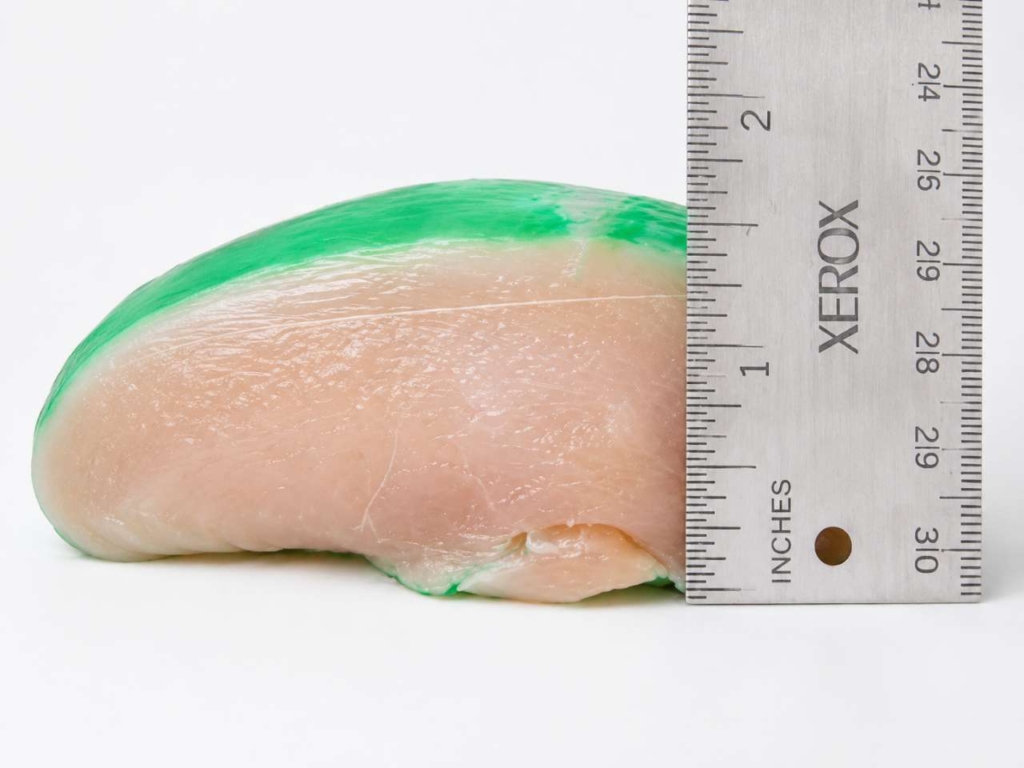
As a rule of thumb, cuts under 1″ thick need only an hour or two for the salt to get in, but 2 to 4 hours will give deeper penetration. Thicker cuts like turkey breasts need 4 to 6 hours for the salt to get deep, and thick roasts, 12 to 48 hours.
About rubs
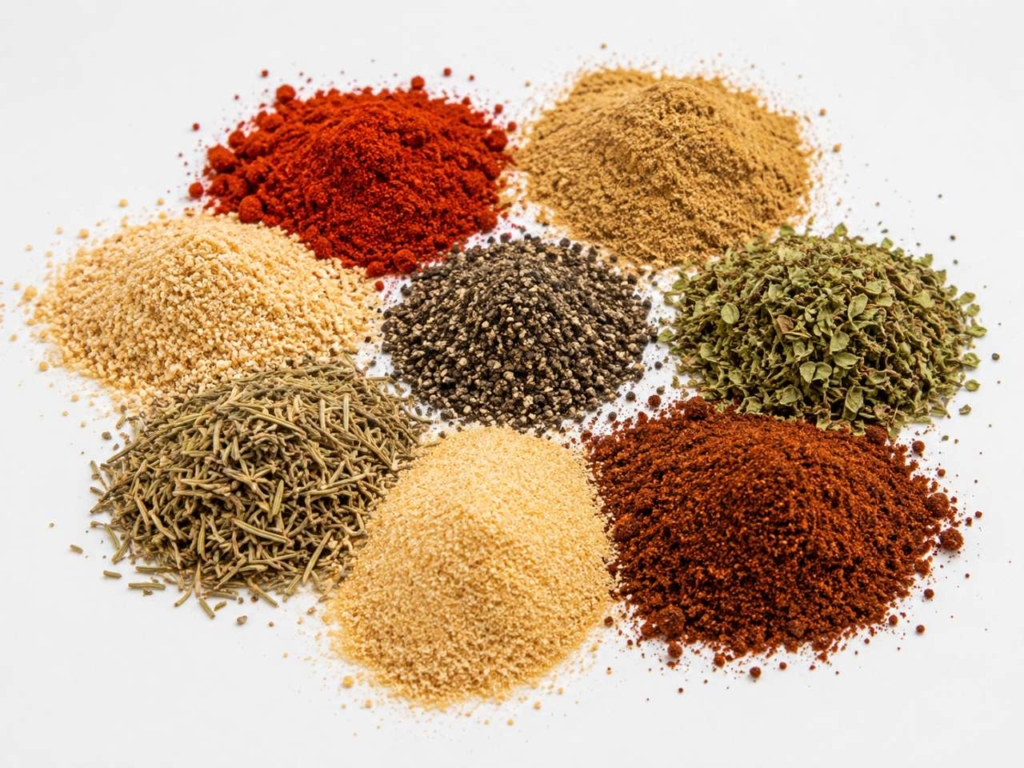
Rubs are aromatic and savory spice and herb mixes that are applied to meats to flavor them. Most contain salt which can help pull the flavorings into the meat. So put them on well in advance. The salt will penetrate deep. The other stuff does not penetrate more than a fraction of an inch. Click here to read more about the Science of Rubs.


Before you can post a comment or question you must sign into our commenting partner, Disqus. This helps make sure everyone hanging around the grill is civil. We do not tolerate nastiness, racism, porn, inappropriate language, or attacks on others. All comments are the property of AmazingRibs.com and we reserve the right to quote them, edit them, delete them, and block people from making future comments.
Please leave comments and questions on the same page that is devoted to that subject so others can see questions and our answers when they are reading about the subject. You must enable JavaScript to use the comments section, and you must accept cookies to post comments. Note: the software that runs Disqus is different from the Pitmaster Club, so members need to sign into the Pitmaster Club separately.