



Contrary to what your neighbor says, greasy grill grates and carbon buildup on the lid do not improve the flavor of your food. Rancid grease garnished with scale is not something I see on restaurant menus very often. When grease burns, it makes acrid smoke that can ruin a meal. And grease buildup has caused many an inferno. A clean grill is a good grill.
Before each cook you need to do a little light cleanup to keep your grill or smoker performing optimally, to prevent off flavors, and to prolong your cooker’s life. Then, once a year your device needs a more thorough cleanup and maintenance. If you use it a lot, do a thorough cleaning two or three times a year and before you store it for winter.
Before you start, check your grill’s manual for any special instructions. If you can’t find it, it may be available on the manufacturer’s website for download.
Remember: A clean grill is a good grill.
Cleaning your cooking grates
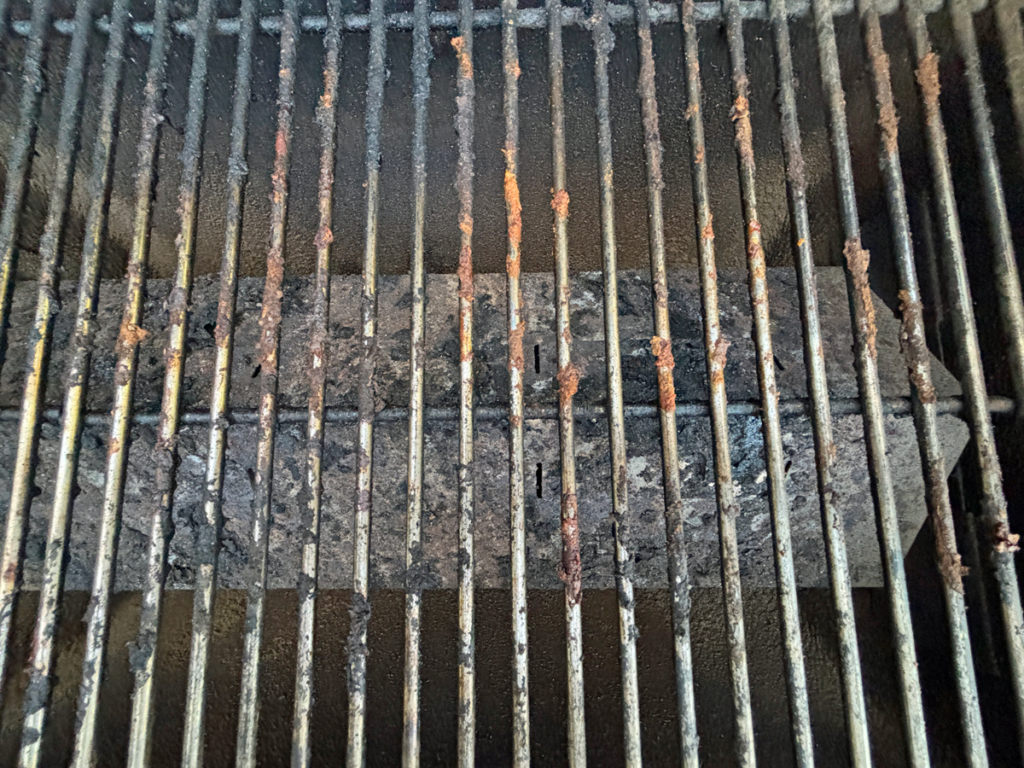
Grease and oils get rancid, particularly in hot weather, and rancid grease on the grates can make your food taste bad. Rancid grease on the bottom of the grates can vaporize and flavor the food, too.
The black crust on the grates is mostly carbon. It tastes bad. In addition carbon insulates the grates and can stick to food. So it is vital that your food go on clean grates.
Click here to read my article discussing how to clean grill grates.
The interior of the cooking chamber
Many websites and books tell you to cover the grates with foil and crank up the burners. They reason that the reflected heat will carbonize everything. This blocks ventilation, forces hot air out through the knob holes and that could melt plastic dials and flexible hoses, warp metal, and crack ceramics. Don’t do it.
Scale is a buildup of carbon, soot, creosote, combustion by-products, and schmutz, usually on the hood and sides.
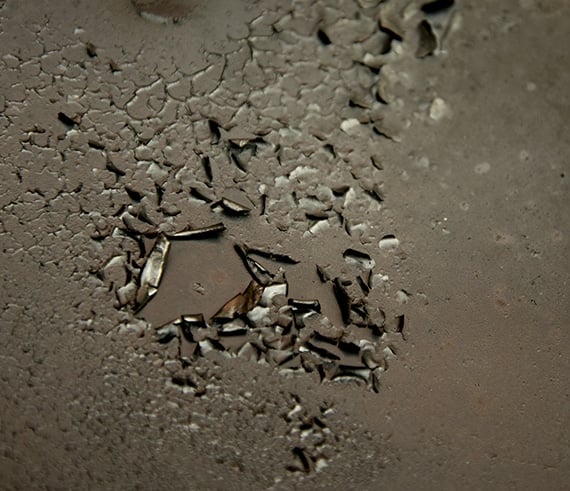
Scale can drop from the hood onto your meal as it did on my turkey one day (I was able to rinse it off).
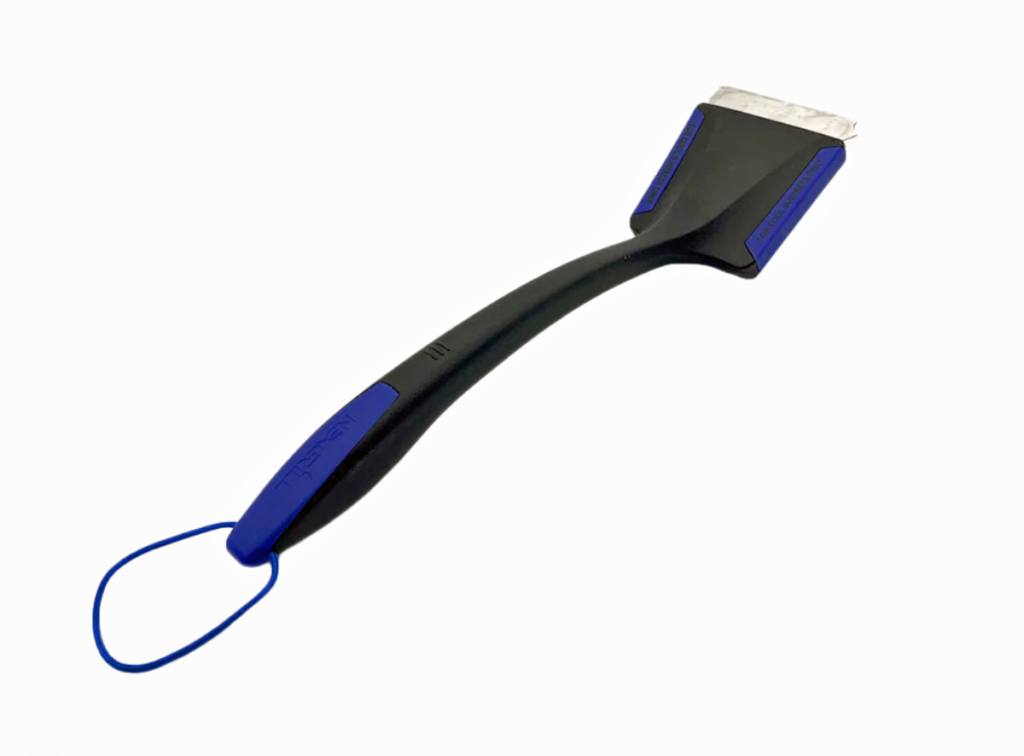
Scale also decreases the reflectivity of the inner surfaces and that can reduce heat. I don’t worry about a thin coat of carbon, but when it starts to crack and curl, I scrape it off and vacuum it up. A plastic putty knife and a good vacuum cleaner with a hose attachment are handy for cleaning the interior of a grill.
Before you go at it, beware that there can be some serious black liquid and large chips of carbon flakes as byproduct of your efforts, so roll your grill into your neighbor’s yard when he is out of town before you start. If your neighbor never goes out, perhaps you want to do this in the street near a sewer drain, or over a drop cloth. Your town might have laws regulating disposal of grease, so check into them.
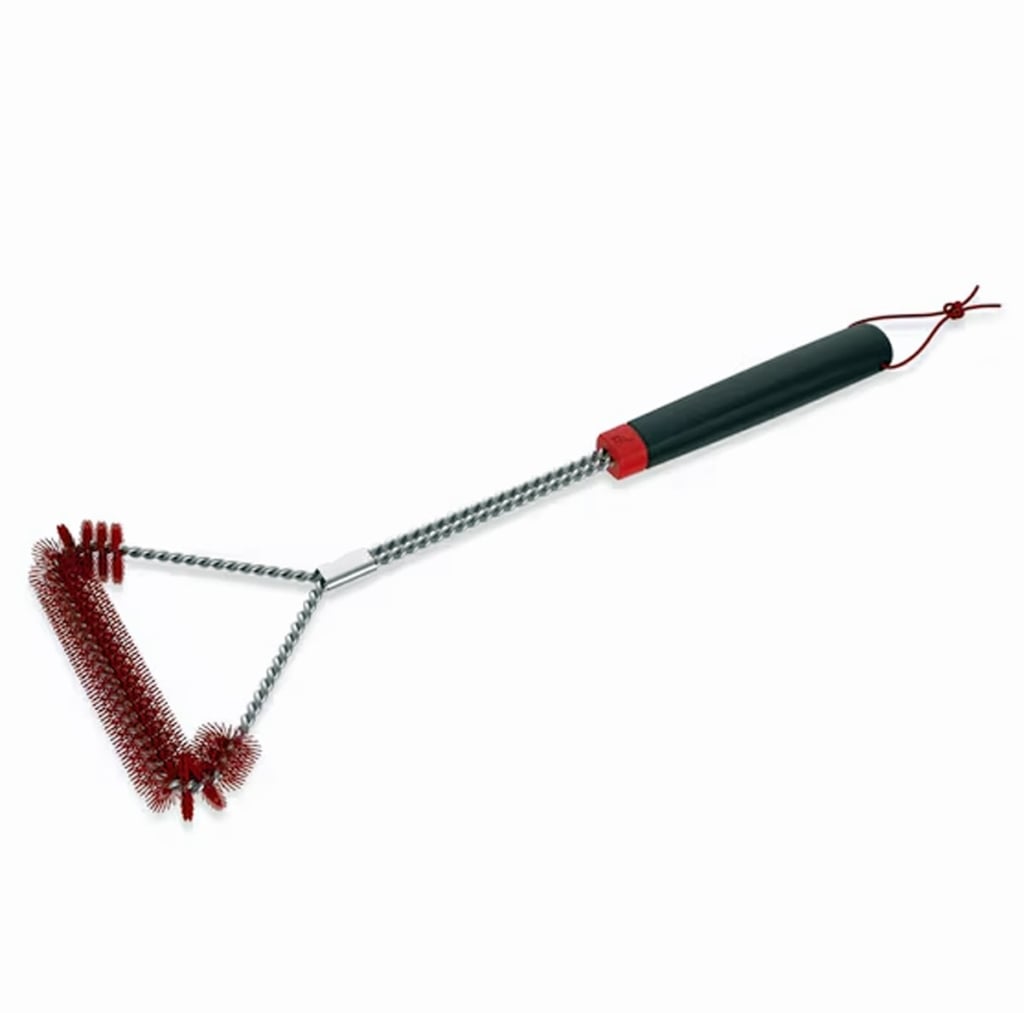
It is helpful to have on hand a plastic putty knife, a bucket, rubber gloves, a stiff wire brush, a softer scrub brush, sponges, steel wool, paper towels, garden hose with nozzle (or pressure washer), dish soap, and cleaner fluid. A mild enzymatic cleanser like Dawn Grill Cleaner
If you have a built-in thermometer, clean the probe and if you use a hose be careful not to get water into the dial area. Then again, most built-in dial thermometers are crap, so why don’t you just remove it and use the hole to insert the probe of a good digital thermometer.
Gas grills
Make sure the gas supply is disconnected and the valve is closed when you do maintenance (DOH!). Keep in mind that to prevent gas cylinders from being attached to air lines, gas connections work in reverse of the normal “righty tighty, lefty loosey” rule. Gas connections tighten when you turn them to the left.
If you use water to clean, remove electrical parts like igniters or cover them with plastic wrap and tape. Some new grills have glass or ceramic “infrared” burners. They need to be handled very carefully. Read the manual.
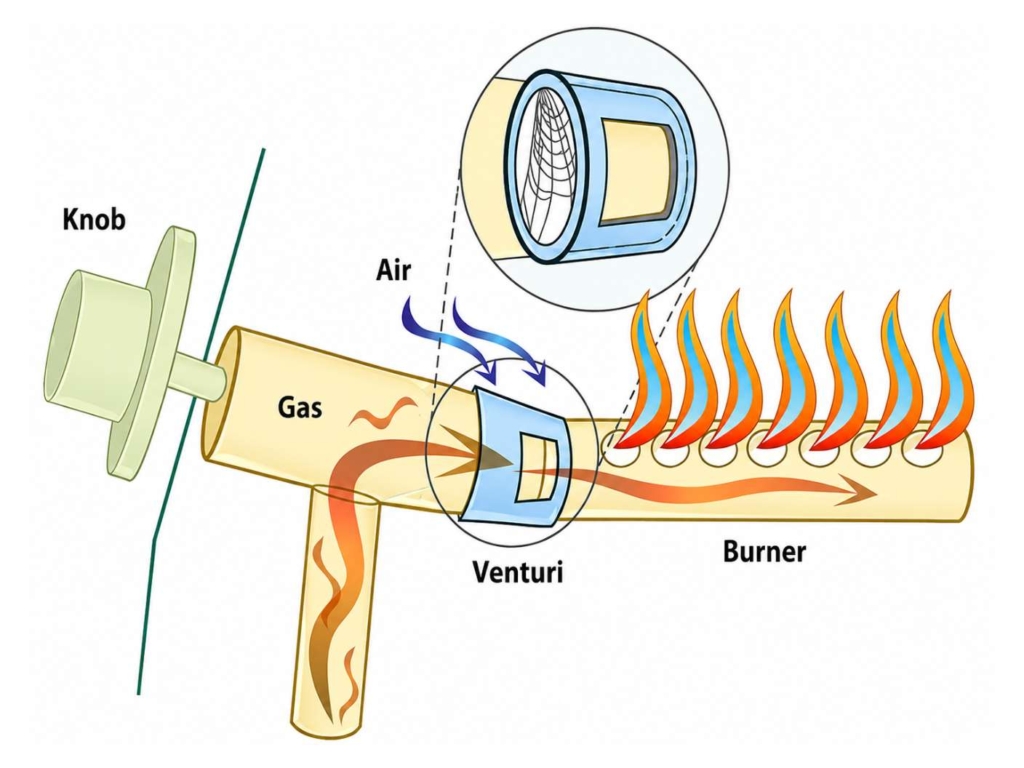
Clean the louvers that allow exhaust to escape. They also provide draft through the cooking chamber and that pulls oxygen into the combustion system so you get an optimum flame.
To clean the bottom, remove the heat diffusers over the burners and anything else that is easy to remove so you can scrape below and between the burners with the putty knife.
If you can easily remove the burners, you should, and inspect the tubes and the gas jets to make sure there are no obstructions. If there are cracks, replace them. You can even shoot water through the tubes to check them out. Spiders like to make their homes in these tubes so check for them and other obstructions. They like to climb in through the venturi, the adjustable air intake shown in blue at the top of this page.
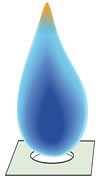
When you are done, check the gas/air mix. Gas grills are typically tuned for the proper mix at the factory, but occasionally they need adjustment. Venturis usually have a set screw. Loosen the screw, fire up, and rotate the venturi until the flame is blue with minimal orange in the tip. Do it at night so you can see the color of your flame best.
Finally, straighten a paper clip and poke them through the gas jet holes to make sure they aren’t clogged. My article on gas grill setup has a section on troubleshooting that you should read.
Charcoal grills
Check the coal grate. It often warps and corrodes. It is subjected to some serious heat after all. Don’t try to straighten it out if it is warped. It will probably crack. As long as it is not preventing airflow underneath you can keep using it. Replacements are easy to find. Also check other moving parts like vents and chimneys.
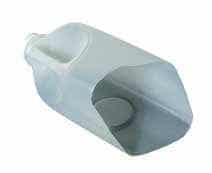
Clean out the ash. Ash holds moisture and can chemically attack steel. Get a plastic half-gallon milk jug and cut it up like the one shown here. It makes a great scoop for removing cold ashes. Needless to say, do not remove hot ashes, and remember, ashes should always go into a metal can. Embers can glow far longer than you think.
Pellet grills and smokers
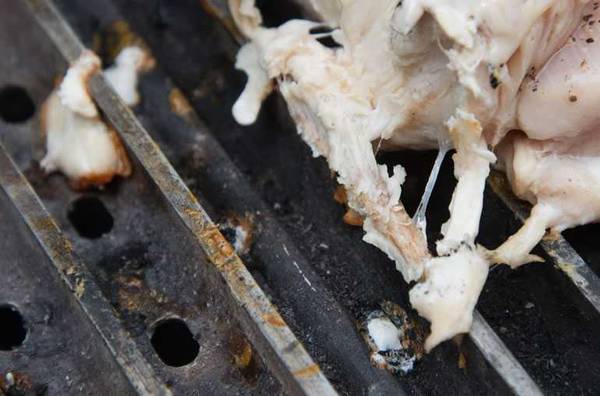
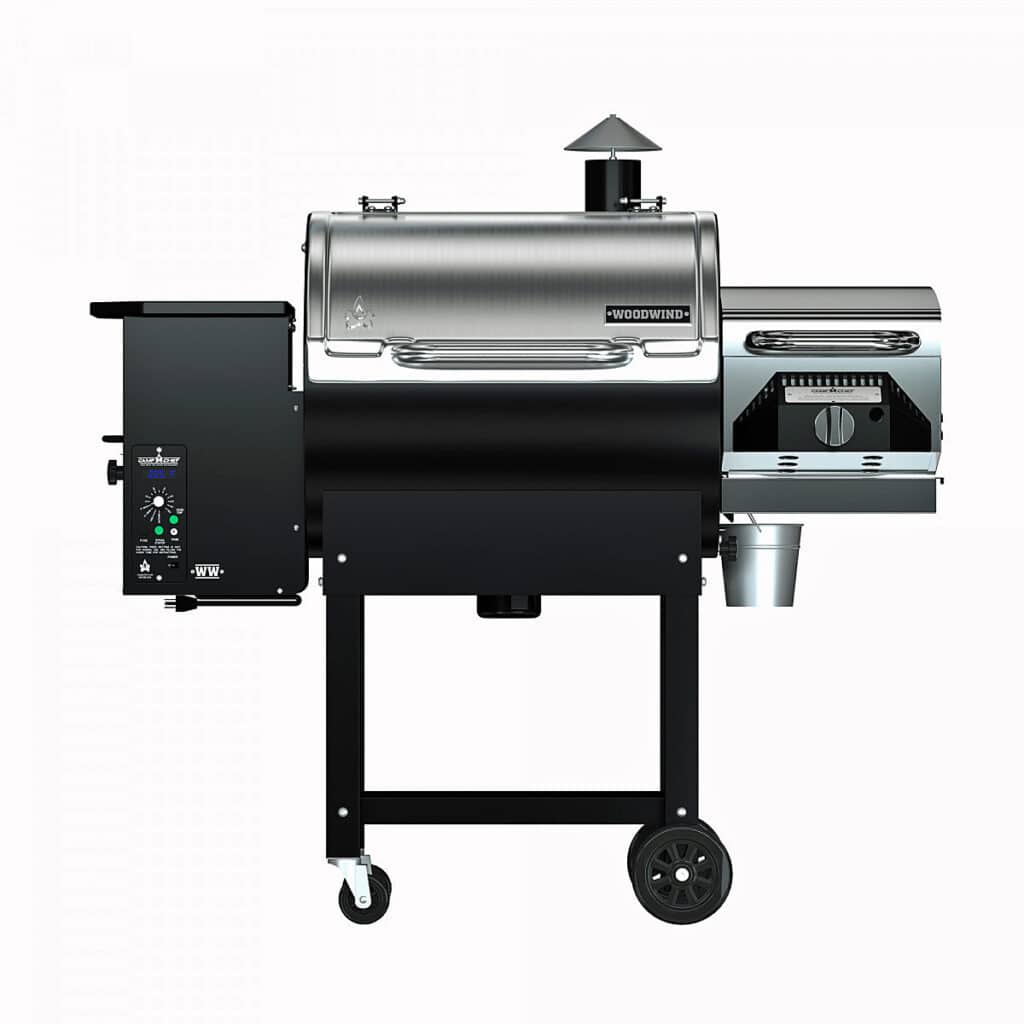
Water is the enemy of pellet grills and smokers, so keep your hose and pressure washer far far away. Pellet burners have a digital controller, a fan, a motorized auger, and a firepot with an igniter rod. If you get water in the electronics, you could ruin them. A wet igniter, fan, or motor can short circuit or rust, so keep them all dry. In addition, the pellets are made from sawdust, and they will turn into a slurry if they get wet. Because the pellets burn so efficiently, there is very little ash. A shop vac or handheld vac is usually all you need.
The deflector plat that sits beneath the grates can build up a lot of carbon and grease. That can insulate the metal and reduce its heat output. Scrub it and if necessary, remove it and hit it with the power washer or steamer.
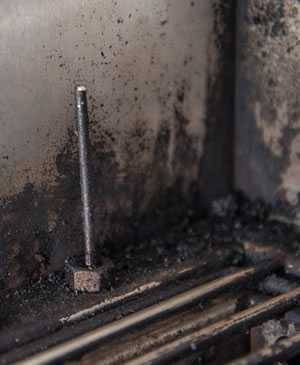
It is also very important that the thermostat probe be clean. Look at the picture of the black probe here. It will not read accurately.
Offset smokers
Grease can pool in the smoke chamber of an offset smoker. To prevent messy cleanup, line the chamber with foil before cooking.
Mold in your smoker
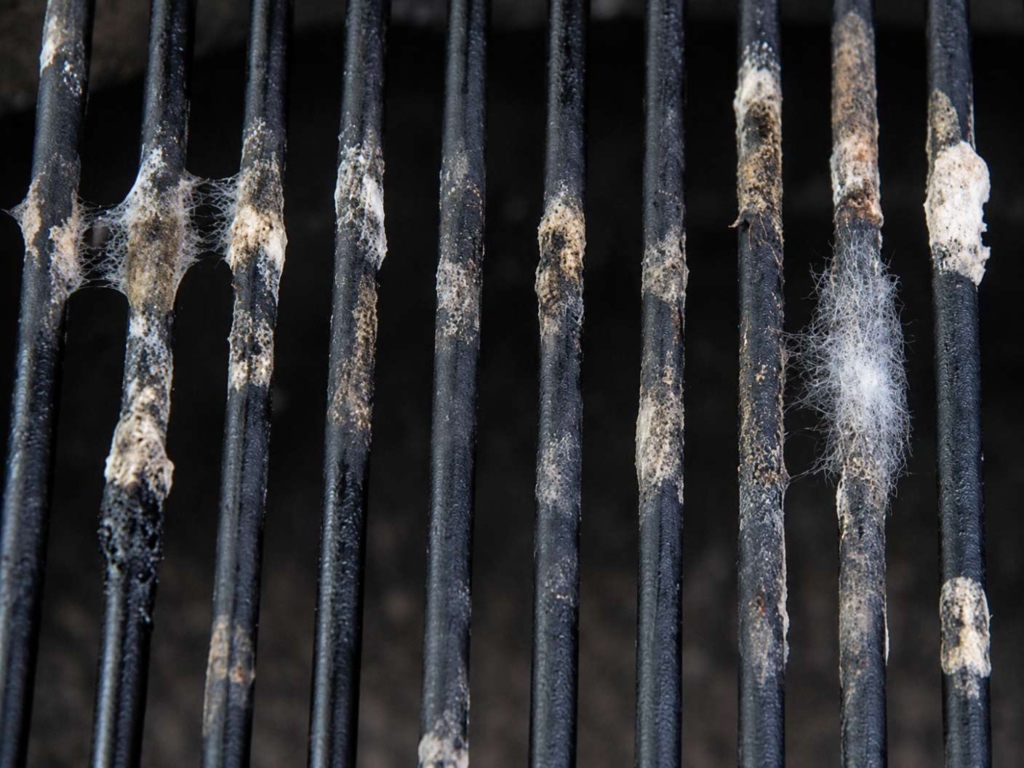
It’s pretty shocking when the rip off the cover off of your cooker in spring to discover the interior is covered in white fuzz. Weber Smokey Mountain owners are especially vulnerable to this jolt. Click here to learn what to do when you are attacked by fungii.
Grease pans
Grill manufacturers have different strategies for dealing with drippings and grease. If yours has a grease pan or collector, remember to check it before each cook. It can overflow or catch on fire. If there is a grease chute, make sure it is cleaned, too.
Flavor bars, lava rocks, ceramic briquets, grease pans, and other deflectors
Gas and pellet grill manufacturers have devised a variety of methods to keep the burners clean, reduce hotspots, prevent flare-ups, and radiate heat.
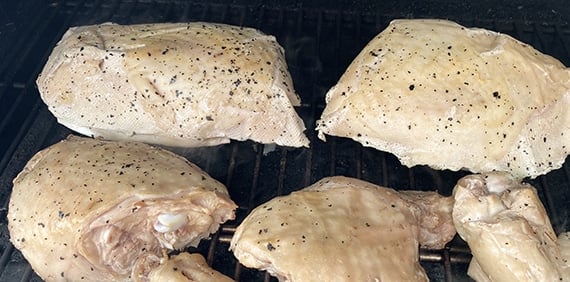
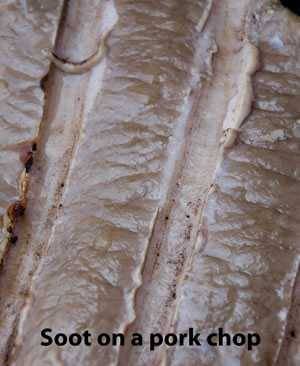
Flavor bars and metal radiators. Nowadays most use some sort of cap between the burners and the cooking grates. Weber calls them “flavor bars” and other producers have their own proprietary name. Sauce and grease can remain on them after a cook. You should always preheat the grill thoroughly to carbonize this gunk. If not, it will put out a lot of greasy soot that can deposit on the meat. The pork chop at right was inedible it was so bitter from soot, even with lots of sauce.
After these drippings burn off they can cake the deflectors in carbon and that insulates them and reduces the amount of heat transmitted. So every now and then pull them out and brush them, scrape them, and wash them with soapy water. Enamel surfaces usually corrode with time and need to be replaced. If there is a stainless steel replacement, get it. It lasts longer.
Lava rocks and ceramic briquets. Periodically you need to inspect these guys and spread them around so they are evenly distributed. They are very porous and absorb grease, but when the grease heats up it usually turns to carbon. Ceramics and lava rocks can often be flipped. Eventually they need to be replaced.
The exterior
Some folks obsess over the shine on their battleship sized grill. Not me. That’s one of the reasons I don’t buy stainless if I can avoid it. But if you want to see your reflection in your grill, literally as well as figuratively, there are some tricks to cleaning the exterior.
Never use steel wool or metal brushes, Use a scrubbie sponge, warm water, and dish soap. For stubborn stains, try vinegar or diluted ammonia. To remove water spots, try unsweetened club soda.
On stainless, work on a cool grill, and follow the grain. They sell stainless steel cleaners in hardware stores that do a pretty good job of restoring the luster.
I asked the AmazingRibs.com science advisor Prof. Greg Blonder about painting a rusted grill or smoker. He recommended Rust-Oleum Filler Primer
I don’t recommend painting the interior where food goes or where heat might vaporize the paint.
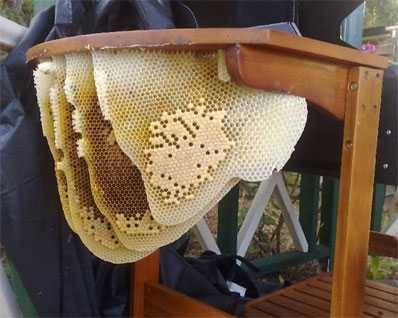
A reader sent me this picture of what he found under his grill cover after leaving it idle for a while. Moral of the story: Use your grill. Often!
The heavy artillery
Another option is to take your grill to a self serve car wash and use the pressure washer there! Just be careful to protect electrical contacts.
Replacement parts and upgrades
Occasionally you may need to replace grates, burners, knobs, or other parts. The first place to start is with your manual. Get the part number and then look on the manufacturer’s website. If you can’t find the manual, it may be available in downloadable form on the website.
If the producer doesn’t have the parts you need, there are companies that supply replacement parts, even for older cookers.
Sometimes you can upgrade your grill or smoker a lot cheaper than replacing it.
Click here for links to suppliers.
Seasoning and calibrating your grill or smoker with dry runs
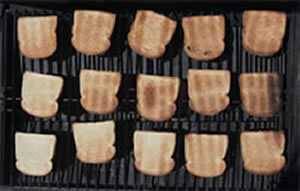
The first thing to do after you assemble your new grill or smoker is to season it and calibrate it by doing a few dry runs without food. This will burn off any manufacturer’s grease, and give you a sense for how to set it up to hit the two important target temps that almost all my recipes use: 225°F and 325°F. Click the link to learn how to do it.

Before you can post a comment or question you must sign into our commenting partner, Disqus. This helps make sure everyone hanging around the grill is civil. We do not tolerate nastiness, racism, porn, inappropriate language, or attacks on others. All comments are the property of AmazingRibs.com and we reserve the right to quote them, edit them, delete them, and block people from making future comments.
Please leave comments and questions on the same page that is devoted to that subject so others can see questions and our answers when they are reading about the subject. You must enable JavaScript to use the comments section, and you must accept cookies to post comments. Note: the software that runs Disqus is different from the Pitmaster Club, so members need to sign into the Pitmaster Club separately.